Plant Health Care
Tree Risk Assessment in Lawrence and Topeka
A written evaluation of whether a specific tree is likely to fail, and what to do about it.
- Inspection fee
- $100 to $250 (HomeGuide national range)
- Written report
- $150 to $450 single tree
- Fee credited
- Against booked work
- Best inspection window
- Mid summer, full leaf
What this is
The question behind most calls is "is this thing going to fall on my house." A risk assessment answers it with a documented inspection rather than a guess from the driveway. We look at the root plate, the trunk, the unions, and the canopy, identify what could fail and where it would land, and put it in writing. That document matters if there is ever a liability question, and it matters more if you are an HOA or a property manager.
What the job includes
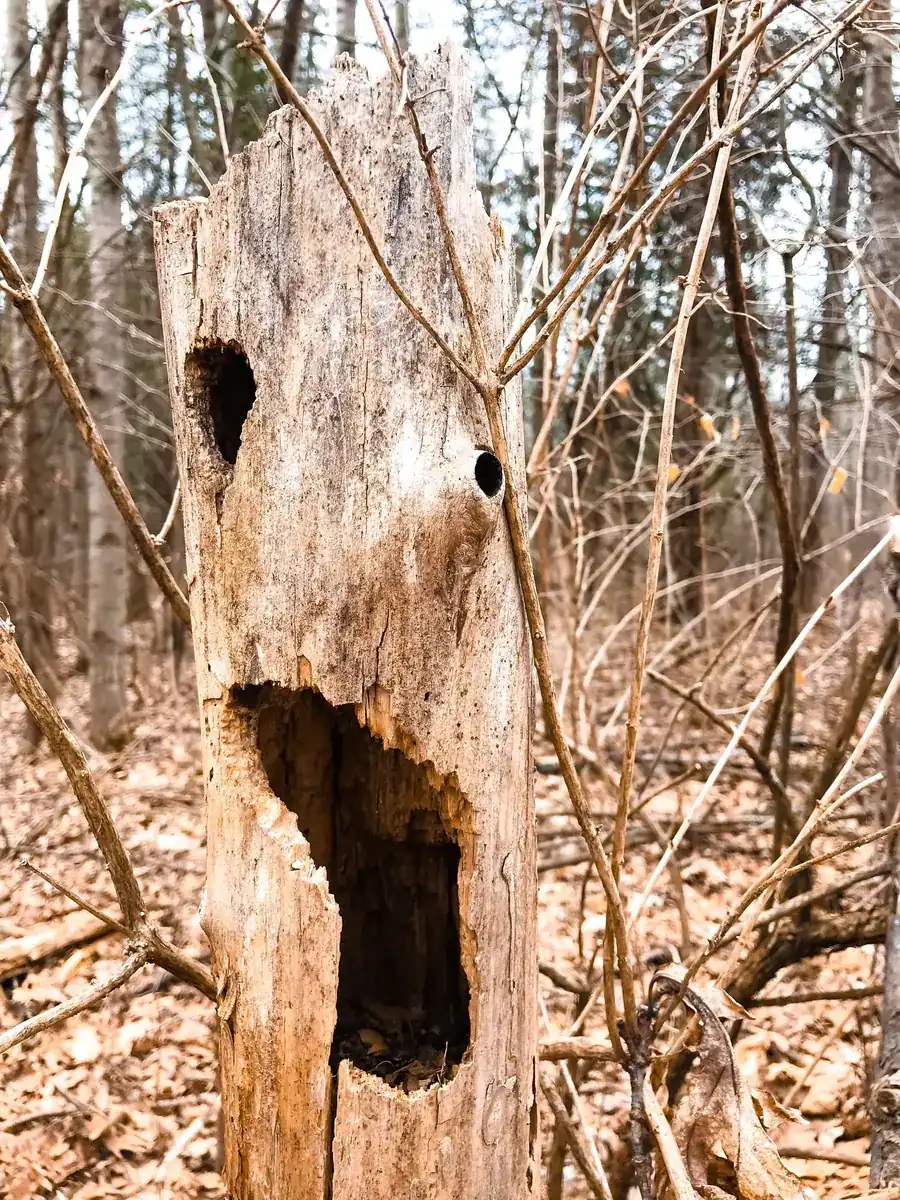
- Root collar excavated and inspected where decay is suspected
- Trunk, unions, and canopy assessed for structural defects
- Target assessment, meaning what is underneath and how often people are there
- Written report with photographs and a recommendation
What we are actually looking at
A risk assessment is an inspection that ends in a document. We work through the tree in the same order every time: the root plate and root collar first, then the trunk, then the branch unions, then the canopy. Only after that do we look at what sits underneath, because a hollow bur oak standing in open pasture and the same tree standing over a driveway are not the same problem and do not get the same recommendation.
Most of the failures we see in Douglas and Shawnee counties start below the mulch line. Root collar decay on silver maple, girdling roots on trees that were planted three inches too deep twenty years ago, and soil heaving on one side of the trunk after a wet spring are the three that come up most often. None of them are visible from a truck window, which is why the collar gets dug out by hand whenever the symptoms point that direction.
Species changes how we weight what we find. Silver maple and Siberian elm both hold decay badly and drop limbs while the canopy still looks full and green. Bur oak carries a cavity for decades without much change in failure risk. Hackberry seals wounds well. The same eight inch cavity in those three trees produces three different recommendations, and a report that does not account for that is a form letter.
- Root collar excavated by hand where decay, girdling roots, or a buried flare are suspected
- Trunk sounded with a mallet to map hollow areas, and probed where the sound is off
- Branch unions checked for included bark, cracks, and the seams that precede a split
- Canopy assessed for deadwood, hangers, and end weight on long horizontal limbs
- Target assessment, meaning what is under the tree and how many hours a day someone is there
The inspection, step by step
A single tree assessment usually takes under an hour on site. A property with a dozen mature trees takes most of a morning. You do not need to be there, though it helps if you can point out what changed and when, since a lean that appeared after the June storm is a very different finding from a lean the tree has had since 1998.
The order matters. We do not start at the canopy, because the canopy is what everyone stares at and it is rarely where the answer is.
- 1 Walk the drip line and the ground beyond it, looking for heaved soil, cracked turf, and fruiting bodies
- 2 Clear mulch and soil off the root collar and inspect the flare all the way around
- 3 Sound the lower trunk with a mallet and probe any area that reads hollow
- 4 Work up the trunk and into the scaffold limbs, checking every union for included bark and seams
- 5 Assess the canopy for deadwood, hangers, storm tears, and limbs carrying weight out at the ends
- 6 Identify the targets, meaning the house, the drive, the play set, the neighbor's roof, and how often people occupy each one
- 7 Photograph every defect with something in frame for scale
- 8 Write up the findings, the likelihood of failure, what would be hit, and the options in order of cost
What the written report says
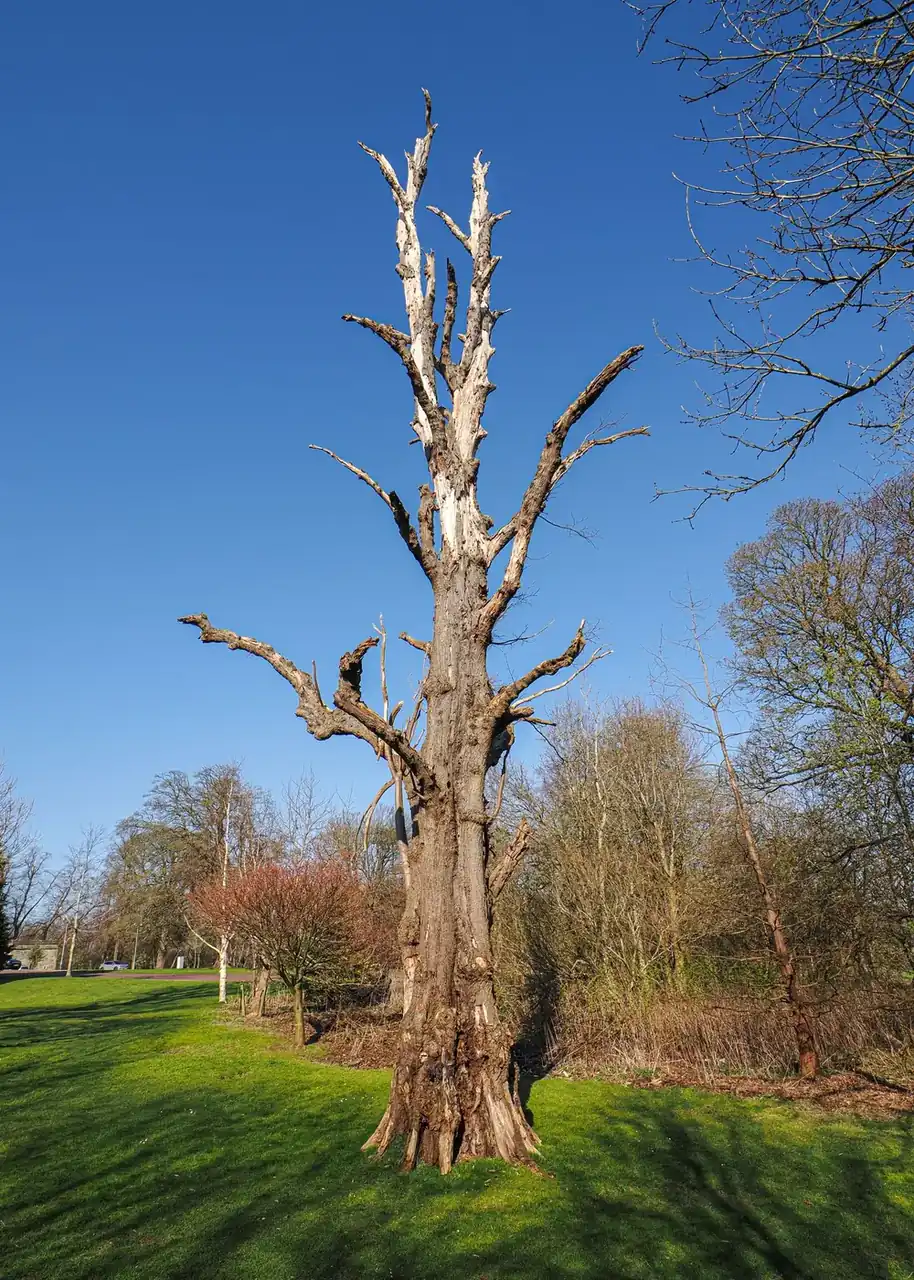
The report names the tree, the defects we found, where each one is, what part of the tree would fail, and what that failing part would land on. It gives a recommendation and it gives the alternatives, because a cable, a crown reduction, a deadwooding pass, and a note to re-inspect in two years are all real answers and one of them is usually cheaper than removal.
Photographs go in with the text. An adjuster, a board member, or an attorney reading this two years from now was not standing under the tree with us, and a description of a seam in a union means very little next to a photograph of it.
You own the document. Use it to get a second bid, take it to your insurer, put it in the association file, or hand it to a buyer's inspector. HomeGuide puts a written single tree report at $150 to $450 nationally and a multi tree report at $300 to $700, which is a fraction of what one unnecessary removal costs.
Signs that are worth a phone call
Almost nothing on this list is proof by itself. Mushrooms at the base of a healthy hackberry can mean the tree is decomposing a long dead root and nothing more. The same mushrooms on a silver maple with a lean and a vertical crack are a different conversation. What makes any of these worth a call is a combination, or a change from last year.
Mid summer is the best time to spot trouble, because everything healthy is fully leafed out and anything that is not stands out from a hundred feet away.
- Mushrooms, conks, or shelf fungus growing out of the trunk, a root, or the soil at the base
- A vertical crack running up the trunk, especially one that opens and closes as the tree moves in wind
- Soil heaved, cracked, or mounded on one side of the trunk
- A lean that is new, or a lean with no compensating curve near the ground
- Bare limbs in July while the rest of the canopy is full
- Bark falling off a limb or a section of trunk in sheets
- Two trunks growing tight against each other with bark pinched between them
- Carpenter ants or sawdust at the base, which usually mean decayed wood is already there
Kansas does not license tree companies, so the report is your protection
Kansas has no state licensing requirement for tree removal companies. There is no exam, no board, and no license number to look up. ISA certification and Kansas Arborists Association membership are voluntary credentials, which is exactly why they are worth asking about, along with a current certificate of liability insurance and workers compensation coverage.
A paid, written assessment is the other filter. We charge for the assessment specifically so the recommendation is not attached to a sale. When the person telling you the tree must come down is the same person who would bill you for taking it down, the incentive is obvious and you should read the diagnosis accordingly.
Plenty of our assessments end without any work at all. Some end in a deadwooding pass on a tree another company quoted for removal. Some end in a note to look again after two more growing seasons.
What it costs and when the fee comes off
HomeGuide puts an arborist inspection or risk assessment at $100 to $250 nationally, a written single tree report at $150 to $450, and a multi tree report at $300 to $700. Kansas specific consultation fees are not published anywhere we could verify, so those national bands are the honest starting point rather than a quote.
What moves the number is how many trees are involved, whether the root collar has to be excavated, whether anyone has to climb to inspect a union from close range, and whether you need a formal written report or a walk and a recommendation. A verbal opinion on one tree costs less than a document you can hand to a board.
We credit the assessment fee against the work when you book the work with us. If the assessment says nothing needs doing, you paid for the answer, which is what you were after.
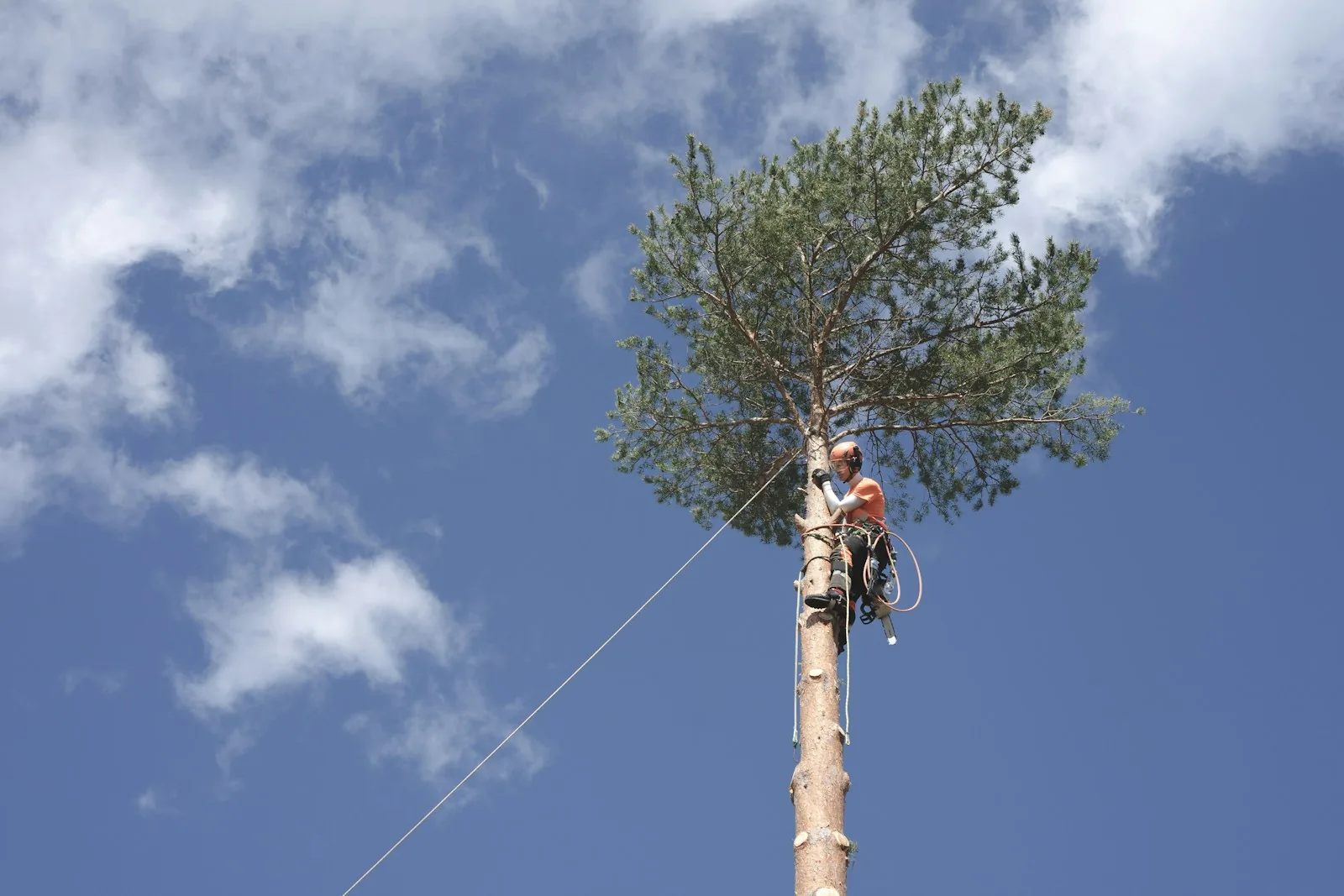
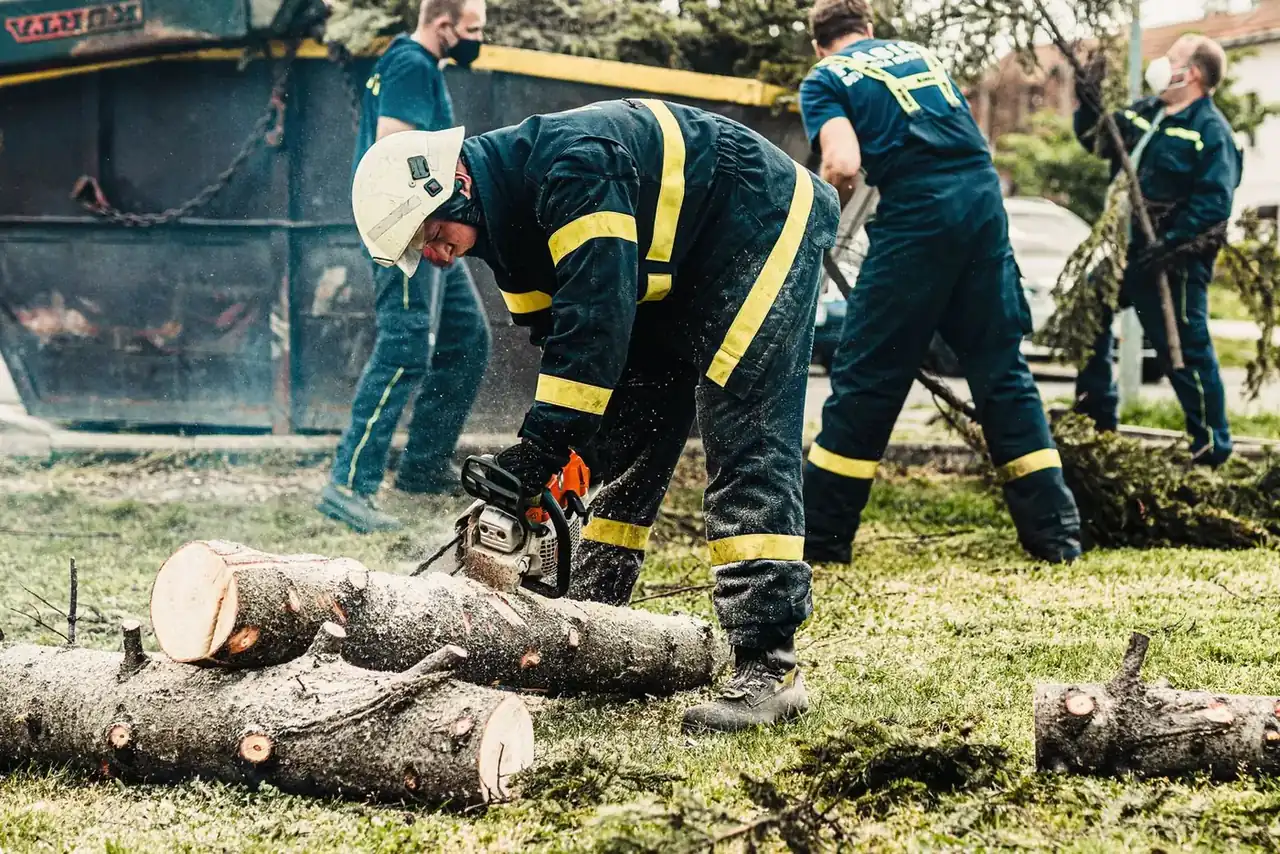
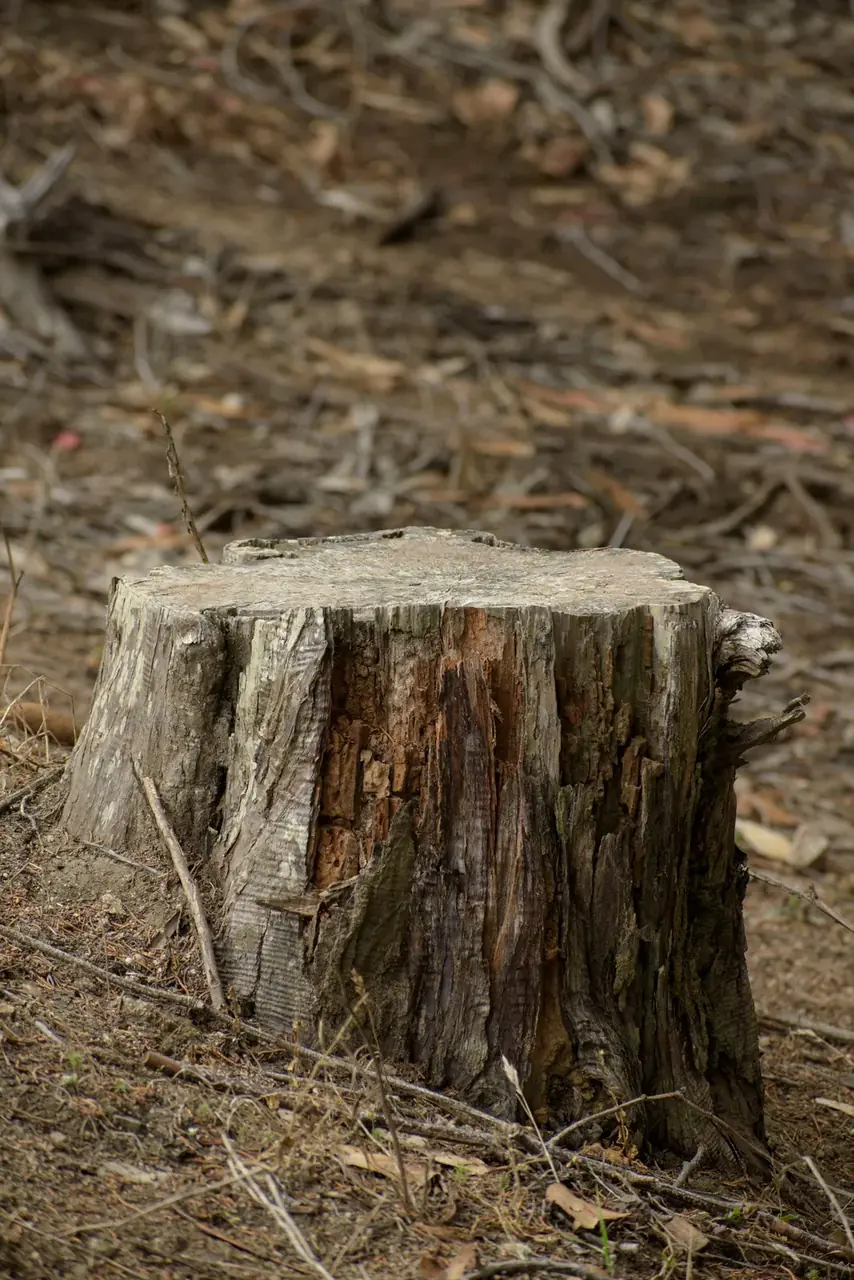
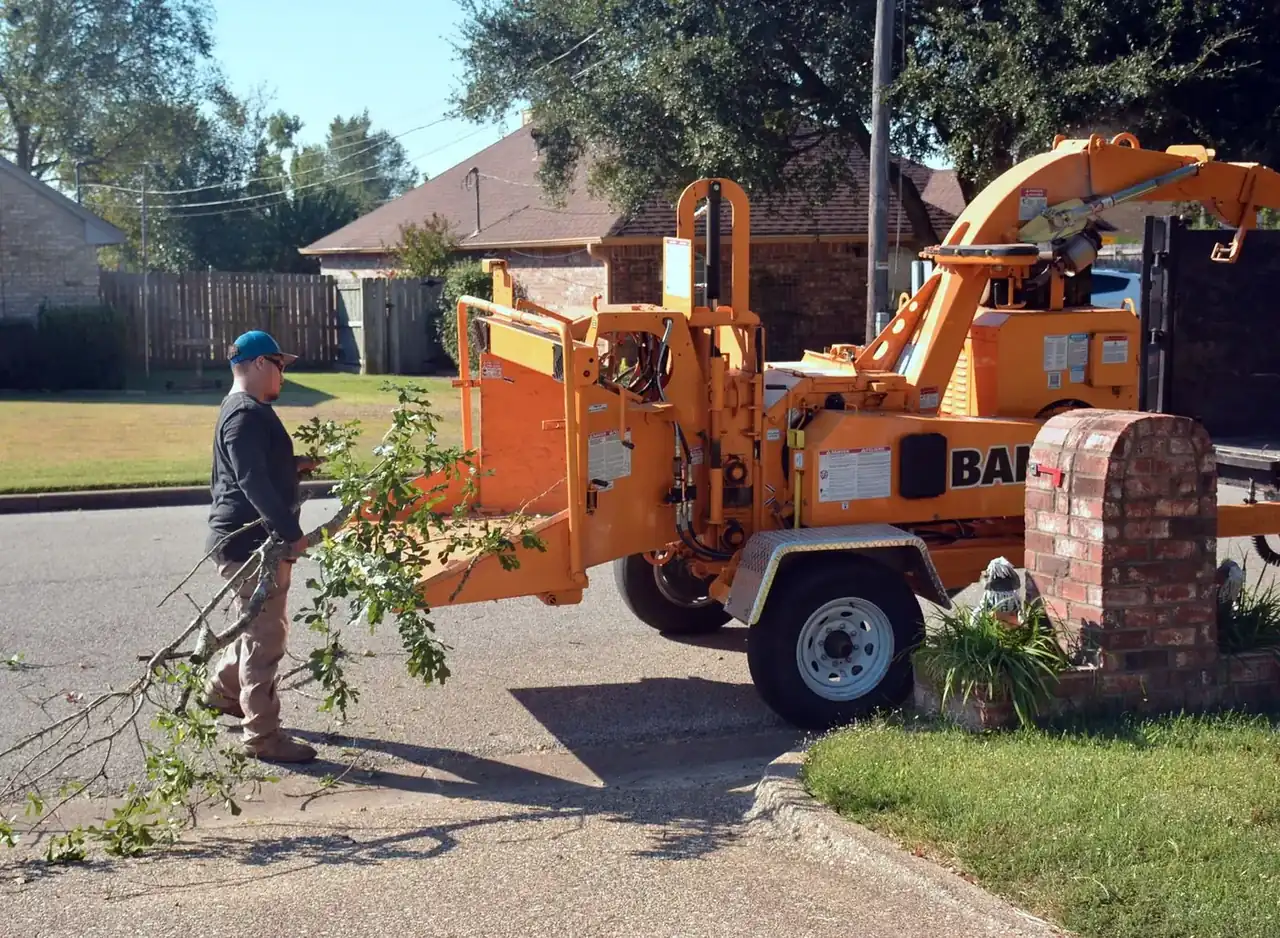
Tree Risk Assessment in progress
Representative of the work. Real job photography replaces these as the crews document jobs.
What this costs and how long it takes
$100 to $250 for an inspection, $150 to $450 for a written single-tree report, $300 to $700 for a multi-tree report
HomeGuide national ranges. No Kansas-specific consultation fees are published anywhere. Many companies, ours included, credit the inspection fee back when the work is booked.
These are published cost ranges for Kansas and national industry averages, not a quote. Every tree is different, and the only way to know what yours costs is a free on-site look.
What moves it up or down
- Hard access or a tight spaceadds 25 to 50 percent
- Several trees on one visitsaves 10 to 25 percent per tree
- Peak season, summer into falladds 10 to 20 percent
- A crane is requiredadds $500 or more
- Same-day emergencyup to two or three times standard rate
- Permit, where one is needed$60 to $450
Tree Risk Assessment questions
How do I know if my tree is dangerous?
Mushrooms or conks at the base, a vertical crack in the trunk, soil heaving on one side, a new lean, and bare limbs in the middle of July are the signals worth acting on. None of them is proof by itself. Two of them on the same tree is worth an inspection this month rather than next spring.
Will you just tell me to remove it?
No, and the fee exists so that answer is not attached to a sale. A good share of assessments end in a cable, a crown reduction, a deadwooding pass, or a note to look at it again in two growing seasons. Removal is one option on the list, not the default.
Do I need to be home for the assessment?
No. It helps if you can tell us what changed and when, since a lean that showed up after a storm last June is a different finding from one the tree has had for twenty years. Otherwise we walk it, photograph it, and send the report.
How long does the report take to reach me?
A single tree report goes out within a few days of the visit. A full property inventory takes longer because every tree gets its own entry and its own photographs. We give you the turnaround when we schedule.
Can I use the report for an insurance claim?
Yes, and adjusters generally want exactly this: dated photographs, a description of the defect, and a professional opinion on likelihood of failure. A report written before a failure is more useful than one written after, because it documents that the condition was known and being managed.
My neighbor's tree hangs over my house. Can you assess that one?
We can assess it from your side of the line and document what is visible, and that document is what you give your neighbor. We cannot go onto their property or work on their tree without their agreement. Property line tree questions get tense fast, and a written professional opinion tends to shorten the argument.
How often should mature trees be reassessed?
Every two to three years for a mature tree standing over something that matters, and after any significant wind or ice event. Trees with known defects we are monitoring, like a cabled union, get looked at on a three to five year cycle for the hardware itself.
Is this the same thing as a free estimate?
No. A free estimate prices work you have already decided to do. An assessment determines whether work is needed at all, in writing, with photographs and reasoning behind it. Different product, different purpose.
Request a free estimate
Free, no obligation. We call back within 15 minutes.
Got it.
We call back within 15 minutes during business hours.
That did not send. Call and we will take it down over the phone.
(785) 550-0100Coverage
Lawrence, Topeka, and everything between
We run out of Lawrence and cover 14 towns across 5 counties. If your town is not pinned, call anyway. We are usually closer than you think.
- Home base
- Lawrence, KS
- Storm calls
- 24 / 7
Often booked together
Arborist Consultation
Time with a certified arborist to diagnose a problem or plan work on your trees.
Cabling and Bracing
Steel hardware that supports a weak union or a heavy limb, so a tree worth keeping can stay.
Deadwooding
Removing dead limbs from an otherwise healthy tree before they come down on their own.
More in Plant Health Care
- Arborist Consultation
- Emerald Ash Borer Treatment
- Pine Wilt Treatment
- Insect and Disease Control
- Tree Fertilization and Deep Root Feeding
- Oak Wilt Treatment