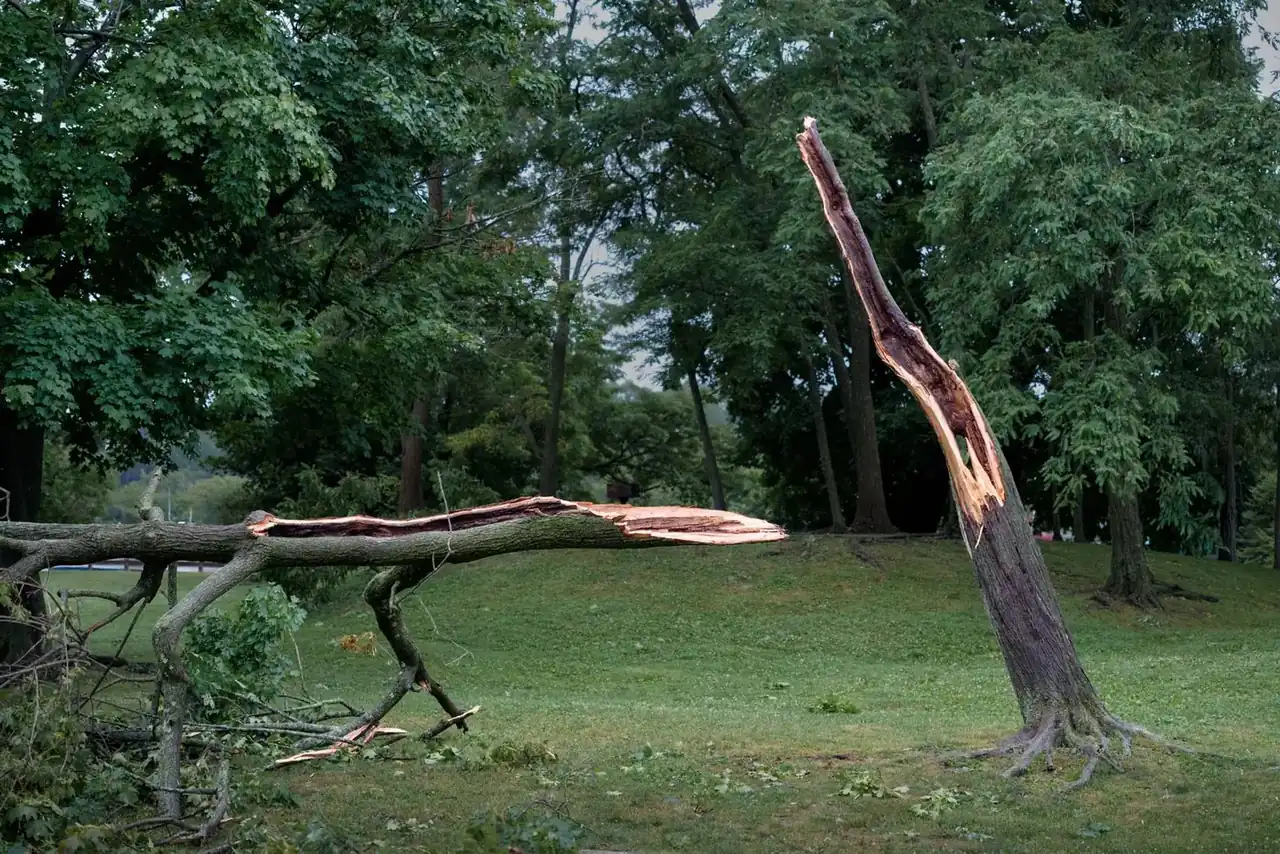
Answered 24 hours a day
Emergency Tree Removal in Lawrence and Topeka
A tree is on the house, across the drive, or leaning on a line. Call, do not fill out a form.
- Phone
- Answered 24/7
- Evergy outage line
- 800-544-4857
- Emergency premium
- About 50% over scheduled
- Price
- Quoted before dispatch
What this is
Emergency work runs in a different order than scheduled work. The first job is making the property safe, which sometimes means cutting a tree off a roof at two in the morning and tarping the hole, and leaving the rest of the cleanup for daylight. We will tell you on the phone whether this is something to handle now or something that can wait until Monday, and we will tell you honestly, because a crew called out at night costs more than one called out on Tuesday.
What the job includes
- Answered 24 hours a day, including holidays
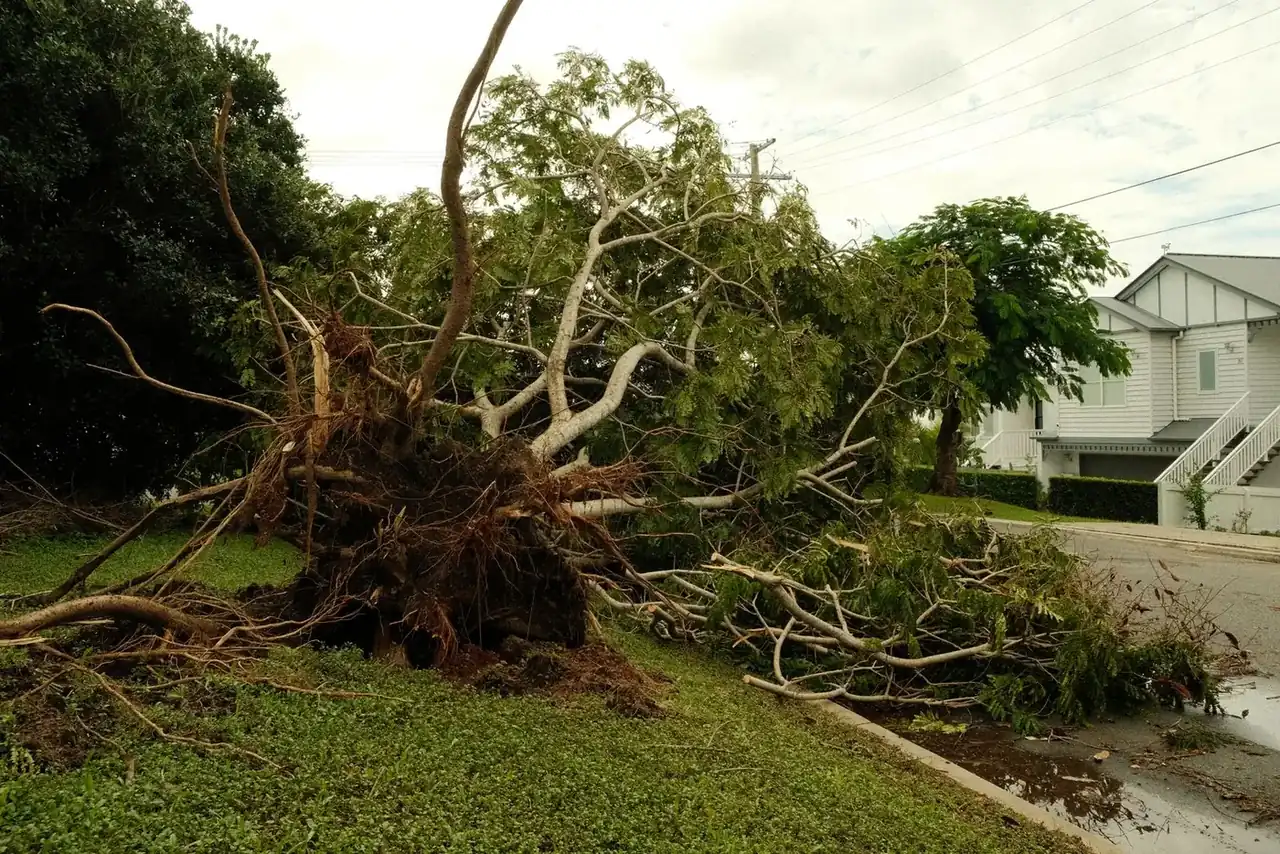
- Trees off roofs, vehicles, driveways, and fences
- Emergency tarping so the next rain does not make the damage worse
- Documentation and photographs for your insurance claim
- Full cleanup scheduled once the property is safe
The First Ten Minutes, In Order
A tree on the house is a people problem first, a utility problem second, a paperwork problem third, and a chainsaw problem last. Work the list below in that order. The whole thing takes about ten minutes and it protects both the people in the building and the insurance claim you are about to open.
Nothing on this list asks you to touch the tree. Do not climb up to look at the roof. Do not pull a limb off the car. Do not run a saw at night on wood that is holding weight. A trunk lying across a house is under tension on one face and compression on the other at the same time, and a cut in the wrong place releases all of it in a direction nobody standing there predicted.
- 1 Get everyone out of the rooms the tree is touching and keep them out. A ceiling that is holding now can let go an hour from now as the wood settles.
- 2 Treat every wire as live, including one lying quietly in wet grass. Keep back, keep kids and pets inside, and stay off metal fencing, gutters, and standing water anywhere near a downed line.
- 3 If a line is down, tangled in the tree, or arcing, call Evergy at 800-544-4857 before you call anyone else. Evergy owns the primary lines on the poles and no tree company in Kansas is permitted to make those safe.
- 4 If you smell gas or hear hissing, get everyone out of the building and call 911 from outside. Do not flip switches on the way out.
- 5 Photograph everything before anything moves. Wide shots from the street, the tree from three or four angles, the point of contact, the interior damage, the ceiling, wet drywall, the vehicle. Shoot video as you walk the property.
- 6 Call your carrier and open the claim. Write down the claim number and the adjuster's name while you are on the phone.
- 7 Protect what you can protect from inside. Buckets under the drips, plastic over furniture, contents out of the wet room.
- 8 Then call a tree service. Tell them what the tree is resting on, whether a line is involved, and whether your driveway or only access is blocked.
What Actually Counts as an Emergency
Emergency rates exist because a crew is coming off their own time with a truck, a chipper, and work lights. That is money well spent when the situation is getting worse by the hour. It is money thrown away when the situation is stable and will be identical on Tuesday morning.
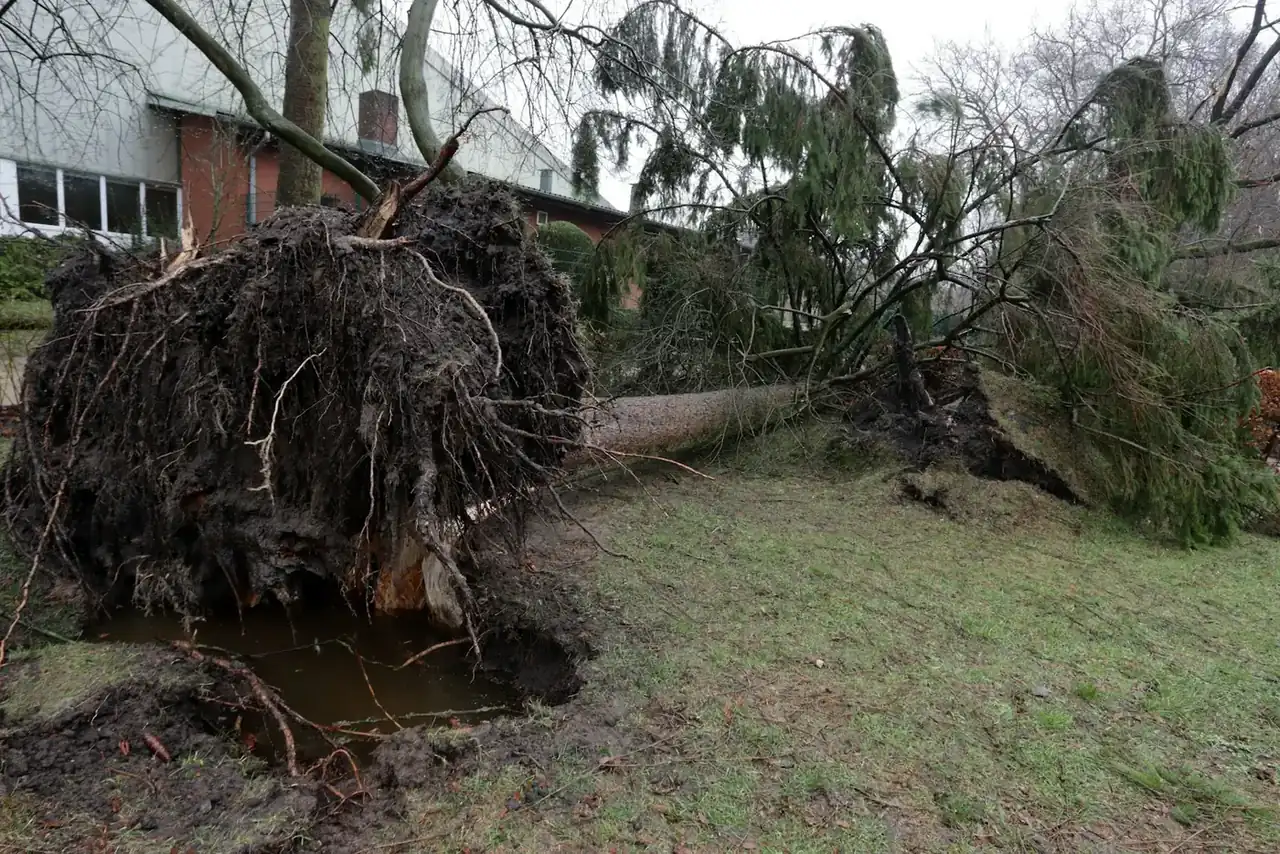
The dividing line is whether the tree is still doing damage or still capable of it. A silver maple lying across the back yard that hit nothing on the way down is stable. The same maple leaning into the service drop, or resting on a roof with rain in the forecast, is not.
When you call, we will tell you which one you have before a truck moves. If it can wait, we say so and put you on the schedule at normal rates. We would rather have the Tuesday job and your trust than the midnight job and neither.
- Tree or limb on the house, garage, or any occupied structure
- Tree on a vehicle, particularly one you need in the morning
- Anything touching or leaning into a power line, service drop included
- Driveway, street, or only access blocked
- A tree that tipped its root plate and is leaning further than it was an hour ago
- Split trunk, or a hanging limb over a walkway, patio, or where children play
- Roof opened to the sky with weather coming
What the Crew Does On Arrival
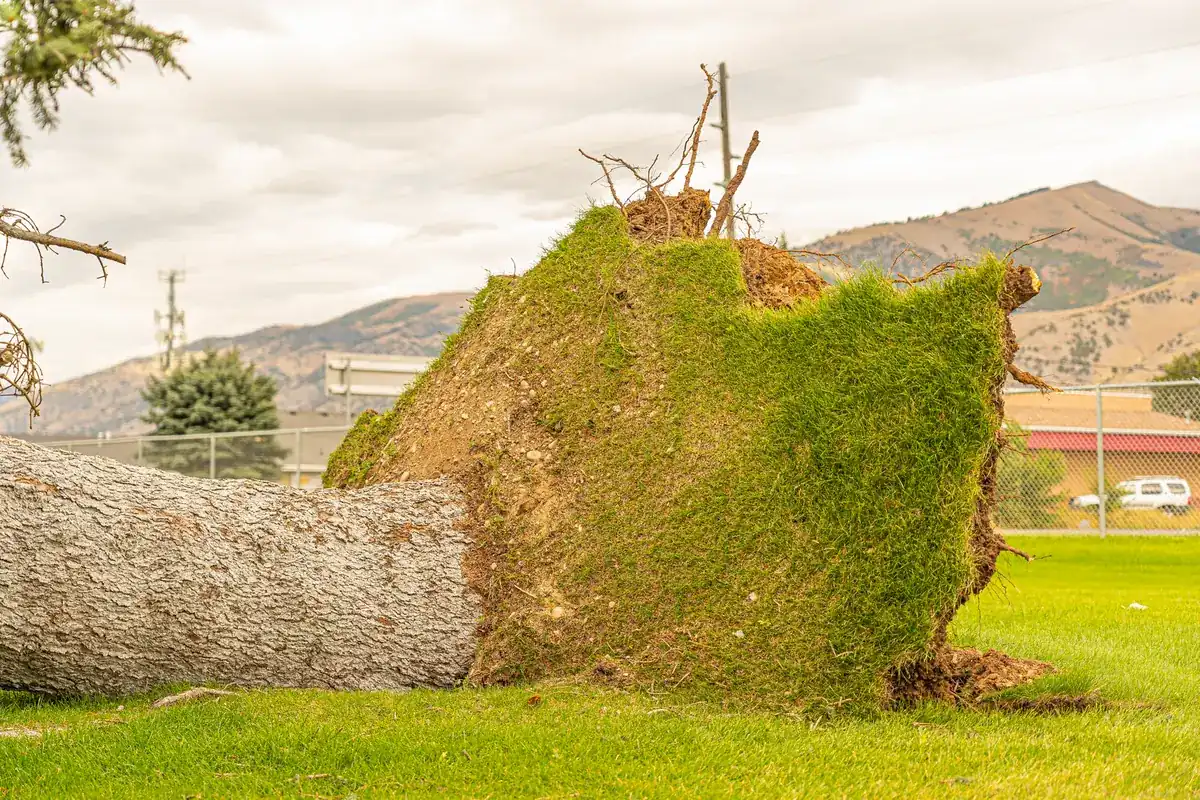
The first move is not a cut. It is a walk around the entire tree to find where the load is sitting. A trunk lying across a ridge line is a lever with your roof as the fulcrum, and the wrong cut lets the butt end swing or drops the whole weight at once. We look for that, for tension wood, for limbs pinned underneath, and for anything the tree is currently holding up that will move when the tree does not.
Night work is triage rather than a finished job. We get the tree off the structure in controlled pieces, clear the access, and tarp the opening so the next band of rain does not double the interior damage. Rounds, brush, ruts, and rake down wait for daylight, and the daylight visit is the cheaper one.
We are not roofers. A tarp buys you time until one gets there. We will say that plainly rather than let anybody believe the tarp is a repair.
- Load assessed before the first cut, including tension and compression on every limb
- Rigging set so weight comes off the structure in pieces instead of all at once
- Emergency tarping over the opening
- Photographs at every stage, sent to you for the claim file
- Cleanup and haul off finished in daylight on a scheduled return
Insurance, Told Straight
Homeowners policies generally pay to remove a tree when it has landed on a covered structure. House, detached garage, shed, and in most policies the fence. The removal is covered because the damage to the structure is covered.
A tree that falls in the open yard and hits nothing is generally not covered. That catches people out every spring in Lawrence and Topeka. The tree itself is landscaping, and the policy is insuring buildings. Some carriers carry a small debris removal allowance that applies whether or not a structure was hit, so it is worth reading your declarations page or asking the adjuster directly rather than assuming.
Whose tree it was matters less than most people expect. If the neighbor's hackberry comes across the property line onto your garage, you generally claim on your own policy. Provable negligence changes that, which is why written notice to a neighbor about a dead tree, dated, is worth sending before anything falls rather than after.
- Tree on a covered structure: removal is generally covered
- Tree down in the yard having hit nothing: generally not covered
- Tree on a vehicle: usually a claim on your auto policy rather than your homeowners policy
- Your deductible applies, so a small removal can cost less out of pocket than a filed claim
- Keep the photos, the claim number, and our written scope and invoice together in one file
What Emergency Work Costs
Emergency and storm call-outs run about fifty percent above the same job done on a schedule. That figure comes from Today's Homeowner data covering Topeka, Lawrence and Shawnee, three separate city datasets that all land in the same place, which makes it the most reliable Kansas number available on this question.
The premium is not a surcharge invented on your driveway. It is overtime labor, a truck rolling at night, and frequently a crane or a bucket on a job that would have been climbed in daylight. A tree on a structure, a tree involved with a line, or anything needing a crane can run well past that fifty percent, and national cost guides put worst case emergency removals as high as five thousand dollars.
We quote before the crew is dispatched. Nobody should learn the price while a truck is already parked in the drive at midnight.
Kansas Does Not License Tree Companies
There is no state license for tree removal in Kansas. Anyone with a saw and a pickup can print a card, and after a wind or ice event across Douglas and Shawnee counties, plenty of them do. Trucks appear in Lawrence and Topeka neighborhoods the morning after a storm, frequently from out of state, and are gone by the weekend.
Certification and proof of insurance are the only real filters a homeowner has. Ask for a certificate of liability insurance and workers compensation sent directly from the carrier with your address on it. If an uninsured groundman is hurt in your yard, that becomes a claim against you.
Do not pay cash up front for storm work, and do not sign anything with a blank scope. Get the price in writing before the saw starts, even at two in the morning.
- Certificate of liability insurance issued by the carrier, not a photocopy handed over at the door
- Workers compensation covering every person who sets foot on your property
- ISA or Kansas Arborists Association certification
- Written scope and price before work starts
- A local address and a phone number that will still be answered next month
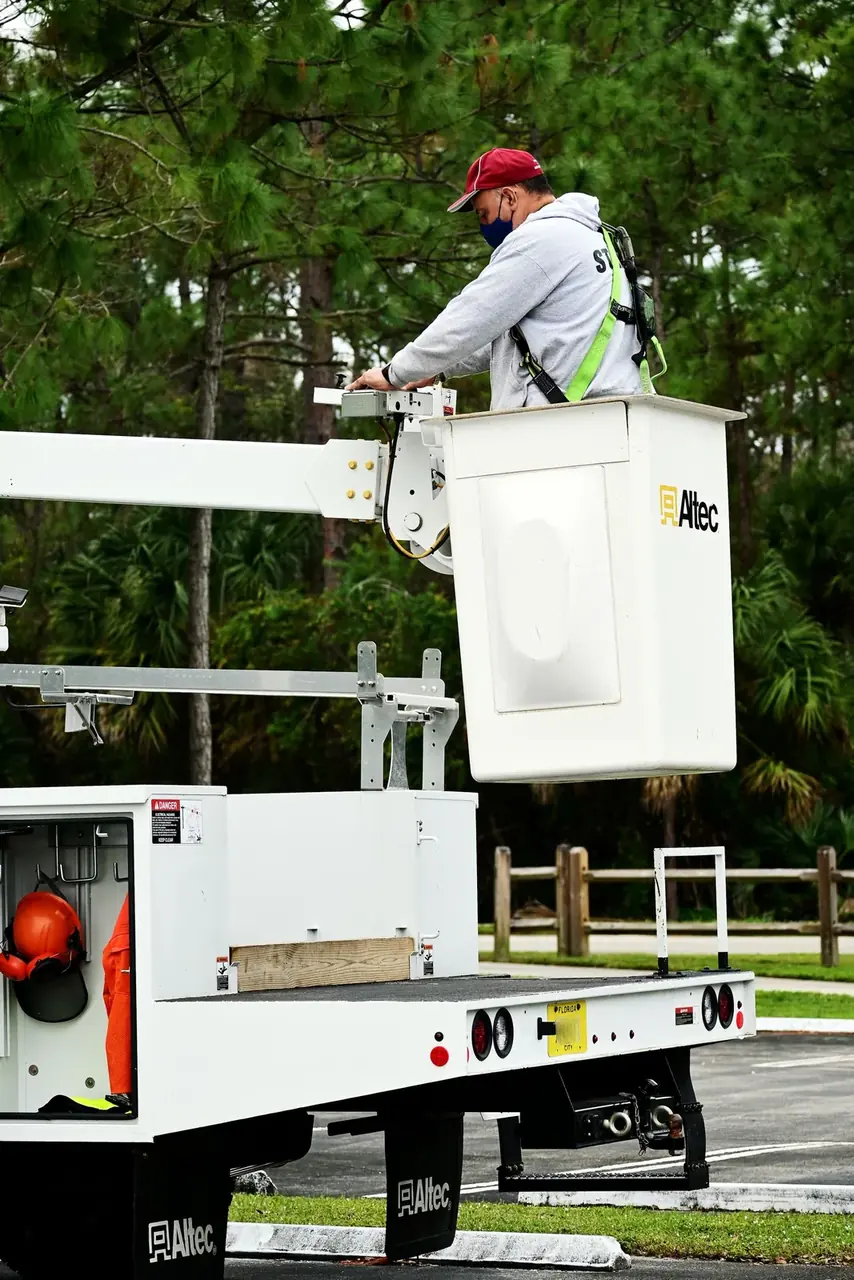
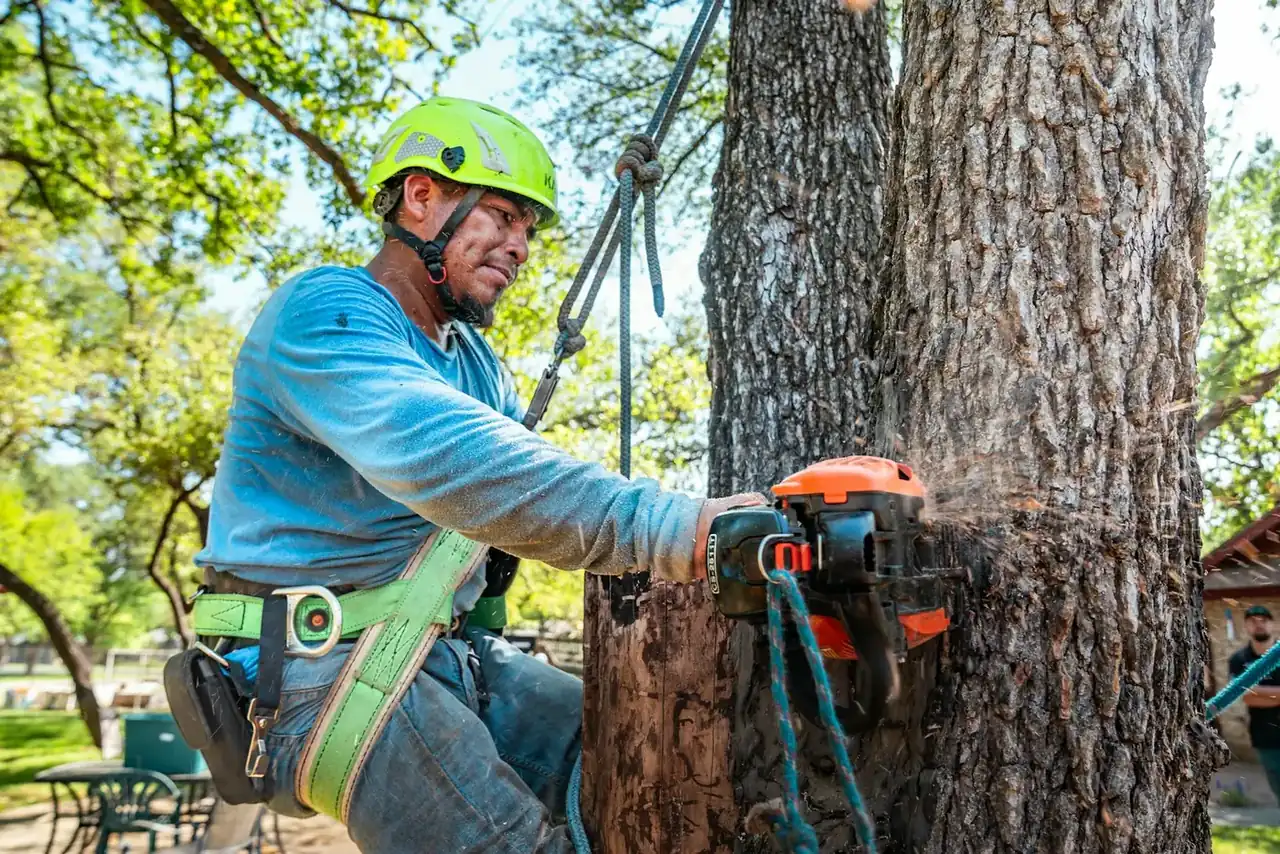
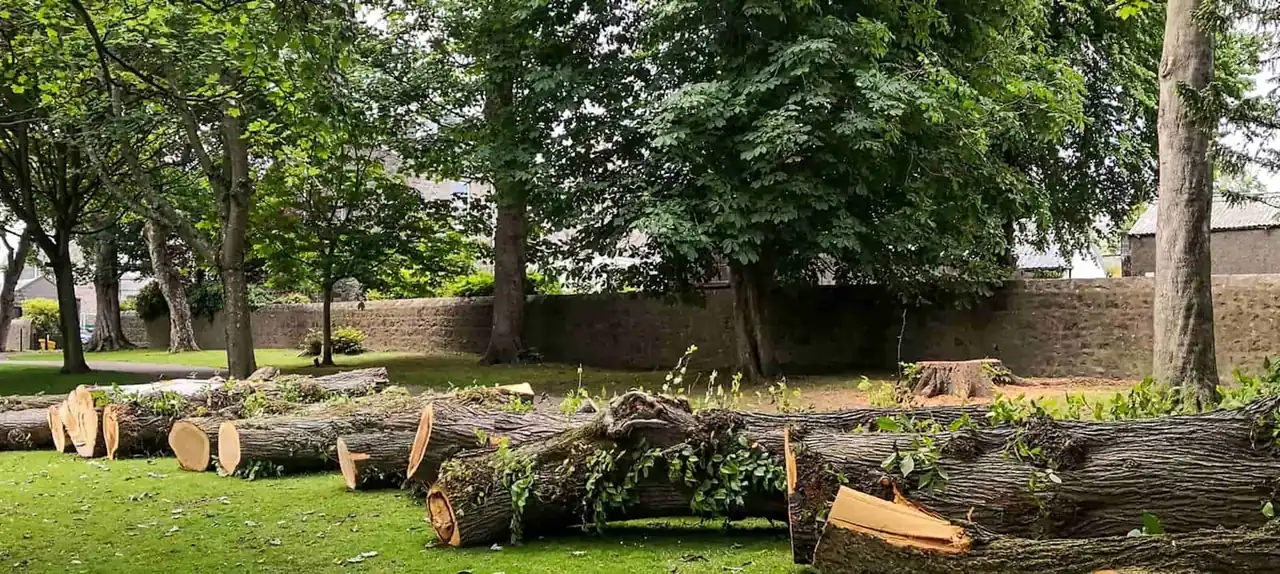
Emergency Tree Removal in progress
Representative of the work. Real job photography replaces these as the crews document jobs.
What this costs and how long it takes
Emergency and storm call-outs typically run about 50 percent above the same removal scheduled
Today's Homeowner city data for Topeka, Lawrence and Shawnee all land near a 50 percent premium. A tree on a structure or a power line, or one needing a crane, goes well beyond that.
These are published cost ranges for Kansas and national industry averages, not a quote. Every tree is different, and the only way to know what yours costs is a free on-site look.
Timing
- Call and a person answers. We tell you on the phone whether it is a now job or a Monday job.
What moves it up or down
- Hard access or a tight spaceadds 25 to 50 percent
- Several trees on one visitsaves 10 to 25 percent per tree
- Peak season, summer into falladds 10 to 20 percent
- A crane is requiredadds $500 or more
- Same-day emergencyup to two or three times standard rate
- Permit, where one is needed$60 to $450
Emergency call-outs are quoted before the crew is dispatched, so nobody arrives at a surprise price.
Emergency Tree Removal questions
A tree just came down on my house. What is the very first thing I should do?
Get everyone out of the rooms the tree is touching. Then look for wires, and assume any wire you see is live. If a line is involved, call Evergy at 800-544-4857. Then photograph everything before anything moves, open your claim, and call us. In that order.
Should I call insurance or the tree service first?
Photograph first, then either. Most people call the carrier first because the claim number makes the rest of the paperwork easier, and because some carriers want to send an adjuster before major work begins. If the tree is actively making the damage worse, call us at the same time and we will document as we go.
Will my homeowners policy pay for the removal?
Generally yes when the tree hit a covered structure, and generally no when it fell in the yard and hit nothing. Policies differ, and some include a modest debris removal allowance either way. We photograph before, during, and after, and we write the scope in plain language, which is what adjusters ask for.
Can you actually get here tonight?
A person answers the phone and makes the dispatch call on that call. On a normal night we roll. After a regional wind or ice event, every crew in the county is committed within hours and we triage by hazard, so we will give you a real position in the queue instead of a hopeful one.
There is a power line in the tree. Can you still work?
The service drop running from the pole to your house we can generally handle. The primary lines on the poles belong to Evergy and have to be de-energized or covered by their crews before anyone works near them. We will tell you which of the two you have, and if it is theirs, we make that call and wait.
Is it cheaper to wait until morning?
Almost always, and often by a lot, since emergency and storm call-outs run roughly fifty percent above scheduled work according to Today's Homeowner data for Topeka, Lawrence and Shawnee. The exception is an open roof with rain coming, where a night tarp costs less than the drywall, insulation, and flooring you lose by waiting.
Do you tarp the roof?
Yes, to keep water out until a roofer takes over. It is a stopgap and we describe it that way to you and on the invoice. We do not do roof repair and we will not pretend otherwise.
The tree came off my neighbor's property. Do they pay?
Usually not. Where a tree lands is generally what decides which policy responds, so a neighbor's tree on your garage is generally your claim. It changes if the tree was obviously dead and the owner had been told in writing and did nothing. That is why a dated letter about a dead tree is worth sending before a storm rather than after.
Someone knocked on my door after the storm offering to clear my tree for cash. Should I use them?
Kansas has no state licensing requirement for tree removal companies, so a business card proves nothing. Ask for a certificate of liability insurance and workers compensation sent from the carrier, ask for the price in writing before any cutting, and do not pay in full up front. Companies that show up after an ice storm and cannot produce those two documents are the reason this paragraph exists.
Request a free estimate
Free, no obligation. We call back within 15 minutes.
Got it.
We call back within 15 minutes during business hours.
That did not send. Call and we will take it down over the phone.
(785) 550-0100Coverage
Lawrence, Topeka, and everything between
We run out of Lawrence and cover 14 towns across 5 counties. If your town is not pinned, call anyway. We are usually closer than you think.
- Home base
- Lawrence, KS
- Storm calls
- 24 / 7
Often booked together
Storm Damage Cleanup
After a wind or ice event: hangers out of the canopy, broken limbs down, property cleared.
Fallen Tree Removal
A tree already down, cut up and hauled off, including off structures and vehicles.
24 Hour Tree Service
A person answers the phone at any hour, every day of the year.