Tree Care
Tree Trimming in Lawrence and Topeka
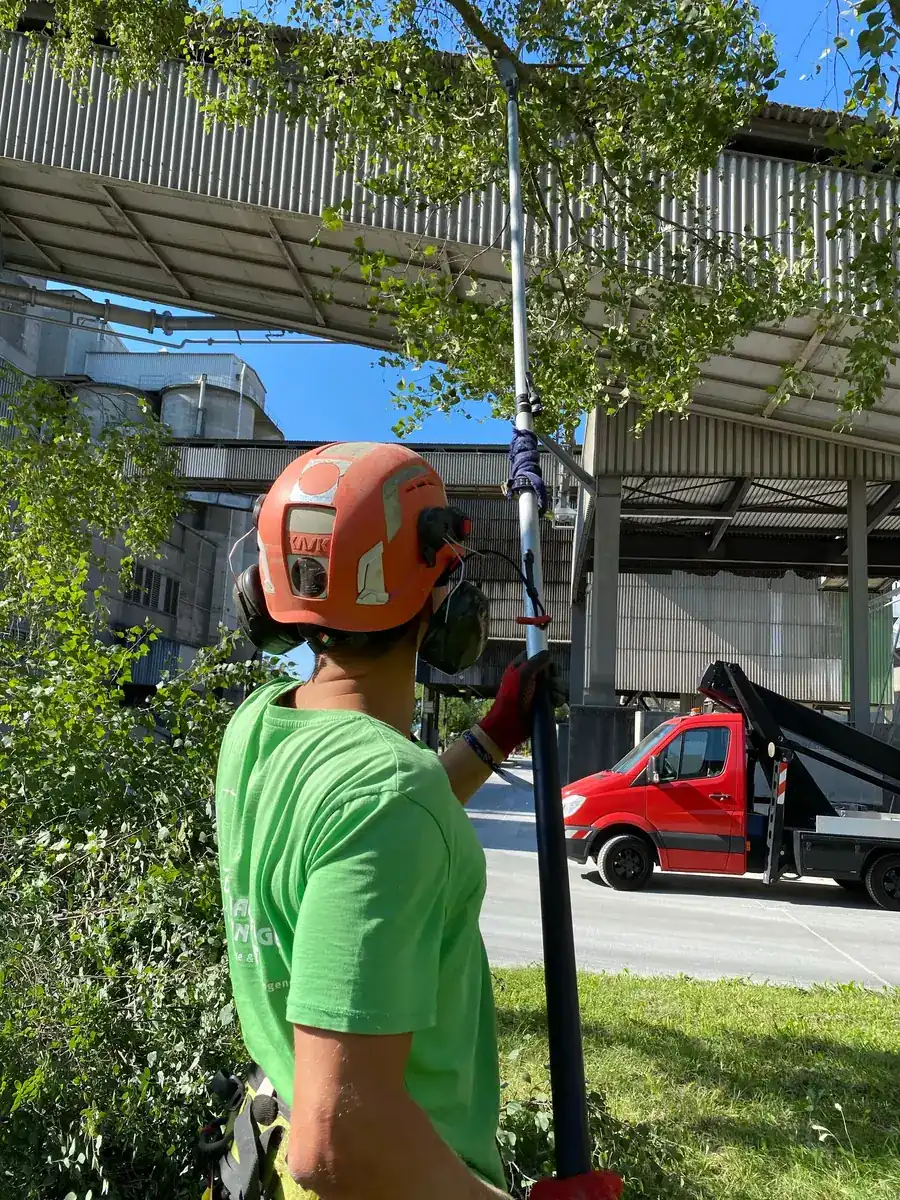
Clearing limbs off roofs, driveways, and power drops, and thinning canopies before storm season.
- Best season
- Late winter, January to early March
- Oak window
- Never April through July
- How often
- Every 3 to 5 years on mature trees
- Max in one season
- About a quarter of live canopy
What this is
Trimming in northeast Kansas is mostly storm prevention. Silver maple and Siberian elm, the two species planted everywhere in Topeka after the war, both grow fast and both form weak branch unions that split in a straight-line wind. Thinning the canopy lets wind pass through instead of pushing the whole crown like a sail. The work is worth doing in late winter, before the spring storms and before the tree leafs out.
What the job includes
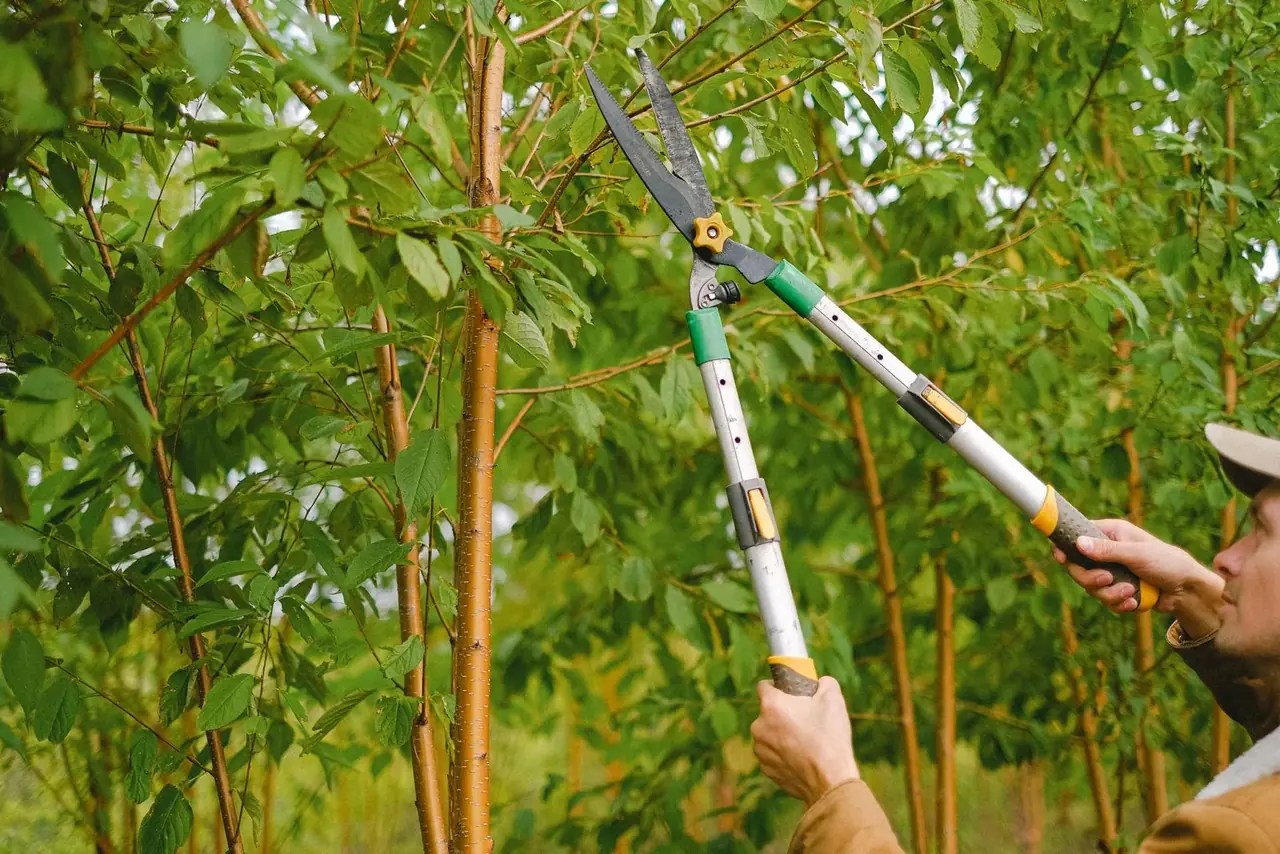
- Roof and structure clearance, usually 6 to 10 feet depending on the species
- Crown thinning so wind moves through the canopy instead of against it
- Clearance over driveways, sidewalks, and the service drop to the house
- Cuts made at the branch collar so the wound closes properly
- Brush chipped on site and hauled
Trimming here is mostly wind management
Straight line winds are the failure mode in Douglas and Shawnee counties, more than ice and more than snow load, though we get both. A dense canopy on a silver maple acts like a sail. The wind cannot pass through it, so the whole crown loads up and the force ends at the weakest branch union, which on a silver maple or a Siberian elm is usually a co-dominant fork with bark trapped inside it. Thinning that canopy lets air move through instead of pushing against it, and it takes weight off the ends of the longest limbs at the same time.
The species list matters. Silver maple reaches 70 to 80 feet in Kansas with a 50 to 60 foot crown spread according to Kansas Forest Service, and it does that fast, on wet bottomland soil, with weak wood. Siberian elm was planted as a quick shade tree and holds even less. Hackberry and honeylocust hold up better but shed deadwood constantly. Bur oak holds up best of anything here and asks for the least.
Trimming does not make a tree safe. It reduces specific loads at specific points. A trimmed silver maple in an 80 mile an hour gust can still lose a limb, it is just far less likely to lose the whole top.
- Crown thinning to let wind pass through rather than push the canopy
- End weight reduced on long horizontal limbs that lever against the union
- Clearance cut back from roofs, gutters, chimneys, and the service drop
- Deadwood taken out at the same visit, since the crew is already in the tree
The calendar, which matters more than most people think
Late winter, roughly January through early March, is the right window for most hardwoods here. The tree is dormant, the structure is fully visible without leaves, the cuts have all of spring to close, and the ground is firm enough to take a bucket truck without leaving ruts across the lawn. It is also the cheapest window, because HomeGuide puts peak summer and fall demand at 10 to 20 percent above the off season.
Oaks are the exception you plan around. Do not prune oaks from April through July. Sap beetles are drawn to fresh wounds during that window and they are how oak wilt gets into a new tree, and once one oak in a group has it the fungus moves underground through grafted roots to the oaks standing next to it. Pin oak and northern red oak can die in a single season. If a storm forces an emergency cut on an oak in June, the wound gets sealed, which is the one case where wound paint is genuinely recommended.
American elm has its own timing problem with Dutch elm disease and the bark beetles that carry it, so elm also comes out of the summer window. Everything else, the maples, the hackberries, the honeylocusts, the hickories, is straightforward dormant season work.
How a trimming visit runs
A trimming job has more decisions in it than a removal and fewer moving parts. Most of the value is in which cuts get made, not in how fast they get made.
One crew, one truck, one chipper is the standard setup. Multiple trees on the same visit is where the money is, since HomeGuide puts the per tree saving at 10 to 25 percent when several trees are done together.
- 1 We walk the trees with you and agree on the objective in plain words, whether that is roof clearance, storm risk, light to the lawn, or deadwood.
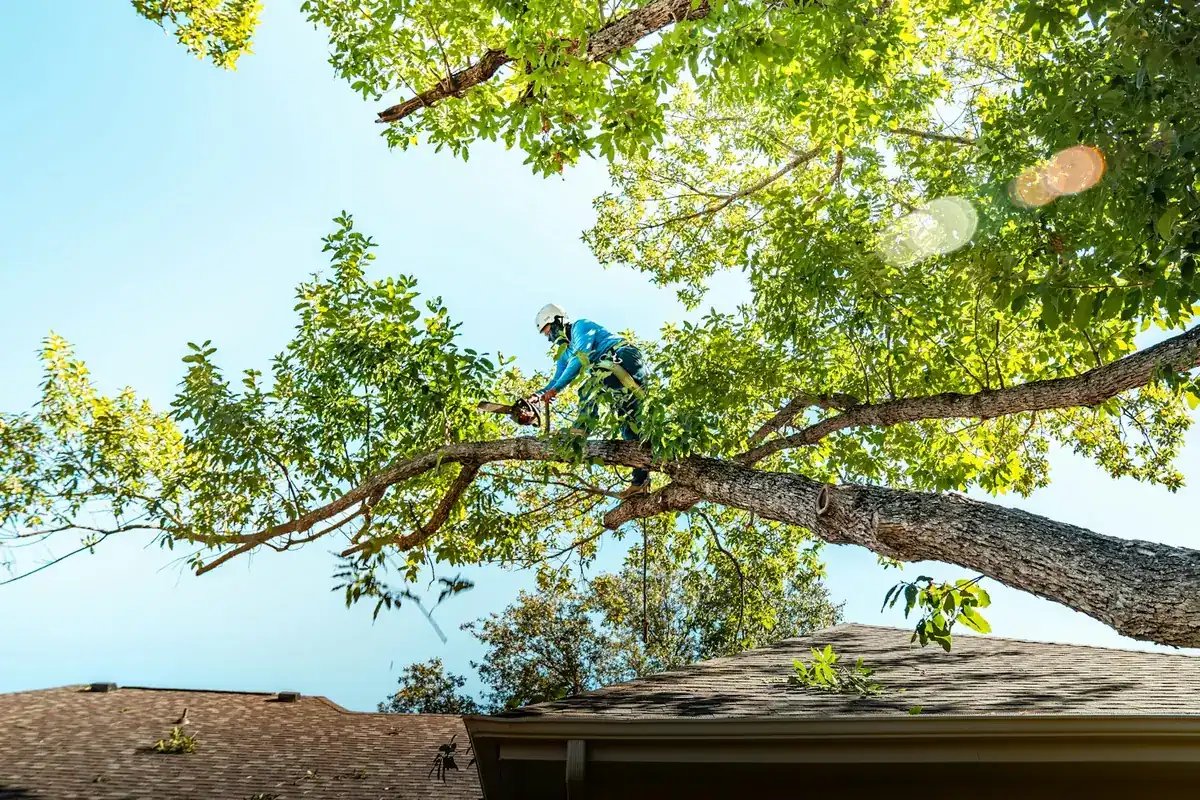
- 2 The climber sets a line and works the canopy from the top down, which is the only way to see what is actually up there.
- 3 Every cut lands just outside the branch collar, the swollen ring where the limb meets the trunk. That ring contains the tissue the tree uses to seal the wound, and cutting through it leaves a hole that never closes.
- 4 Live canopy removal stays under about a quarter in a single season. Past that the tree responds by throwing water sprouts, which grow fast, attach weakly, and leave you worse off in three years.
- 5 Brush feeds into the chipper as it comes down rather than piling up, so the yard is never fully covered.
- 6 The crew blows down the lawn, the drive, and the gutters if we worked over them, and walks the site with you before loading up.
What trimming costs, and why the minimum fee exists
HomeGuide's per tree bands are the most realistic published figures because they reflect actual invoices rather than bare labor. A small tree under 30 feet runs roughly $250 to $700. A medium tree in the 30 to 60 foot range, which is where most Lawrence and Topeka trees sit, runs roughly $600 to $1,200. Anything over 60 feet runs $1,000 to $2,500 and up.
Kansas hourly data exists and is worth knowing. ProMatcher's Kansas contractor reports put a two man crew at $128.66 per hour for trimming and pruning, with a tight range of $115 to $142. That figure carries a 2018 date on the source page, so treat it as a floor rather than a current rate, but it tells you the shape of the market.
HomeGuide also publishes something most companies do not put in writing, a minimum job fee of $100 to $300. A truck, a chipper, a climber, and a groundman cost the same to roll out for one branch as for a full day. If you have one small limb over a driveway, wait until you have three things that need doing, or find a neighbor doing tree work the same week.
- HomeGuide recommends most mature trees get professional trimming every 3 to 5 years
- Several trees on one visit cuts the per tree price 10 to 25 percent
- Angi puts hard access at 25 to 50 percent above an open yard job
- Brush chipping and haul off are included in our price, which is not universal in this market
Topping, and why we will not do it
Topping means cutting limbs off at an arbitrary point in the middle of the wood, leaving stubs. The tree cannot seal a stub because there is no branch collar there, so the cut end decays inward while the tree pushes a dense flush of sprouts just below it. Those sprouts attach to the outer bark rather than into the wood, and in five to ten years you have a heavier, taller, more poorly attached canopy than the one you paid to remove.
HomeGuide is direct about it in its arborist cost guide, telling homeowners not to hire anyone who tops trees because topping severely weakens trees and can kill them. It prices topping at $150 to $500 against $250 to $1,300 for a proper crown reduction, which explains why the cheap bid after a storm is so often a topping bid.
If a tree is genuinely too tall for its spot, crown reduction gets real height off it by cutting back to a lateral branch big enough to take over as the new leader. It costs more, it takes longer, and the tree survives it.
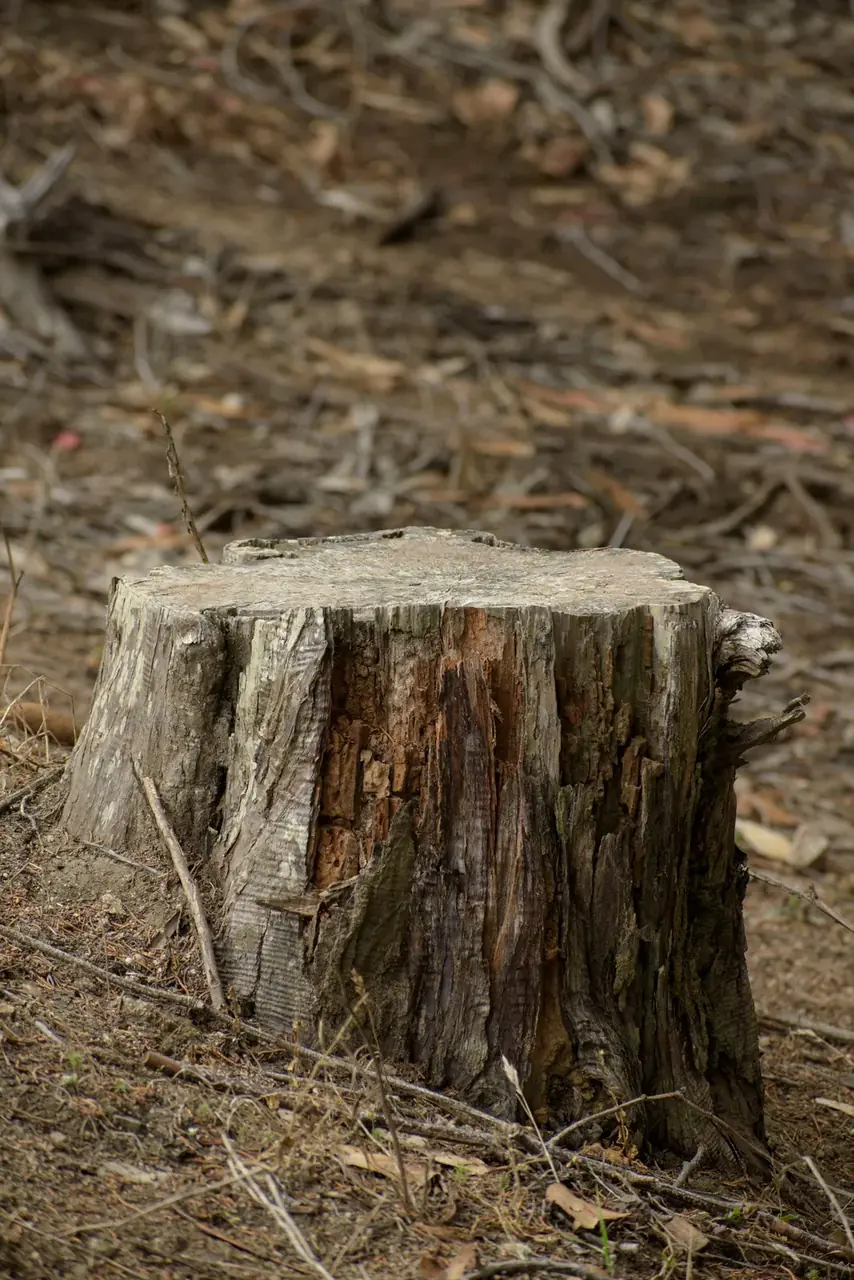
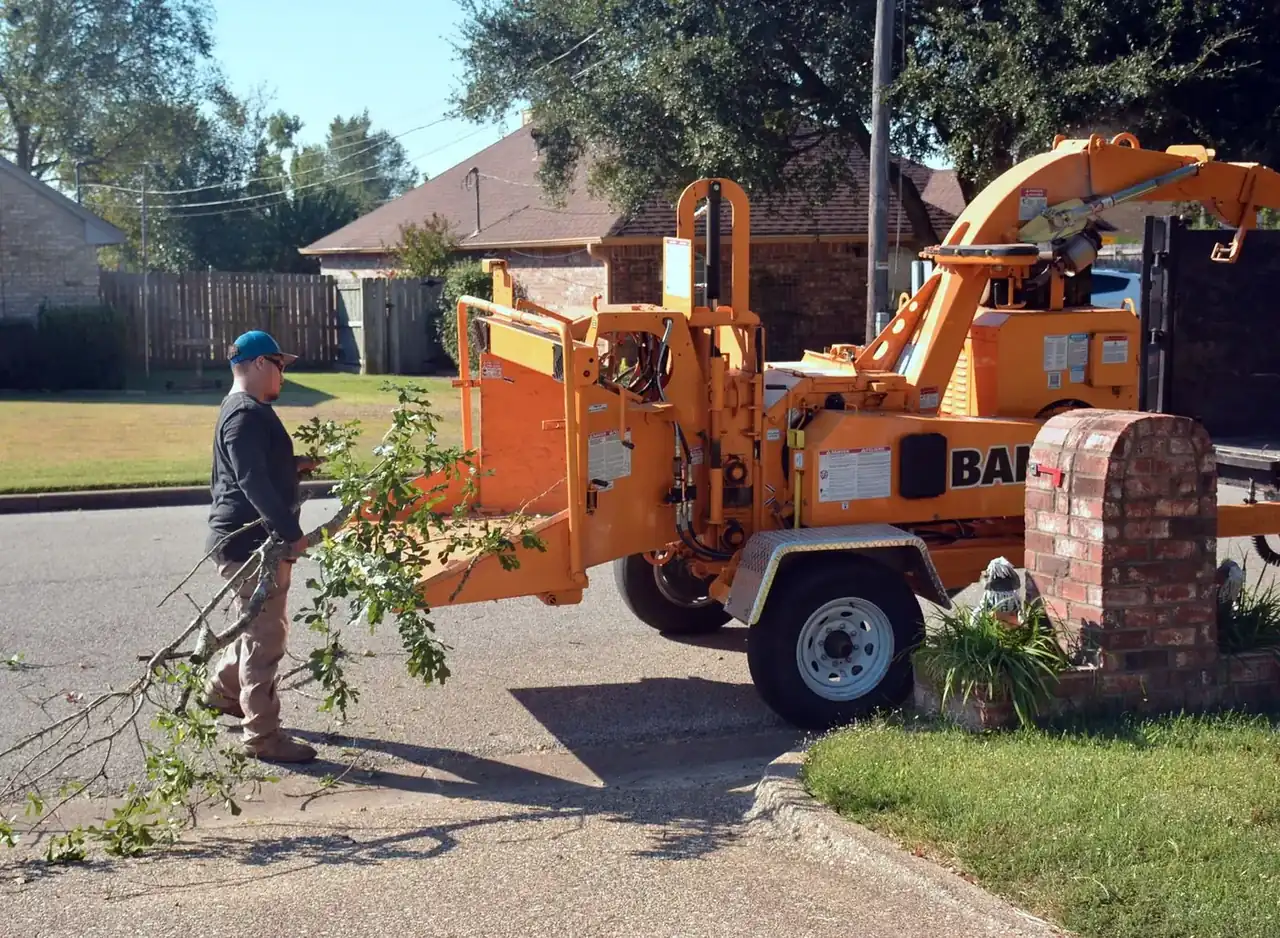
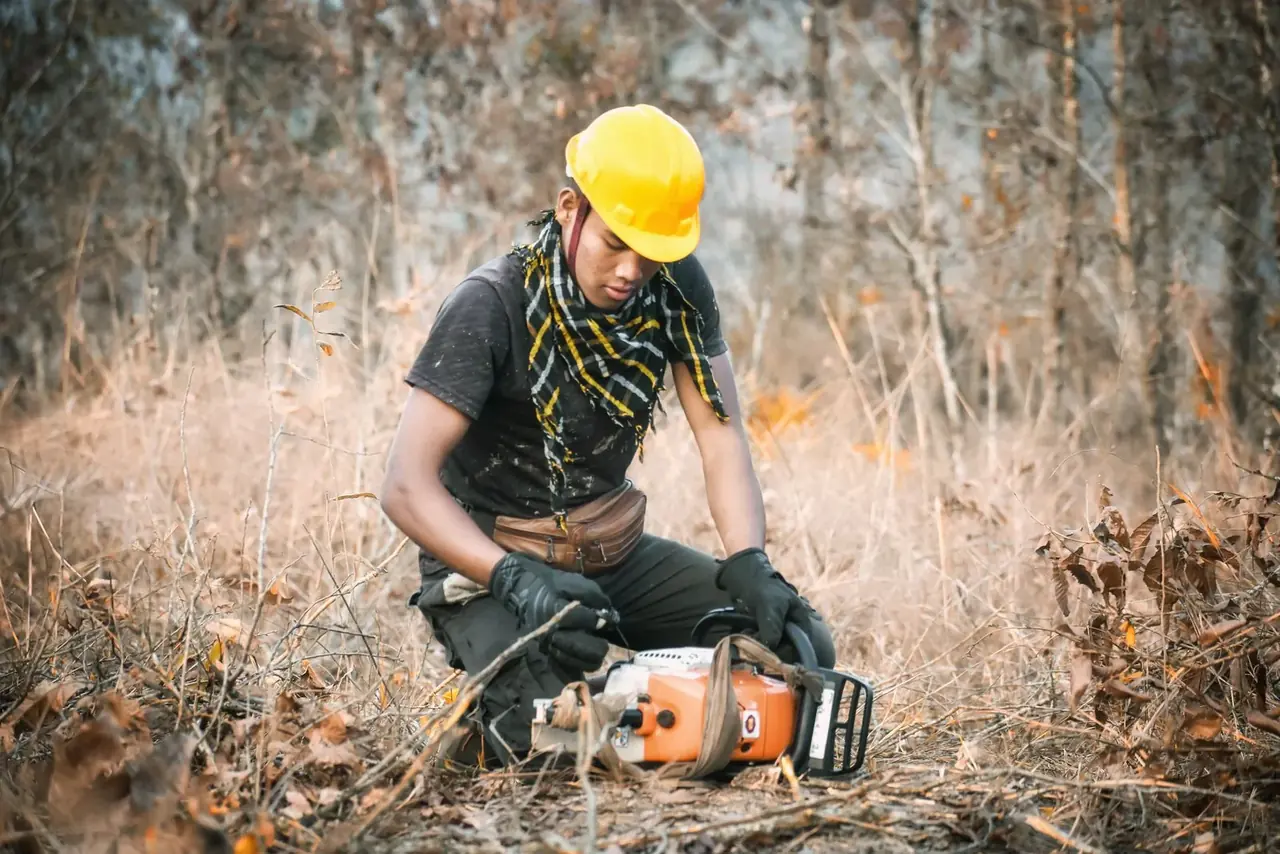
Tree Trimming in progress
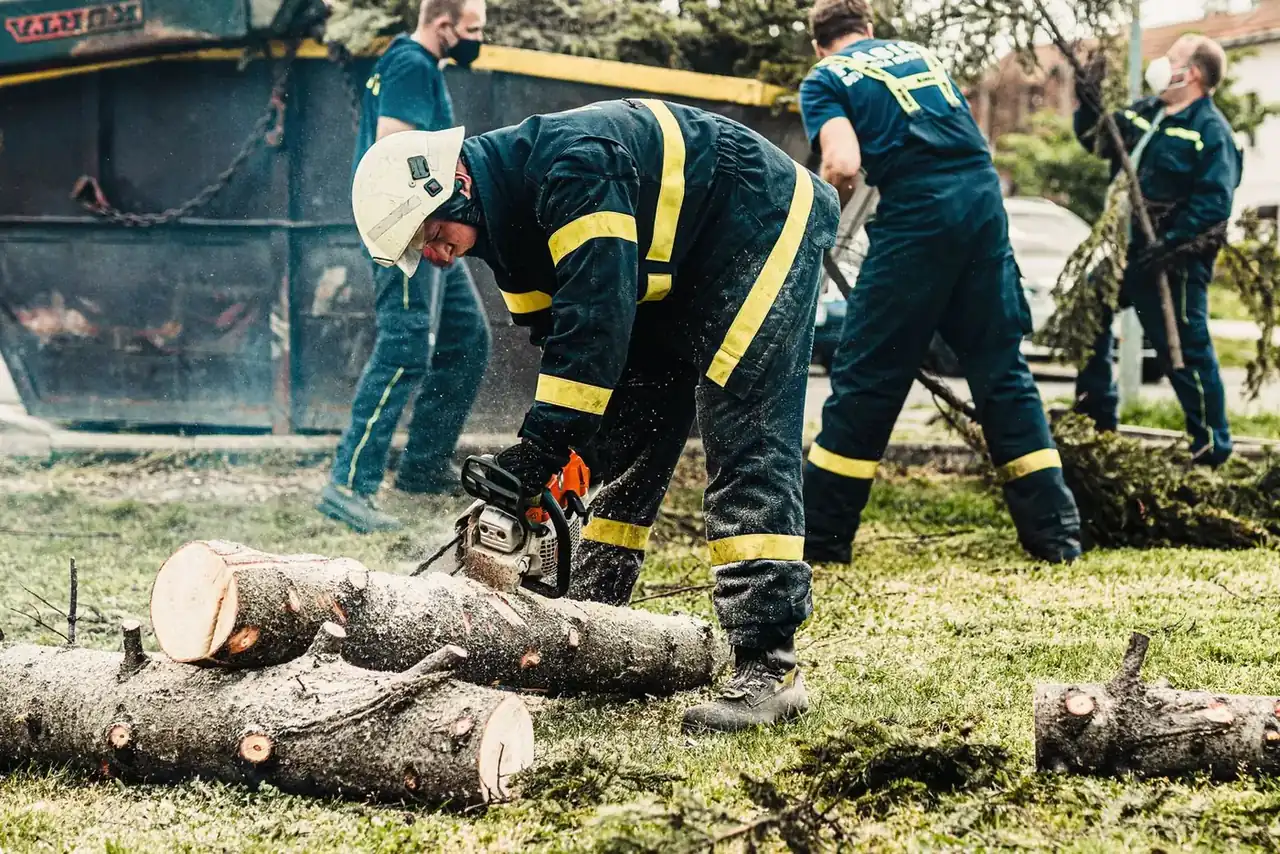
Representative of the work. Real job photography replaces these as the crews document jobs.
What this costs and how long it takes
Roughly $250 to $700 for a small tree, $600 to $1,200 for a medium one, and $1,000 to $2,500 for anything over 60 feet
HomeGuide published ranges. Like most companies we have a minimum service charge of a couple hundred dollars, because a crew and a chipper cannot roll out for one branch.
These are published cost ranges for Kansas and national industry averages, not a quote. Every tree is different, and the only way to know what yours costs is a free on-site look.
What moves the price
- Tree height and how much of the canopy is being worked
- Whether the crew can work from a bucket truck or has to climb
- How much brush comes out and how far it has to be carried to the chipper
- Number of trees, since a second tree on the same visit costs less than a separate trip
Included
- All cutting
- Brush chipped and hauled
- Cleanup of the work area
What moves it up or down
- Hard access or a tight spaceadds 25 to 50 percent
- Several trees on one visitsaves 10 to 25 percent per tree
- Peak season, summer into falladds 10 to 20 percent
- A crane is requiredadds $500 or more
- Same-day emergencyup to two or three times standard rate
- Permit, where one is needed$60 to $450
Free on site estimate. You do not need to be home.
Tree Trimming questions
What is the average price to have a tree taken down?
The published averages contradict each other badly. Fixr says $435, This Old House says $906, and Angi says $750. The size bands are the useful part and they agree closely. Under 30 feet is roughly $200 to $500, 30 to 60 feet is roughly $450 to $1,200, 60 to 80 feet is roughly $800 to $1,500, and over 80 feet starts around $1,000. Before you price a removal, get the tree looked at. Plenty of trees homeowners assume are done can be trimmed or reduced for less than a removal costs.
How much does it cost to remove a tree in Kansas?
Today's Homeowner puts the average removal at $472 in Lawrence and $527 in Topeka. Wellnitz Tree Care, a certified firm working both cities, publishes prices by trunk diameter that run higher, $500 to $2,000 at 7 to 12 inches and $900 to $3,000 at 13 to 20 inches. Both figures are honest and they measure different jobs. Trimming, for comparison, runs about $250 to $700 on a small tree and $600 to $1,200 on a 30 to 60 foot tree per HomeGuide, which is why trimming a keepable tree is usually the cheaper path.
How big of a tree to charge $1000 for removal?
Roughly a 40 to 60 foot hardwood with a 15 to 20 inch trunk and access a truck can reach. That sits at the top of the $450 to $1,200 dollar medium band published by Angi and This Old House, and inside Wellnitz Tree Care's $900 to $3,000 dollar band for a 13 to 20 inch trunk. Note that a heavy trim on a very large mature tree can approach the same number. HomeGuide prices trimming on an over 60 foot tree at $1,000 to $2,500, so on the biggest trees the trim and the removal are in the same conversation.
Can seniors get trees removed for free?
There is no standing free removal program we can point you to in Douglas or Shawnee County. The situations where a removal costs the owner nothing are a right of way tree that belongs to the city, an insurance claim after a tree hit a covered structure, or volunteer work by a church or service group. Be cautious with door to door offers of free or almost free tree work, since Kansas requires no license to do this and the storm chasers know which neighborhoods to knock on. On a tight budget, a targeted trim that removes the specific hazard limb is often a few hundred dollars against a four figure removal.
What is the cheapest time of year for tree removal?
Winter. HomeGuide puts peak summer and fall pricing at 10 to 20 percent higher than the off season, and dormant season work is easier on every axis. No leaf weight, firm ground that does not rut, full visibility of the structure, and crews with open calendar space. The same window is the correct one for trimming most hardwoods here, with oaks and elms staying out of the April through July period regardless of price.
How much can you cut off without hurting the tree?
We hold to under about a quarter of the live canopy in one season, and less than that on a stressed or mature tree. Leaves are how a tree eats. Take too many and the tree responds by pushing water sprouts, which are fast, vertical, weakly attached shoots that give you a denser and more dangerous canopy within a few years. If you want a large change, it gets staged across two or three seasons.
Will trimming stop my tree from dropping limbs in a storm?
It lowers the odds, it does not remove them. Thinning reduces the sail area so wind passes through, and end weight reduction shortens the lever arm on the longest limbs. That addresses the two most common failure mechanisms here. It does nothing about a hidden decay pocket or a root plate compromised by a driveway. If the tree worries you specifically, a risk assessment is the right call before a trim.
Do you have a minimum charge?
Yes, and so does everyone else running a real crew. HomeGuide puts the industry minimum job fee at $100 to $300. Rolling a truck, a chipper, a climber, and a groundman has a fixed cost whether the job takes twenty minutes or six hours. If you only need one small thing done, group it with other work or with a neighbor's job on the same street and the economics improve for both of you.
Request a free estimate
Free, no obligation. We call back within 15 minutes.
Got it.
We call back within 15 minutes during business hours.
That did not send. Call and we will take it down over the phone.
(785) 550-0100Coverage
Lawrence, Topeka, and everything between
We run out of Lawrence and cover 14 towns across 5 counties. If your town is not pinned, call anyway. We are usually closer than you think.
- Home base
- Lawrence, KS
- Storm calls
- 24 / 7
Often booked together
Tree Pruning
Structural cuts on young and mid-age trees so they grow strong instead of needing removal later.
Crown Reduction
Bringing a tree down in height and spread without topping it, when it has outgrown its spot.
Deadwooding
Removing dead limbs from an otherwise healthy tree before they come down on their own.
More in Tree Care
- Tree Removal
- Tree Pruning
- Stump Grinding
- Stump Removal
- Crown Reduction
- Deadwooding
- Cabling and Bracing
- Tree Planting
- Shrub and Hedge Trimming
- Firewood