Tree Care
Crown Reduction in Lawrence and Topeka
Bringing a tree down in height and spread without topping it, when it has outgrown its spot.
- Max in one pass
- 15 to 20 percent of height
- Return interval
- Every 3 to 5 years
- Not suitable for
- Cedar and other conifers
- Best season
- Dormant, outside the oak window
What this is
A crown reduction shortens limbs back to a lateral branch large enough to take over as the new leader. Done right the tree keeps a natural shape and the wounds close. Done wrong, which is what topping is, you get stubs that rot and a flush of weak regrowth that is more dangerous than the original limb. Reduction takes longer and costs more than topping, and it is the only version worth paying for.
What the job includes
- Cuts made back to a lateral at least a third the diameter of the removed limb
- Height and spread reduced while the canopy keeps its natural form
- End weight taken off long horizontal limbs that are prone to failure
- A real alternative to removal on trees that are simply too large for the space
The cut that makes it a reduction instead of a topping
A reduction cut shortens a limb back to a living side branch that is at least a third the diameter of what is being removed. That side branch becomes the new terminal. It already has leaves, it already has a vascular connection to the trunk, and it takes over as the limb's growing point the same season. The tree closes the wound from the branch collar just as it would on any properly placed cut.
A topping cut goes through the middle of the wood at whatever height somebody wanted the tree to be. There is no lateral there to take over, so the tree does two things at once. The stub end has no way to compartmentalize, so decay moves down the inside of the limb. Meanwhile the tree pushes a dense flush of epicormic sprouts from dormant buds just below the cut, and those sprouts attach into the outer bark rather than into the wood underneath.
In five to ten years the topped tree is taller than it was, denser than it was, and the regrowth is anchored to bark sitting over a column of decay. That is the failure that lands on a garage in a June storm. HomeGuide's arborist guide tells homeowners outright not to hire anyone who tops trees, on the basis that topping severely weakens trees and can kill them.
- Cuts go back to a lateral at least a third the diameter of the removed portion
- The lateral becomes the new terminal and keeps the limb supplied
- The tree keeps a recognizable natural outline rather than a flat cut top
- No stubs, which means no decay column and no epicormic flush
How much you can actually take
Fifteen to 20 percent of height in one pass on a healthy, vigorous tree. That is the working limit, and on a stressed, mature, or already declining tree it is less. The constraint is leaf area. Every foot of height you remove is leaf area that was feeding the root system, and a tree that loses too much at once responds with the same sprout flush that makes topping fail.
If you need more change than that, it gets staged. Two passes three to five years apart will get you meaningfully lower without pushing the tree into a stress response. That is a real plan with a real timeline, and it is worth knowing before you decide whether reduction or removal is the answer.
Species matters more here than anywhere else in tree care. Silver maple and Siberian elm tolerate reduction because they sprout readily, though that same habit means the regrowth needs revisiting. Honeylocust and hackberry take it reasonably well. Bur oak and other white oaks respond slowly to any reduction and should be reduced conservatively. Eastern redcedar and other conifers largely cannot be reduced at all, because they hold few latent buds in old wood and a cut back past the green foliage leaves a bare stub that never fills in.
- 15 to 20 percent of height in one pass on a healthy tree
- Larger changes staged across two passes, three to five years apart
- Conifers including eastern redcedar do not respond to reduction
- White oaks including bur oak are reduced conservatively or not at all
How a reduction is planned and executed
Reduction is slower work than trimming because every cut is a judgment call made in the tree rather than a clearance decision made from the ground.
Expect a full crew day on a large tree. This is not a job that gets squeezed in between two others.
- 1 We stand back and establish the target outline first, in feet of height and spread, and agree it with you before anyone climbs.
- 2 The climber works the perimeter of the crown, identifying the lateral on each leader that is big enough to take over.
- 3 Cuts get made back to those laterals, working around the crown so the shape stays balanced rather than lopsided on one side.
- 4 Deadwood and crossing limbs come out at the same time, since the climber is already in position and it costs nothing extra in mobilization.
- 5 Total live wood removed gets tracked against the 15 to 20 percent ceiling as the work goes, and we stop at it rather than at the sketch.
- 6 Brush chips on site, the ground gets cleared, and we walk the finished outline with you from the same spot we planned it from.
- 7 We note the return interval, usually three to five years, because reduced trees do grow back toward their original size.
When reduction is the right call and when it is not
Reduction earns its cost on a mature tree that is worth keeping and is genuinely too large for its space. A silver maple overhanging a roof in Old West Lawrence, a hackberry crowding a power drop, a honeylocust whose long horizontal limbs have grown out over a patio. In each case the tree is healthy and the problem is geometry.
It is also a real risk reduction tool on a tree with a structural defect. Taking end weight off the limbs feeding a weak co-dominant union lowers the bending force at that union, which is often paired with a cable rather than chosen instead of one.
It is the wrong answer on a tree with significant trunk decay, a compromised root plate, or a canopy already more than about a third dead. Reducing a tree that is failing at the base does not address the failure mode, it just spends money on a tree that is coming out anyway. If the required change is more than about 20 percent of height and it is needed now rather than over a decade, removal and replanting with a species sized for the spot is the more honest conversation.
Cost, and what the cheap bid usually is
HomeGuide's arborist guide is the only source with editorial standards that prices crown reduction at all, at $250 to $1,300 per tree. That is a national figure. No Kansas specific crown reduction pricing exists in any published source we could verify, so we quote it on inspection rather than putting a Kansas range on a page.
The comparison that matters is what HomeGuide prices topping at, which is $150 to $500, with Angi putting it at $400 to $800. A topping bid comes in below a reduction bid because topping is faster. A crew can top a mature silver maple in half the time it takes to reduce it properly, because nobody has to think about where each cut lands.
That price gap is the whole reason topping persists. If you are holding two bids on the same tree and one is meaningfully cheaper, ask each company where the cuts will land. The answer separates them faster than any credential does.
- HomeGuide puts crown reduction at $250 to $1,300 per tree, nationally
- HomeGuide prices topping at $150 to $500, Angi at $400 to $800
- Angi puts difficult access at 25 to 50 percent above an easy job
- Reductions are quoted per tree after an on site look, not from a table
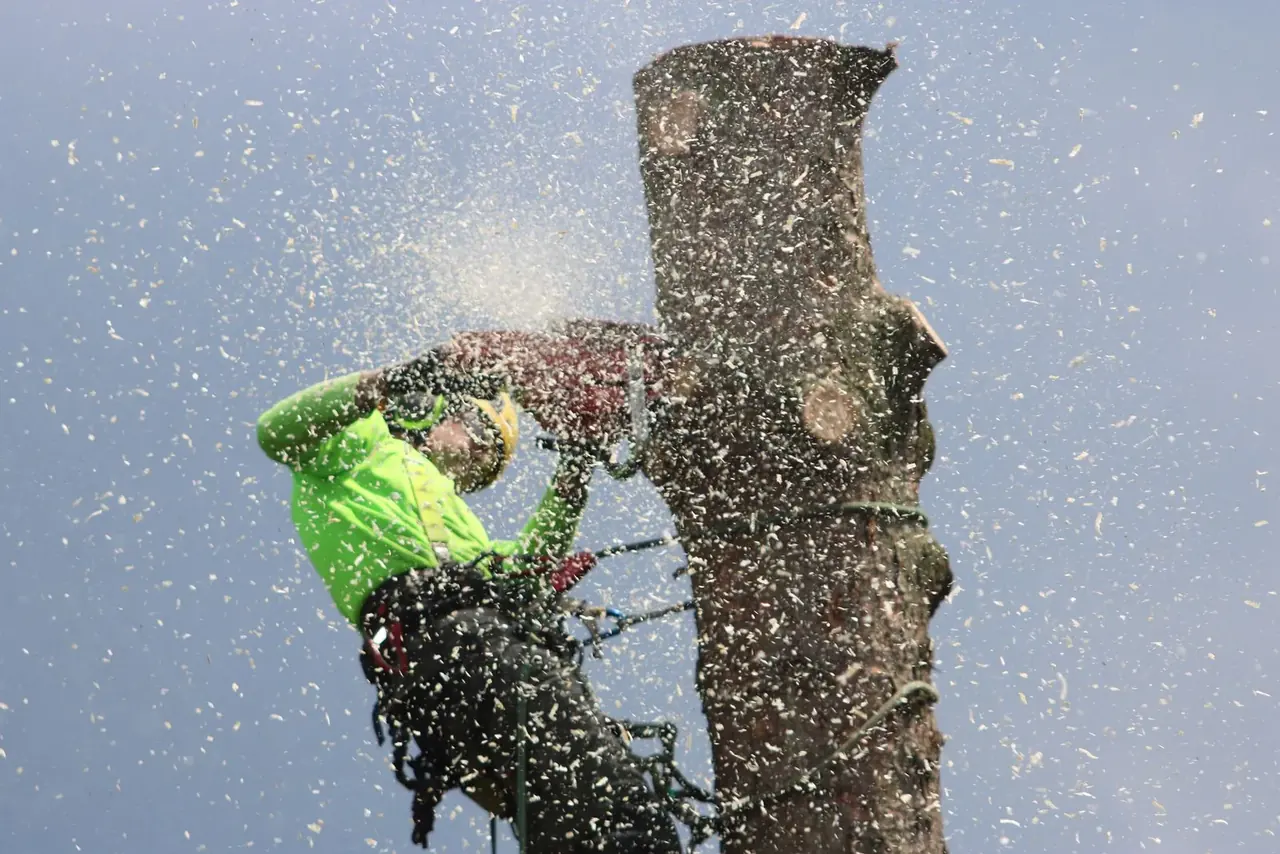
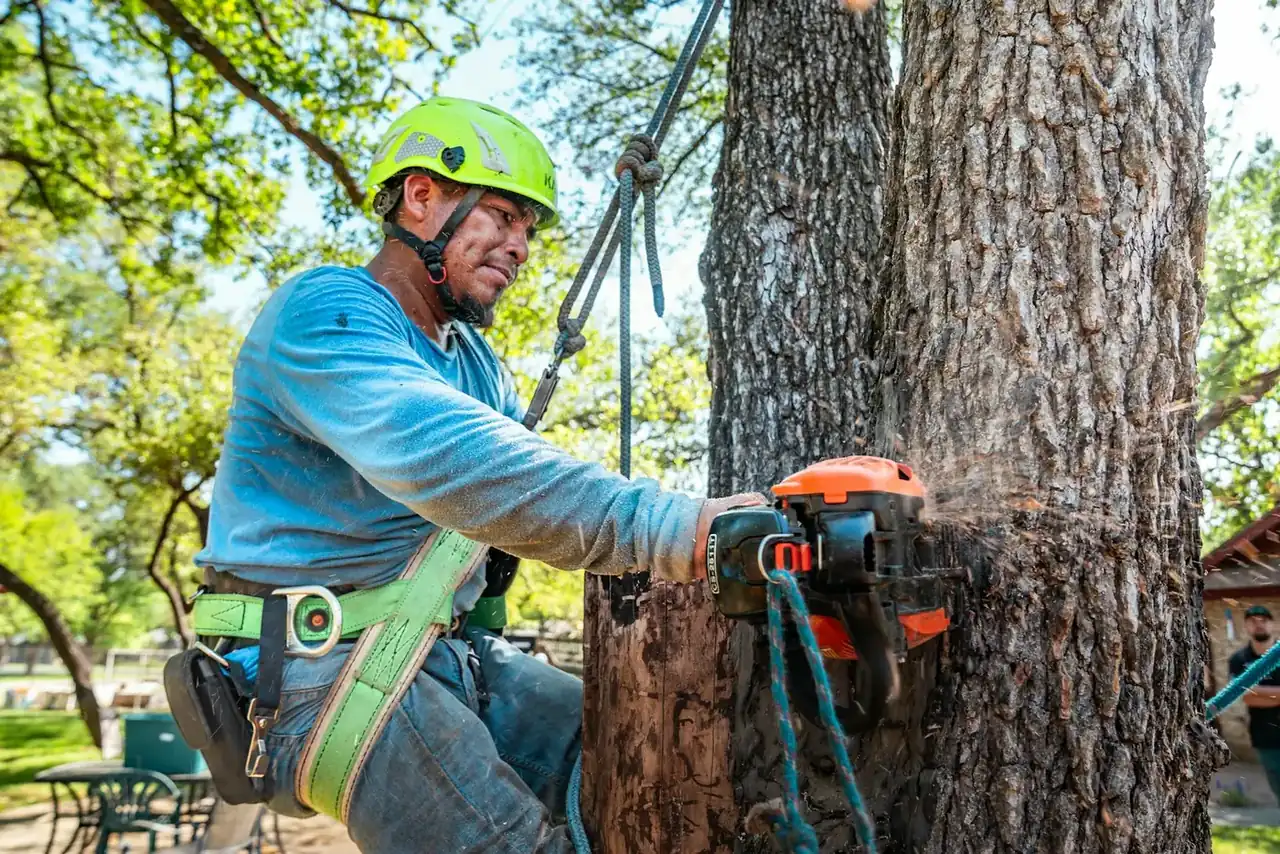
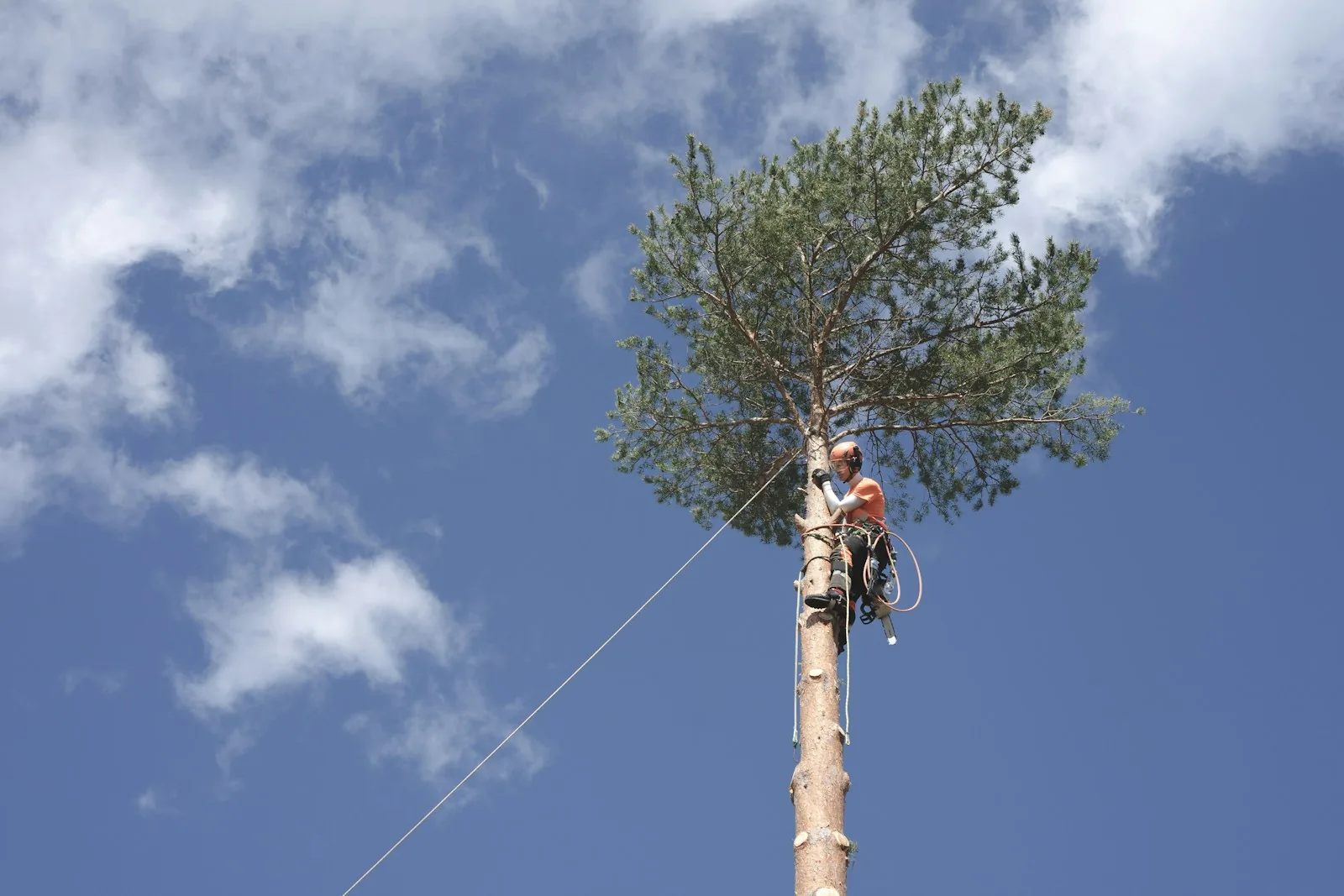
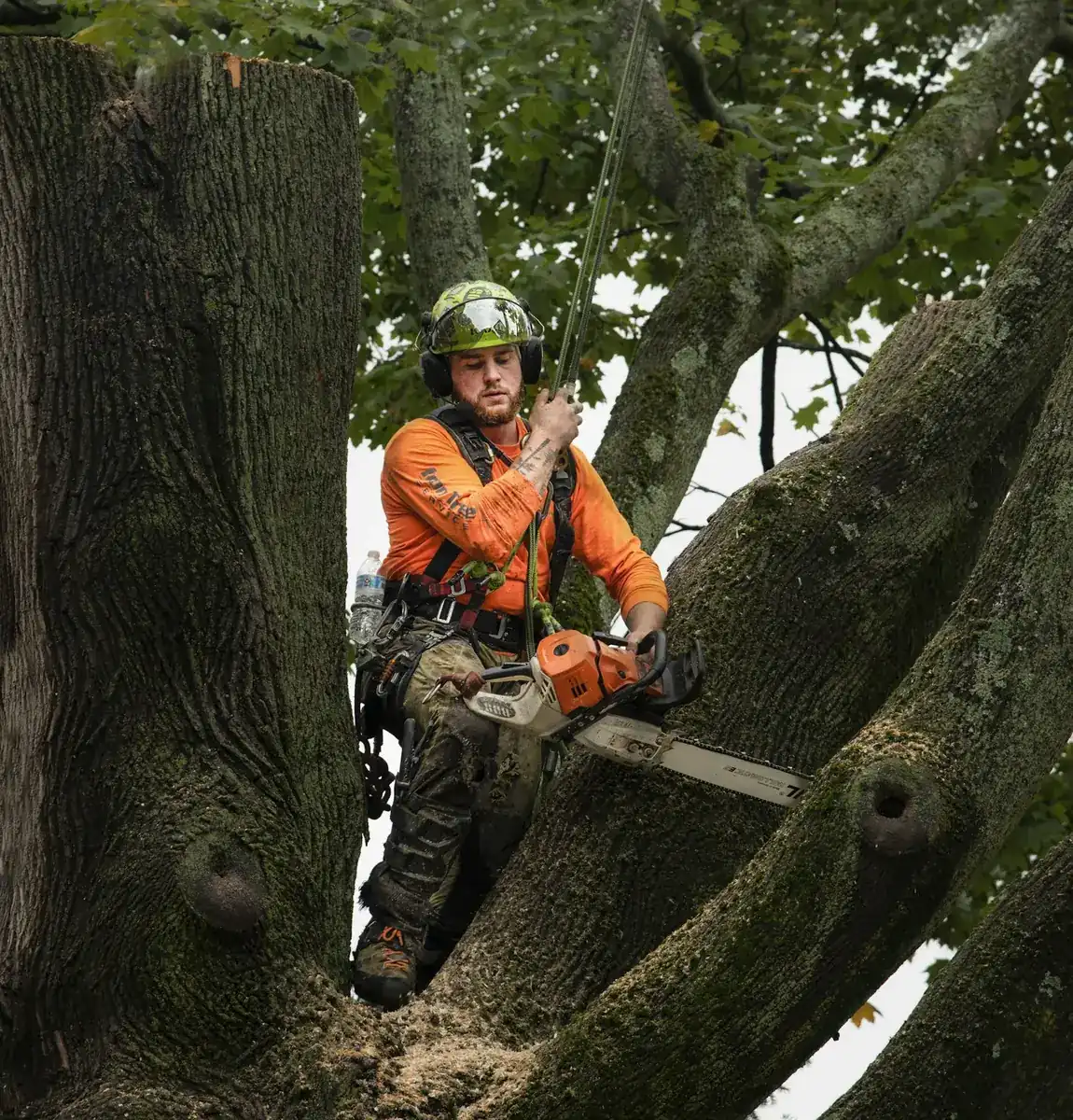
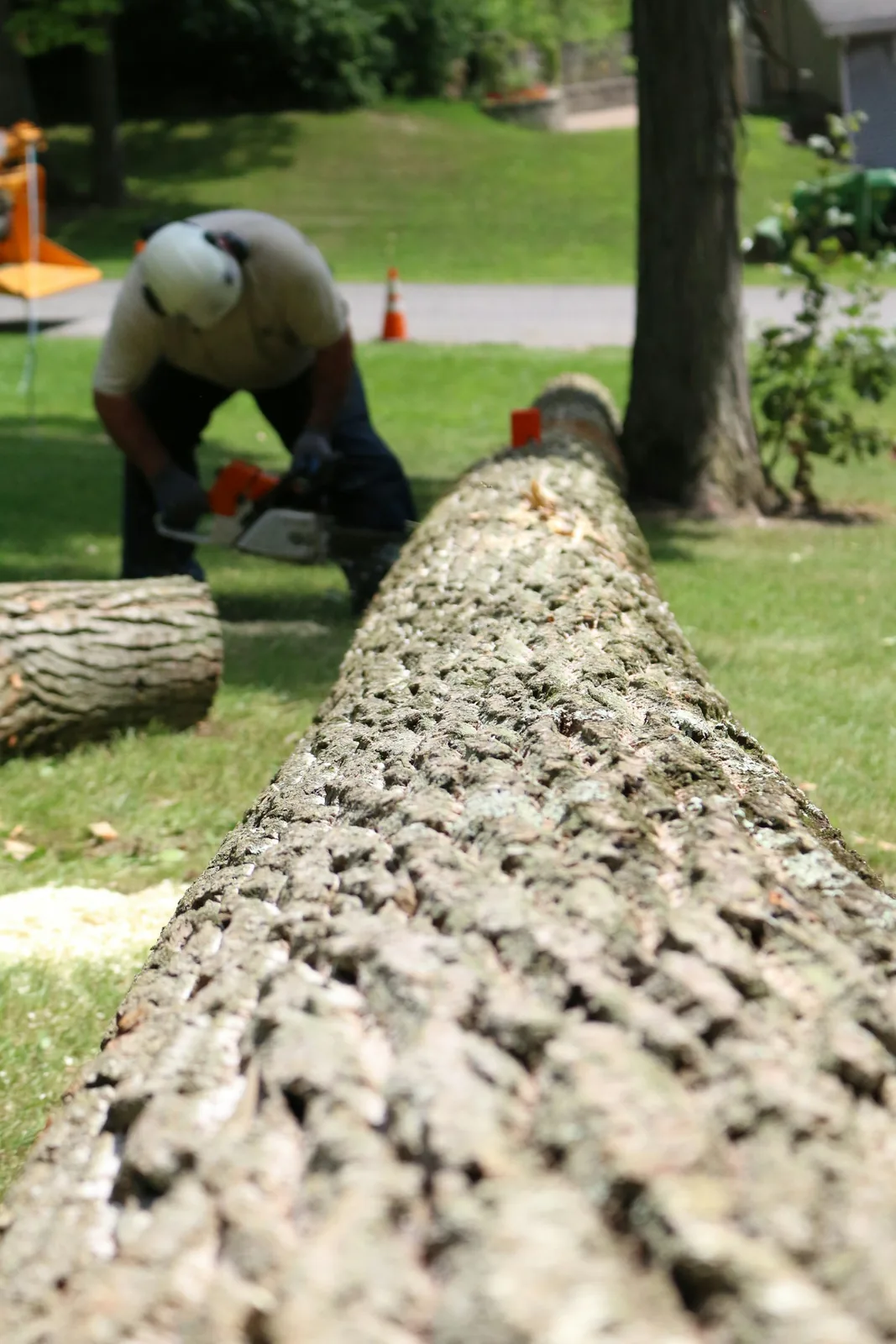
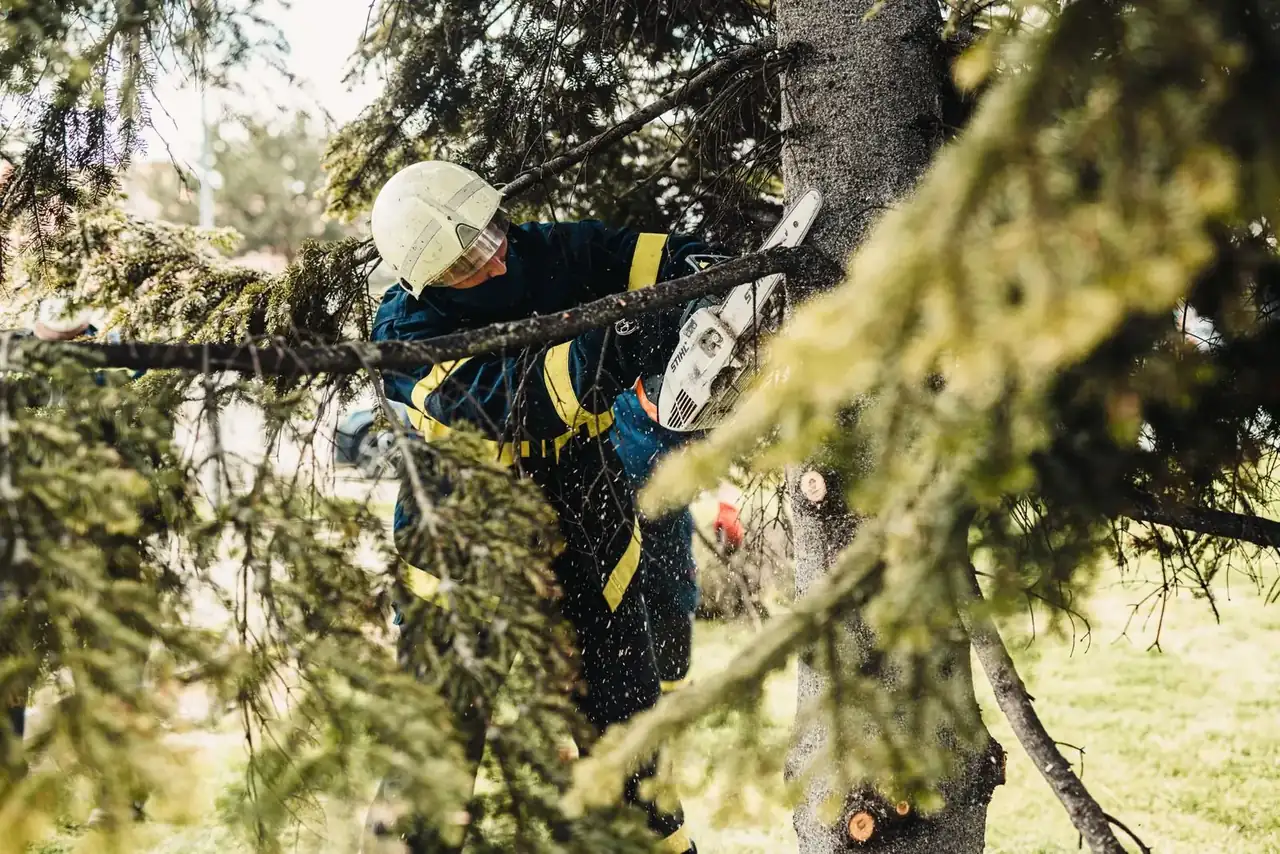
Crown Reduction in progress
Representative of the work. Real job photography replaces these as the crews document jobs.
Crown Reduction questions
Is crown reduction the same as topping?
No, and the difference is where the cut lands. Reduction cuts back to a living lateral branch big enough to take over as the new terminal, so the limb keeps a growing point and the tree seals the wound. Topping cuts through the middle of the wood and leaves a stub with nothing below it, which decays inward while the tree pushes weakly attached sprouts around the cut.
How much can you take off my tree?
About 15 to 20 percent of the height in one pass on a healthy tree, less on a mature or stressed one. Leaf area is what feeds the roots, and removing too much triggers the same sprout flush that makes topping fail. If you need a bigger change, it gets staged across two passes several years apart.
What does crown reduction cost?
HomeGuide's arborist guide, the only source with editorial standards that prices this work, puts it at $250 to $1,300 per tree nationally. There is no published Kansas specific figure for crown reduction, so we look at the tree and quote it rather than pretending a national table applies to your silver maple. Expect it to cost more than a standard trim on the same tree and considerably more than a topping bid.
Will my tree grow back to its old size?
It will grow back toward it. Reduction is maintenance, not a permanent change, and a vigorous silver maple or elm will regain much of what came off within five years or so. Plan on revisiting a reduced tree every three to five years. A tree that needs reducing every other year is a tree in the wrong spot.
Can you reduce my cedar or my spruce?
Generally no. Eastern redcedar, spruce, and pine hold very few latent buds in old wood, so a cut made back past the green foliage leaves a bare stub that never fills in. Conifers can be lightly shaped or have specific limbs removed, but they cannot be reduced in the way a hardwood can. If a conifer is too big for its spot, the honest options are living with it or removing it.
When is the best time of year to do this?
Dormant season, roughly January through early March, for the same reasons as trimming. The structure is visible, the tree is not spending energy on top growth, and there is a full growing season ahead to respond. Oaks stay out of the April through July window entirely because of oak wilt risk, which matters here since a reduction makes many large wounds at once.
Would I be better off just removing it?
Sometimes yes. If the tree needs more than about 20 percent off to fit its space, if the trunk has significant decay, if the root plate is compromised, or if more than a third of the canopy is already dead, reduction is spending money on a tree that is coming out regardless. A reduction plus a decade of return visits can cost more than a removal and a well chosen replacement that fits the space.
Request a free estimate
Free, no obligation. We call back within 15 minutes.
Got it.
We call back within 15 minutes during business hours.
That did not send. Call and we will take it down over the phone.
(785) 550-0100Coverage
Lawrence, Topeka, and everything between
We run out of Lawrence and cover 14 towns across 5 counties. If your town is not pinned, call anyway. We are usually closer than you think.
- Home base
- Lawrence, KS
- Storm calls
- 24 / 7
Often booked together
Tree Trimming
Clearing limbs off roofs, driveways, and power drops, and thinning canopies before storm season.
Tree Pruning
Structural cuts on young and mid-age trees so they grow strong instead of needing removal later.
Tree Removal
Taking down a tree safely when it is dead, dying, or growing somewhere it cannot stay.
More in Tree Care
- Tree Removal
- Tree Trimming
- Tree Pruning
- Stump Grinding
- Stump Removal
- Deadwooding
- Cabling and Bracing
- Tree Planting
- Shrub and Hedge Trimming
- Firewood