Land Services
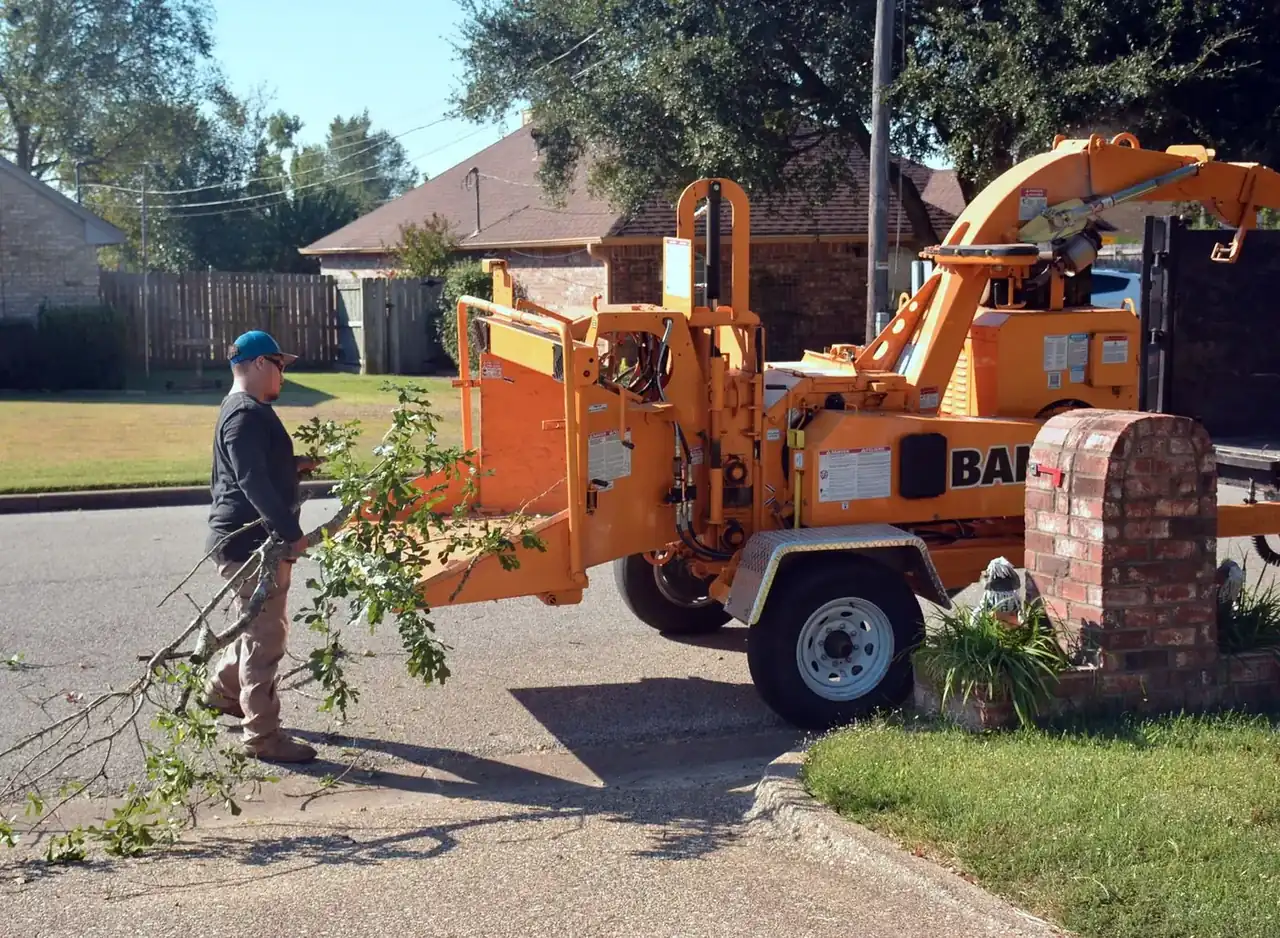
Debris Hauling in Lawrence and Topeka
Wood, brush, and storm debris loaded and hauled off.
- Hauling
- $75 to $250 per trip
- On site chipping
- $75 to $150 per hour
- Source
- HomeGuide cost data
- Firewood
- Rounds stacked free if you burn
What the job includes
- Storm debris cleared after the fact
- Piles left by other contractors hauled off
- Brush, limbs, logs, and stump grindings
- Loaded by hand or with a grapple depending on the pile
What We Load and Take Away
Sometimes the cutting is already done and the problem is the pile. Storm debris dragged to the curb, a windrow left by a contractor who quoted removal but not disposal, brush from a fence line somebody cleared two summers ago, or rounds from a tree a neighbor dropped and never came back for.
We haul all of it. Brush, limbs, logs, rounds, stump grindings, and mixed yard debris from a storm. Loading is either by hand or with a grapple truck depending on the size of the pile and whether the material is stacked or scattered across half an acre.
The main thing worth knowing before you call is where the pile is and what is under it. A pile on a driveway is a different job than a pile at the back of a soft back yard behind a thirty six inch gate.
- Storm debris cleared after the fact, including piles that have been sitting a while
- Material left behind by other contractors
- Brush, limbs, logs, rounds, and stump grindings
- Loaded by hand or with a grapple depending on the pile
- Access and ground conditions checked before the truck is committed
What Hauling Costs
Debris hauling runs roughly $75 to $250 per trip according to HomeGuide cost data, and trip count is the whole equation. A single pile of limbs from a trimming job is one trip. A yard full of storm debris after an ice event across Topeka or Lawrence is several, and that is where the estimate comes from.
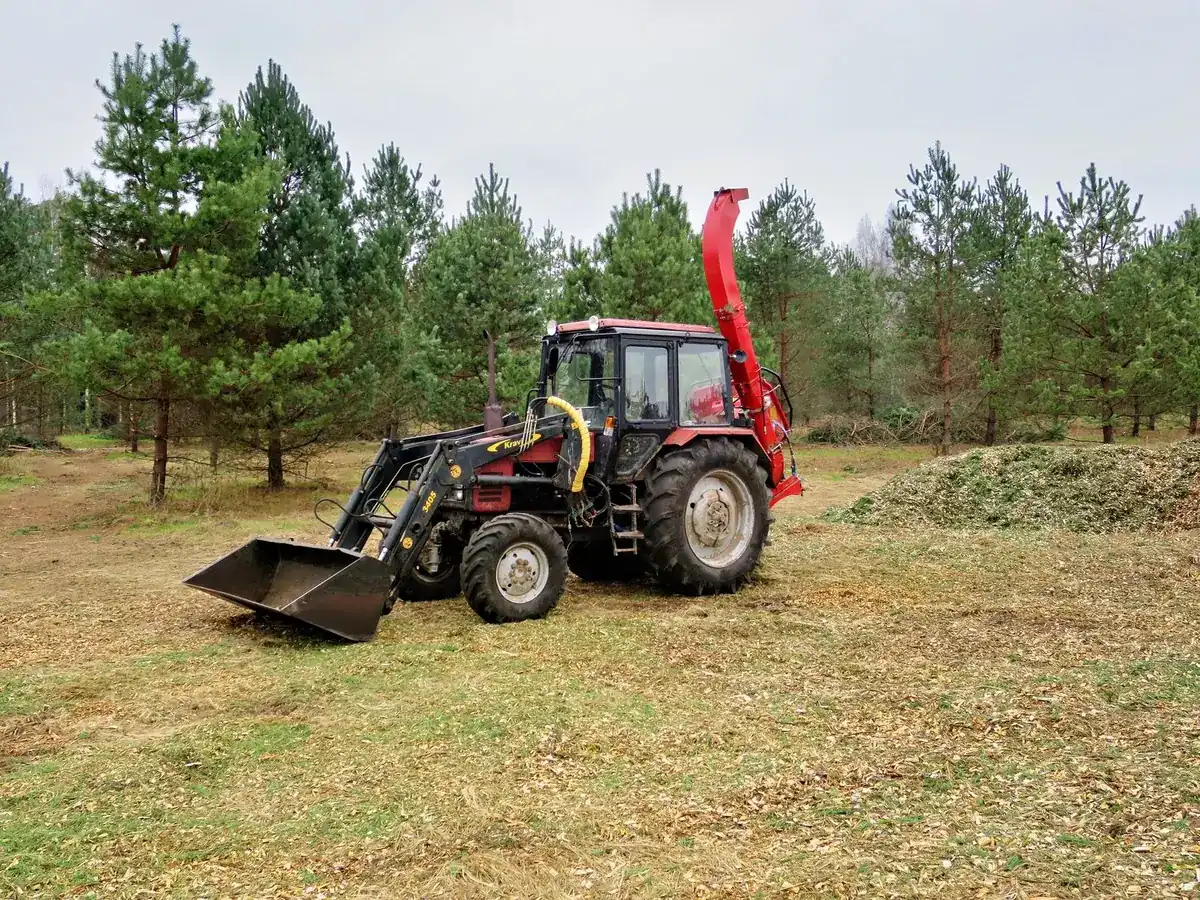
On site chipping runs roughly $75 to $150 per hour, also from HomeGuide. Chipping reduces brush volume dramatically, so on a large brush pile it is frequently cheaper to bring the chipper to the pile than to make four trips with material that is mostly air. The chips can stay if you have anywhere to put them.
The other variables are distance to a legal disposal site, whether the material is clean wood or mixed with soil, wire, and trash, and whether a truck can get within reach of the pile. Mixed material costs more to dispose of than clean wood, and a pile that has to be barrowed a hundred feet to the street costs more than one a grapple can reach.
- Trip count, which is the largest single factor
- Whether the material gets chipped first to reduce volume
- Access for a truck or a grapple, and ground conditions
- Clean wood versus material mixed with soil, wire, or trash
- Stump grindings, which are heavy and dense for their volume
Chip It Here or Truck It Out
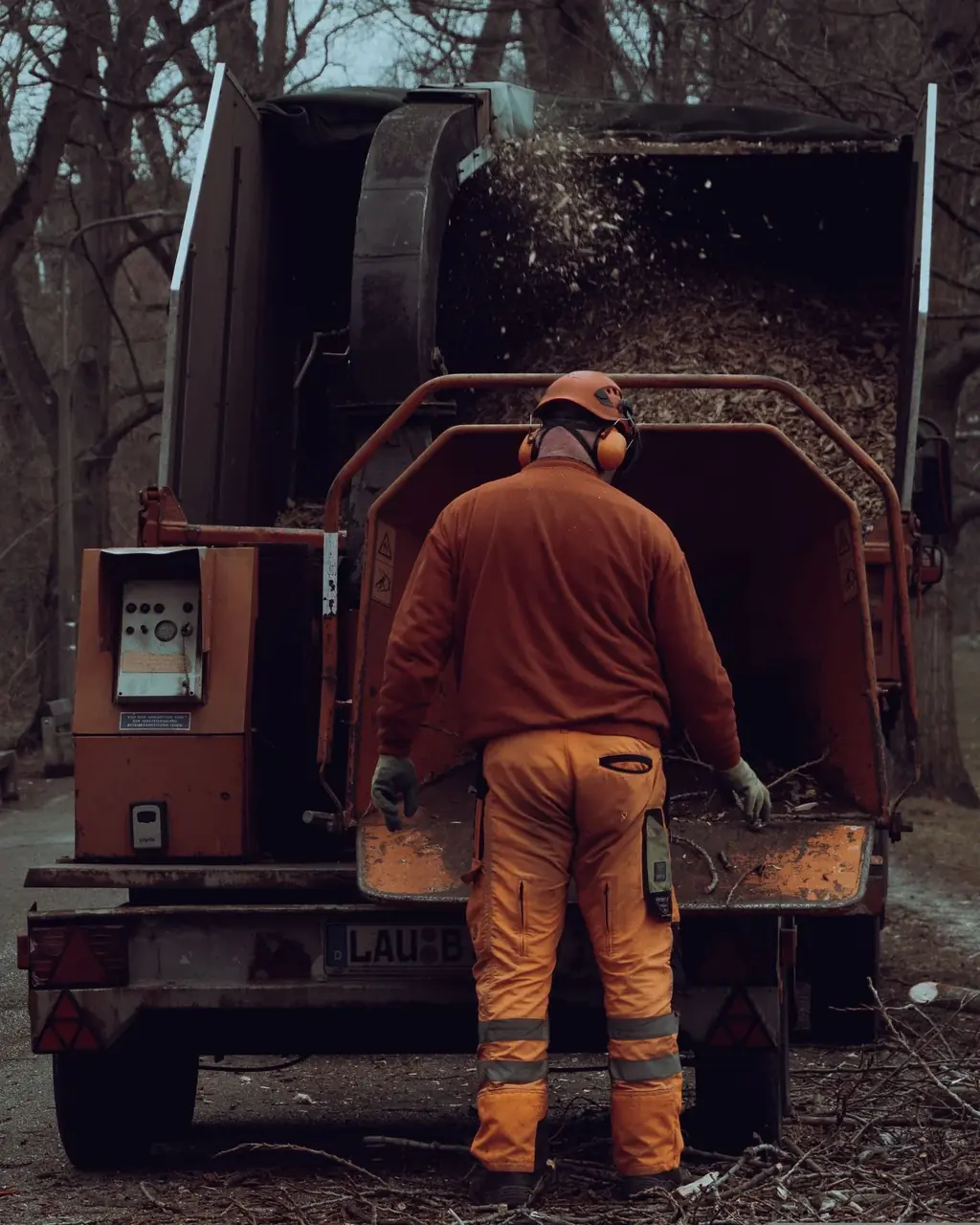
Brush is mostly empty space. A pile ten feet across is a fraction of that volume as chips, which is why chipping on site so often beats hauling the raw material. If you have a treeline, a trail, a garden bed, or a low spot, the chips have a home and the disposal cost goes to zero.
Chips are not free of consequences. A thick layer ties up nitrogen while it breaks down, so grass seeded straight into it comes in thin and yellow. Spread thin, they are fine. Piled deep on ground you want as lawn, they are a problem for a season or two.
Logs and rounds are the opposite case. They are dense, they do not chip, and they are the material that actually fills a truck. If you burn, keeping the rounds costs you nothing and removes the heaviest part of the load from the invoice. Oak, hackberry, honeylocust, and Osage orange are all worth stacking. Osage orange in particular burns hot and long, which is why so many Kansas farmsteads have a rick of it.
- Chipping on site cuts brush volume and cuts trip count
- Chips can stay on the property, spread thin rather than piled deep
- Rounds kept for firewood reduce what gets loaded
- Stump grindings hauled separately, since they are heavy and full of soil
Piles Left by Somebody Else
A regular reason people call us is a pile another company left behind. It usually traces back to a bid that quoted the cutting and stayed quiet about the disposal, so the crew felled the tree, took payment, and left the wood stacked at the back of the yard.
That is worth knowing when you compare bids on any tree work. Ask every bidder in plain language whether hauling and disposal are included, and get the answer in writing. It is one of the most common places a low bid becomes a higher final bill, and it is a real convention in the Topeka and Lawrence market that reputable companies include haul off by default.
It also connects to a bigger point about hiring here. Kansas has no state licensing requirement for tree removal companies, so a written scope is the only thing standing between you and a different definition of finished. Certification and proof of insurance are the only other filters available.
- Ask every bidder directly whether hauling and disposal are included
- Get the answer in the written scope rather than in conversation
- Ask for a certificate of liability insurance and workers compensation from the carrier
- A pile left behind is not a discount, it is a deferred cost
Land Clearing Debris and Whether Anything Needs Hauling At All
On acreage the calculation changes completely. Clearing a tract generates far more material than a truck can economically move, which is why land clearing in Kansas is often mulched in place rather than hauled, and why per acre clearing prices here sit at roughly $1,100 to $2,300 according to ProMatcher's Kansas cost data. Mulching removes the hauling line item entirely.
So on rural work the question is not usually what the hauling costs. It is whether any hauling should happen. Cedar thickets and brush mulch in place and stay put. Big wood, hedge row material with wire in it, and anything near a house or a drive is what actually gets loaded and taken away.
Stumps are the other thing people ask about here. Grindings from a stump are heavy, dense, and full of soil, and they fill a truck faster than their volume suggests. Leaving them in the hole is standard and free. Hauling them off is a separate line and it is the right call only when you want clean soil to plant or build in.
- Acreage material usually mulched in place rather than hauled
- Big wood, hedge material, and debris near buildings hauled off
- Stump grindings backfilled by default, hauled only on request
- Burn piles built where county rules allow it and you have the room
How a Haul Off Runs
Debris hauling is simple work and it goes wrong in exactly two ways: the truck cannot reach the pile, or the pile turns out to contain something no disposal site will accept. Both are avoidable with a five minute conversation before we roll.
Here is the sequence.
- 1 Send photos of the pile with something in frame for scale, or let us look at it.
- 2 Tell us what is in it, particularly any soil, wire, fence, trash, or treated lumber mixed into the wood.
- 3 We confirm access: gate widths, overhead lines, soft ground, and how close a truck can get.
- 4 Decide whether the material gets chipped on site to reduce volume or loaded as it is.
- 5 Decide what stays, including chips you want spread and rounds you want kept for firewood.
- 6 Crew loads by hand or with a grapple, working from the outside of the pile inward.
- 7 Material goes to a legal disposal or recycling site, with clean wood and mixed debris separated.
- 8 Work area raked and blown, and any ruts pulled back out before we leave.
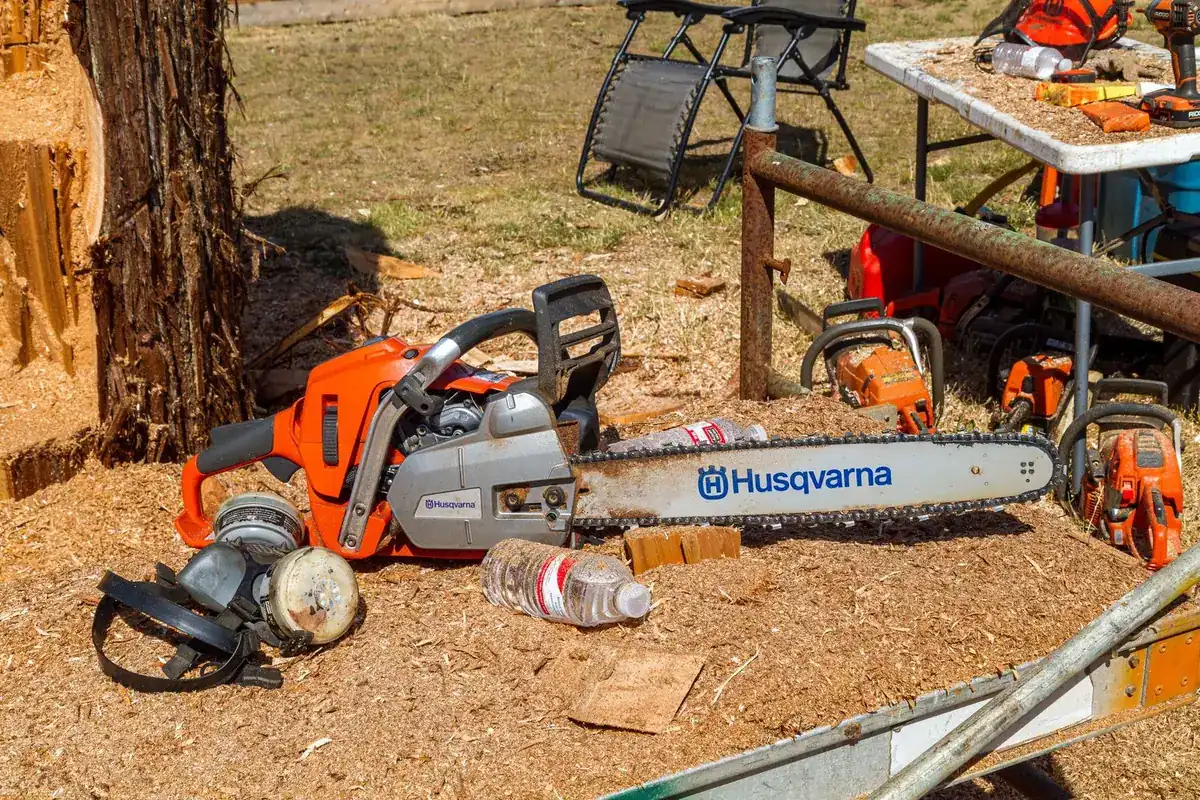
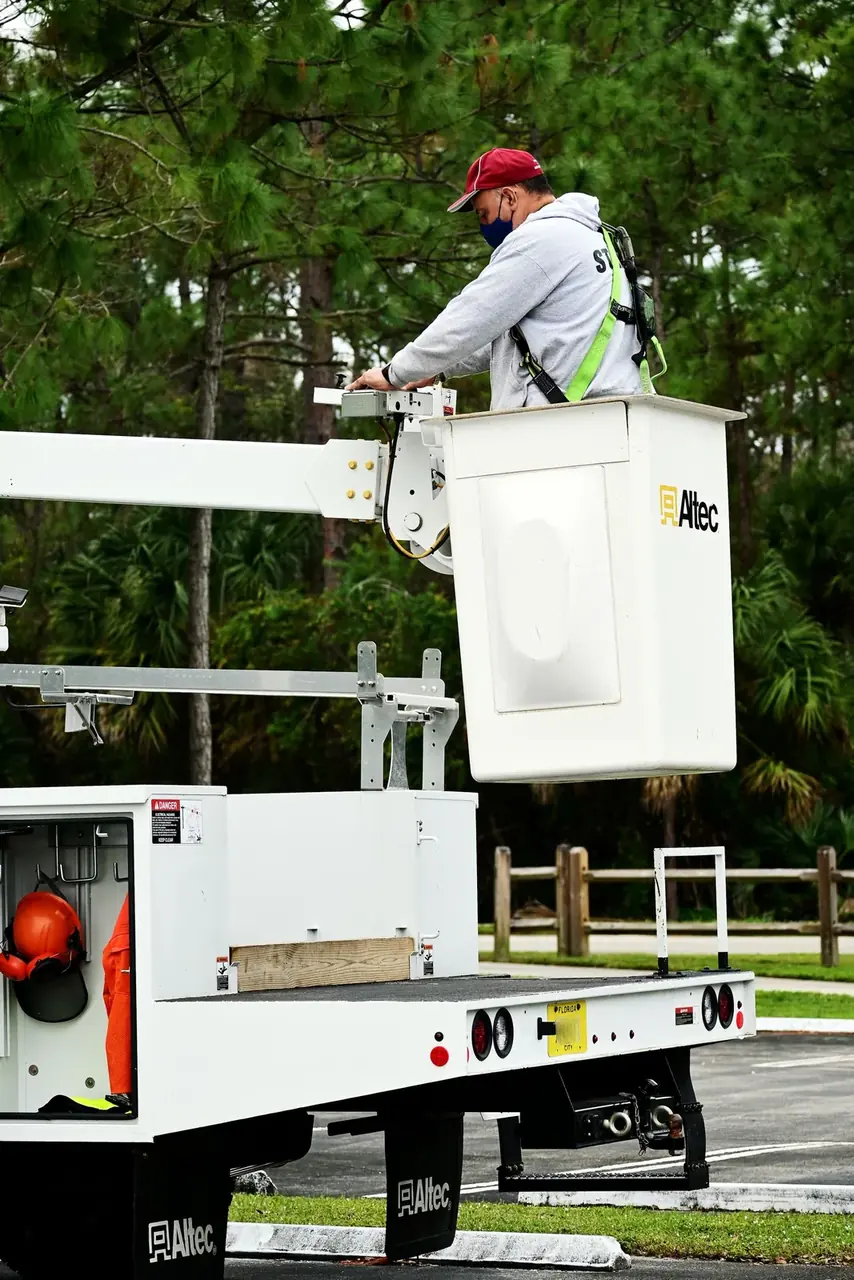
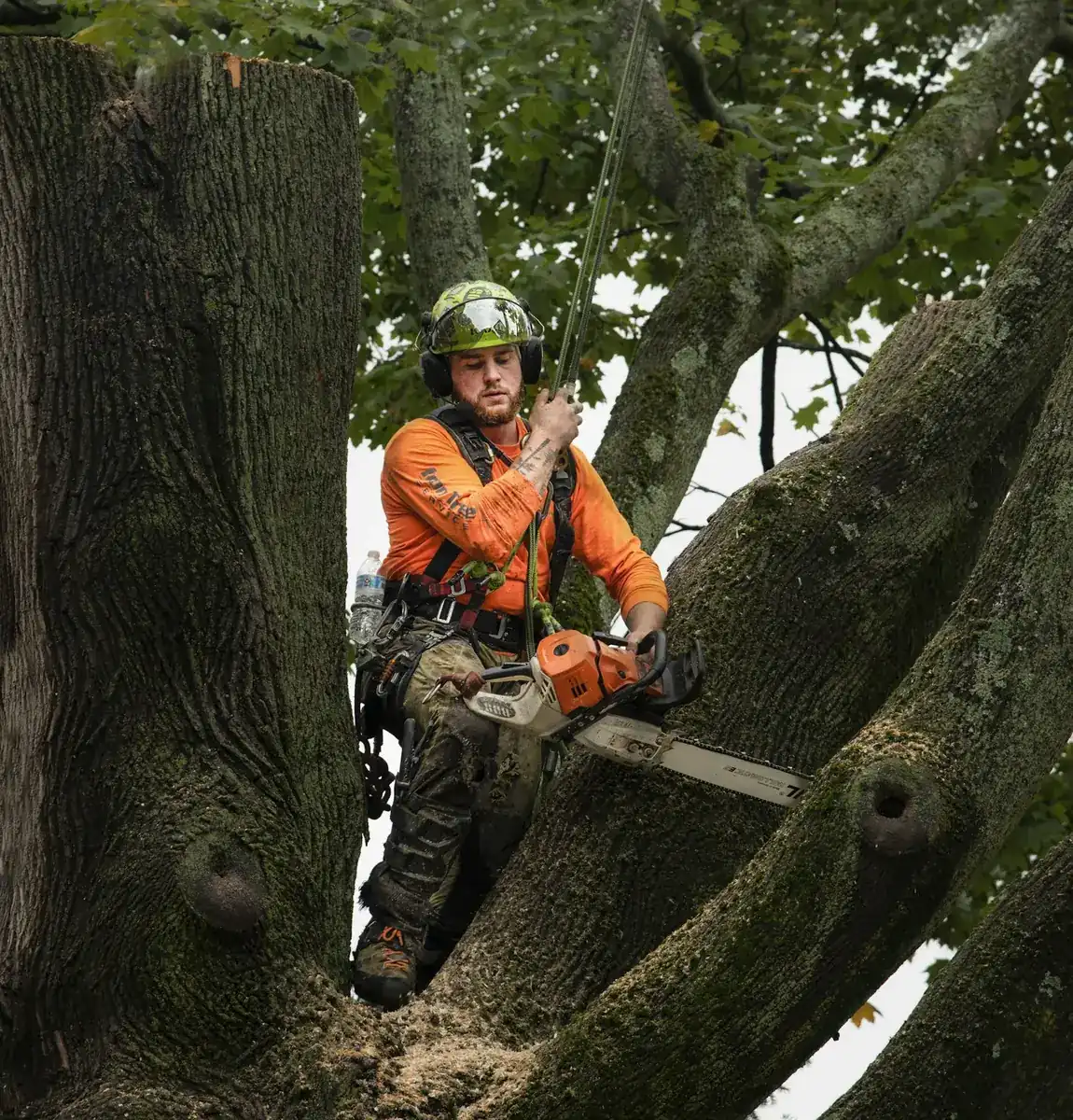
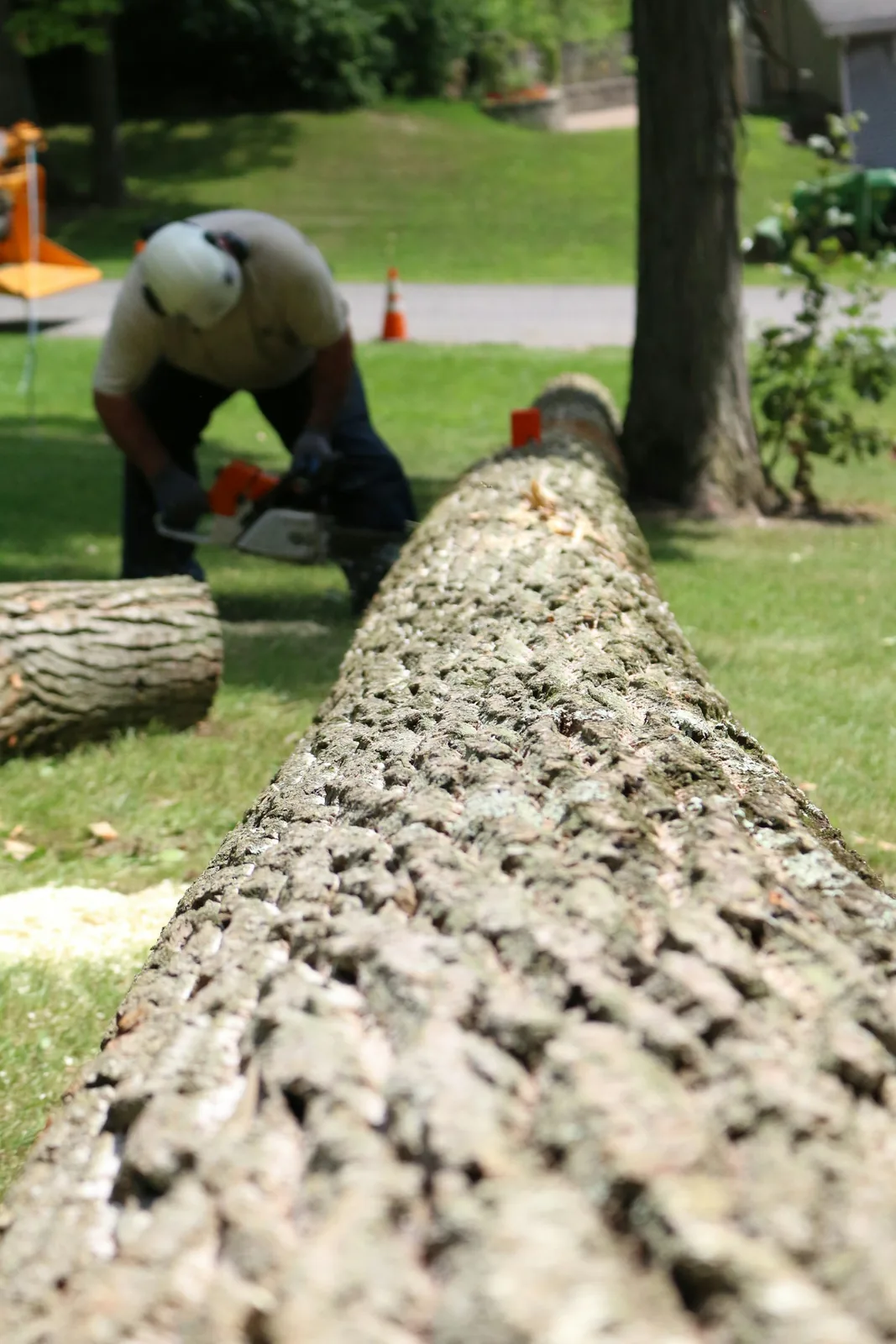
Debris Hauling in progress
Representative of the work. Real job photography replaces these as the crews document jobs.
What this costs and how long it takes
$75 to $250 per trip for hauling and disposal, or $75 to $150 an hour for on-site chipping
HomeGuide and Lawn Love. Worth knowing: our removal prices already include hauling brush and logs off your property unless you ask us to leave the wood.
These are published cost ranges for Kansas and national industry averages, not a quote. Every tree is different, and the only way to know what yours costs is a free on-site look.
What moves it up or down
- Hard access or a tight spaceadds 25 to 50 percent
- Several trees on one visitsaves 10 to 25 percent per tree
- Peak season, summer into falladds 10 to 20 percent
- A crane is requiredadds $500 or more
- Same-day emergencyup to two or three times standard rate
- Permit, where one is needed$60 to $450
Debris Hauling questions
How much does debris hauling cost?
HomeGuide puts it at roughly $75 to $250 per trip, and the number of trips is what drives the total. A single pile from a trimming job is one trip. A yard full of storm debris after an ice event is several. Chipping first often reduces the trip count enough to pay for itself.
Do you haul debris you did not cut?
Yes, and it is a regular call. Piles left by other contractors, storm debris that has been sitting since spring, and brush somebody cut two summers ago all get loaded the same way.
Is chipping on site cheaper than hauling raw brush?
Frequently, because brush is mostly air and a truck fills up with very little actual wood. HomeGuide puts on site chipping at roughly $75 to $150 per hour. If you have anywhere to put the chips, the disposal cost drops to nothing.
Can I keep the chips or the firewood?
Both, and it costs you nothing. Chips get spread where you want them, though spread them thin rather than piling them deep, since a heavy layer ties up nitrogen and slows grass. Rounds get cut to stove length and stacked. Oak, hackberry, honeylocust, and Osage orange are all worth keeping.
Will you haul stump grindings?
Yes, as a separate line. Grindings are heavy and full of soil, so they fill a truck faster than they look like they should. Standard practice is to backfill them into the hole at no cost. Hauling them off makes sense only when you want clean soil for planting or building.
What if the pile has wire or fence in it?
Tell us up front. Wire, old fence, treated lumber, and material mixed with soil are handled differently and disposed of differently, and a load that has to be sorted at the site costs more than clean wood. It is not a problem, it just needs to be in the quote rather than a surprise.
Can you get a truck to the back yard?
Depends on gate width, overhead lines, and how soft the ground is. We check before committing. On tight access we load by hand or barrow it out, which takes longer and shows up in the price. On genuinely wet ground we reschedule rather than leave you ruts to repair.
What about debris from clearing several acres?
That is usually a mulching question rather than a hauling one. Clearing an acre generates far more material than a truck can move economically, which is why so much rural clearing in Kansas gets mulched in place. ProMatcher puts Kansas clearing at roughly $1,100 to $2,300 per acre, and mulching is a large part of why that number is not higher.
Do you take the material to a proper disposal site?
Yes, clean wood and mixed debris separated. Dumping brush on a back road or in a ditch happens in this business and it comes back on the property owner as often as the contractor. Ask any hauler where the material is going.
Request a free estimate
Free, no obligation. We call back within 15 minutes.
Got it.
We call back within 15 minutes during business hours.
That did not send. Call and we will take it down over the phone.
(785) 550-0100Coverage
Lawrence, Topeka, and everything between
We run out of Lawrence and cover 14 towns across 5 counties. If your town is not pinned, call anyway. We are usually closer than you think.
- Home base
- Lawrence, KS
- Storm calls
- 24 / 7
Often booked together
Storm Damage Cleanup
After a wind or ice event: hangers out of the canopy, broken limbs down, property cleared.
Brush Removal
Overgrown brush, volunteer trees, and undergrowth cut and hauled.