Tree Care
Tree Pruning in Lawrence and Topeka
Structural cuts on young and mid-age trees so they grow strong instead of needing removal later.
- Best age to start
- Years three to ten
- Visit interval
- Every 2 to 3 years when young
- Season
- Dormant, January to early March
- Oak rule
- Nothing cut April through July
What this is
Pruning and trimming get used as the same word, but the jobs are different. Trimming clears limbs off things. Pruning shapes how a tree will grow for the next thirty years. On a young tree, picking a single central leader and removing competing stems takes twenty minutes and prevents the co-dominant split that takes the tree down in a storm at age twenty five. It is the cheapest tree work there is and the least often requested.
What the job includes
- Structural pruning on young trees to establish a single dominant leader
- Removing crossing and rubbing limbs before they wound each other
- Correcting co-dominant stems and included bark before they fail
- Raising the canopy gradually as the tree matures
The defect that pruning prevents
Walk any street in Lawrence or Topeka after a June thunderstorm and count the trees that split down the middle. Most of them failed at the same defect, a co-dominant union. Two stems of roughly equal size compete for the leader position, neither one wins, and the bark on the inside of the fork gets pinched between them instead of the wood growing together. That trapped bark is called included bark, and it means the two stems are pressed against each other rather than joined. There is no wood fiber crossing the union to hold it.
On a fifteen year old silver maple that union is maybe three inches across and easy to correct with a single cut. On a forty year old one it is a twelve inch crotch carrying half the canopy, and the only options left are a cable, a heavy reduction, or a removal. The cost curve between those two moments is steeper than almost anything else in tree care.
Pruning is also how you set clearance before you need it. Raising a canopy gradually over ten years, one whorl of low limbs at a time, gives you a tree you can walk under and mow beneath without ever making a large wound. Doing it all at once on a mature tree means removing branches four and six inches across, which is a wound the tree may never fully close.
- Establish a single dominant leader while the competing stem is still small
- Remove crossing and rubbing limbs before they wear through each other's bark
- Correct included bark unions in the first fifteen years, when a hand saw does it
- Raise the canopy in stages instead of one large lift
A schedule for a young tree
A newly planted tree gets almost nothing done to it in year one. Take out broken and dead material, take out anything rubbing, and leave everything else. The tree needs every leaf it has to build a root system in Kansas clay, and a heavy first year pruning is one of the more common ways a good tree gets set back.
Years three through ten are the working window. A visit every two to three years, twenty minutes to an hour of actual cutting, is enough to pick the leader, subordinate the competitor by cutting it back rather than removing it outright, and clear crossing limbs. Bur oak, chinkapin oak, hackberry, and Kentucky coffeetree all respond well to this because they naturally hold decent form and only need nudging.
Trees that need it most are the ones that grow fastest. Silver maple, honeylocust, and Siberian elm all put on height quickly and all form multiple competing leaders as a matter of habit. A pin oak planted in a Topeka front yard will usually keep a central leader on its own and needs less intervention, though it often needs iron in our alkaline soils, which is a separate conversation.
How we prune a young or mid-age tree
The work looks small from the sidewalk. On a fifteen foot tree it is often four or five cuts, which is why it is inexpensive and why so few people call for it.
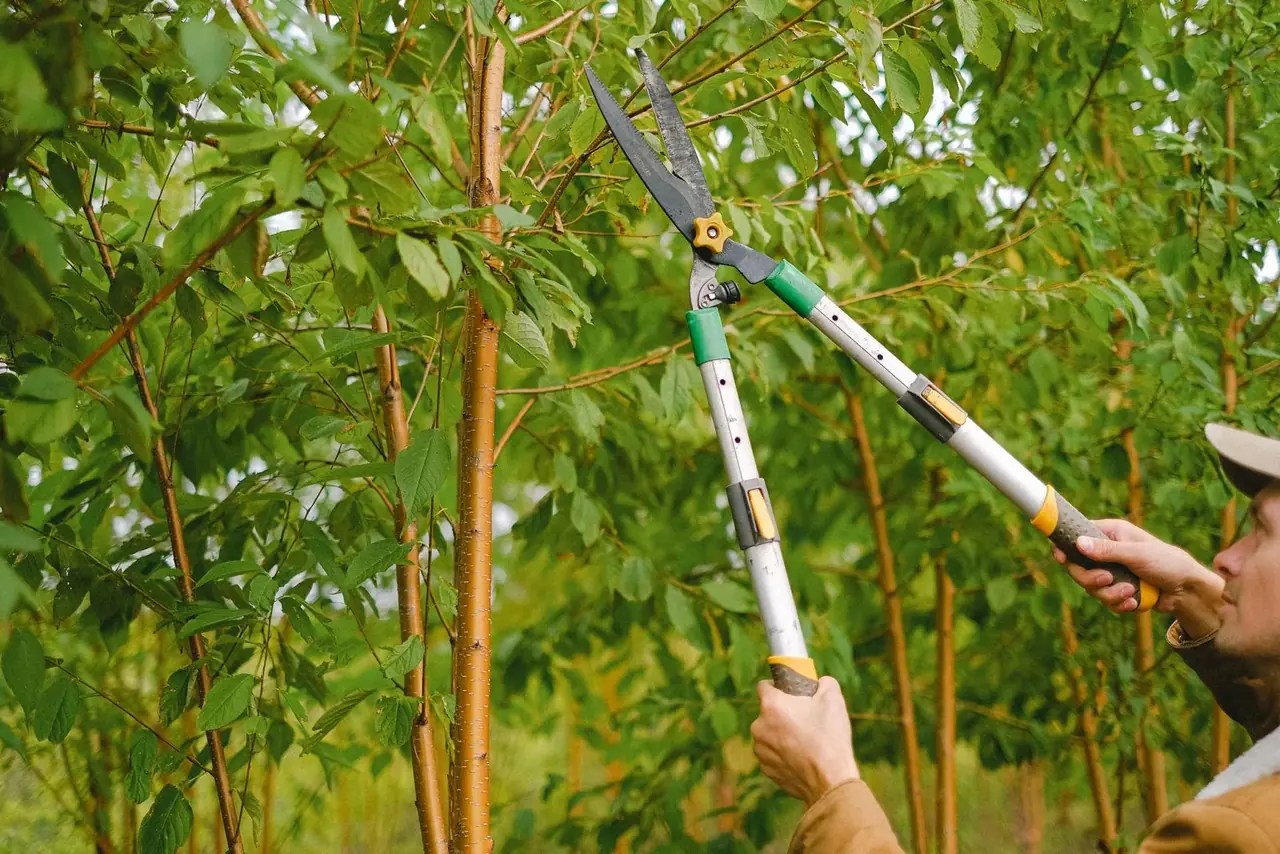
Nothing here requires a bucket truck on a young tree. Most of it happens from the ground or a short ladder with hand tools.
- 1 Stand back and look at the whole tree before touching it. The leader and the competing stem are obvious from twenty feet away and invisible from underneath.
- 2 Take out the dead, damaged, and diseased wood first. That alone reveals whether the remaining decisions are still needed.
- 3 Identify the strongest, straightest, most central stem and commit to it as the leader.
- 4 Subordinate the competitors by shortening them back to a lateral rather than cutting them off flush. A shortened stem keeps feeding the trunk while it loses the race, which builds trunk taper.
- 5 Remove limbs that cross, rub, or grow back into the center of the canopy.
- 6 Clear the lowest whorl only if clearance is genuinely needed, and never take more than the bottom third of the total height as clear trunk.
- 7 Stop. Total live wood removed on a young tree stays under about a quarter, and on most visits it is far less than that.
Mature trees, where the window has closed
You cannot structurally prune a sixty year old bur oak. The architecture is set and the cuts required to change it would be large enough to invite decay. What is still available on a mature tree is worth doing anyway: removing deadwood, reducing end weight on the long horizontal limbs that lever hardest against their attachment, and taking out a single hazardous limb over a target.
End weight reduction is the underrated one. A horizontal hackberry limb running thirty feet out over a driveway is a lever, and every pound at the far end multiplies the stress at the union. Shortening the last six feet back to a lateral removes a small fraction of the leaf area and a large fraction of the bending moment.
Where a mature tree has a defect that pruning cannot fix, cabling and bracing or a crown reduction are the next tools, and sometimes the honest answer is that the tree has run its course. Kansas Forest Service rates 59 percent of the state's urban canopy as fair to poor, dominated by aging silver maple, elm, and pin oak, which is a fair description of a lot of the older Topeka and Lawrence neighborhoods.
Cost and timing
Angi prices pruning at $200 to $800 per tree and notes that pruning and trimming tend to cost about the same, since both are billed on crew time and tree size rather than on the label. HomeGuide's arborist guide agrees at $200 to $800 per tree, or $50 to $125 an hour for trimming and pruning labor. ProMatcher's Kansas contractor data puts a two man crew at $128.66 an hour, though that figure carries a 2018 date on the source page and should be read as a floor.
Structural pruning on a young tree is the cheapest work on this site and usually lands against a minimum job charge rather than a per tree price. HomeGuide puts industry minimums at $100 to $300. The sensible move is to have every young tree on the property done in one visit, since HomeGuide puts the multi tree saving at 10 to 25 percent per tree.
Timing follows the same rules as trimming. Dormant season, roughly January through early March, for almost everything. Oaks never get pruned April through July because of oak wilt, and American elm stays out of that window as well. Fresh wounds during the growing season are an invitation, and on an oak the invitation gets accepted.
- HomeGuide suggests mature trees get looked at every 3 to 5 years
- Young trees benefit from a visit every 2 to 3 years through about year ten
- Oaks and elms are dormant season only
- Doing all the young trees on a property in one visit avoids paying the minimum twice
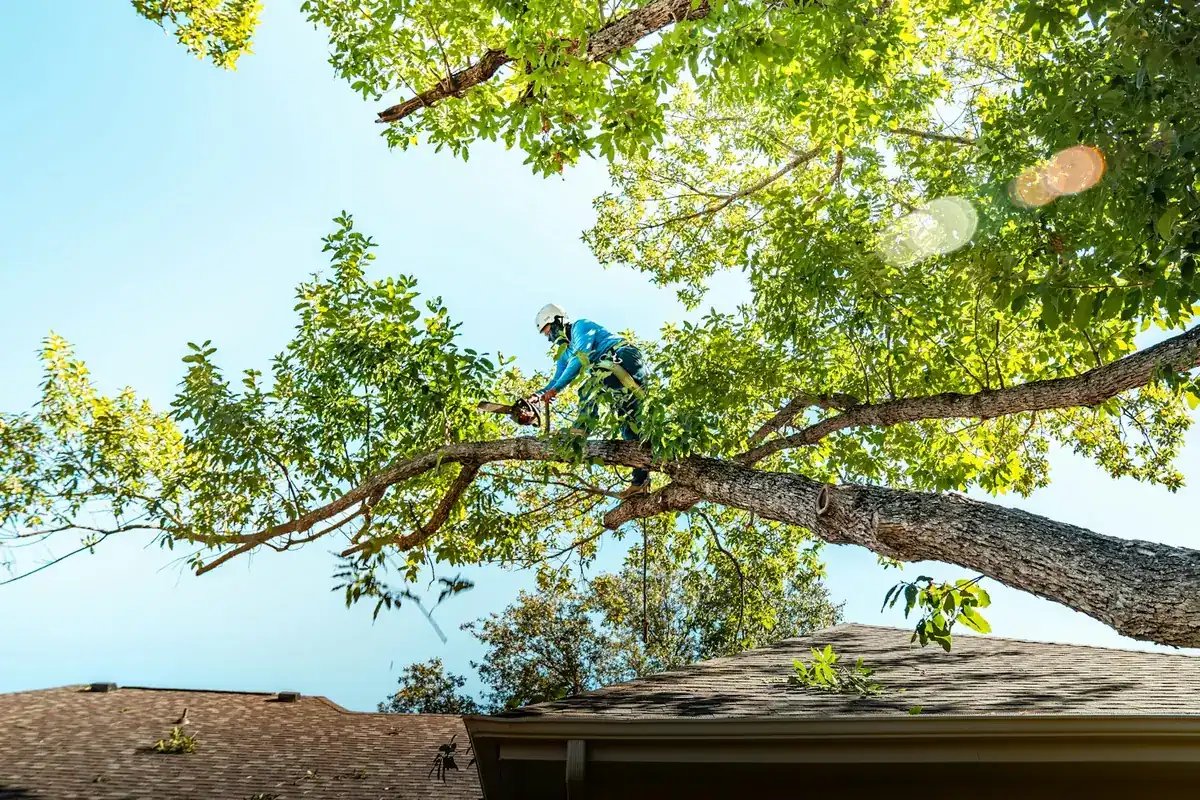
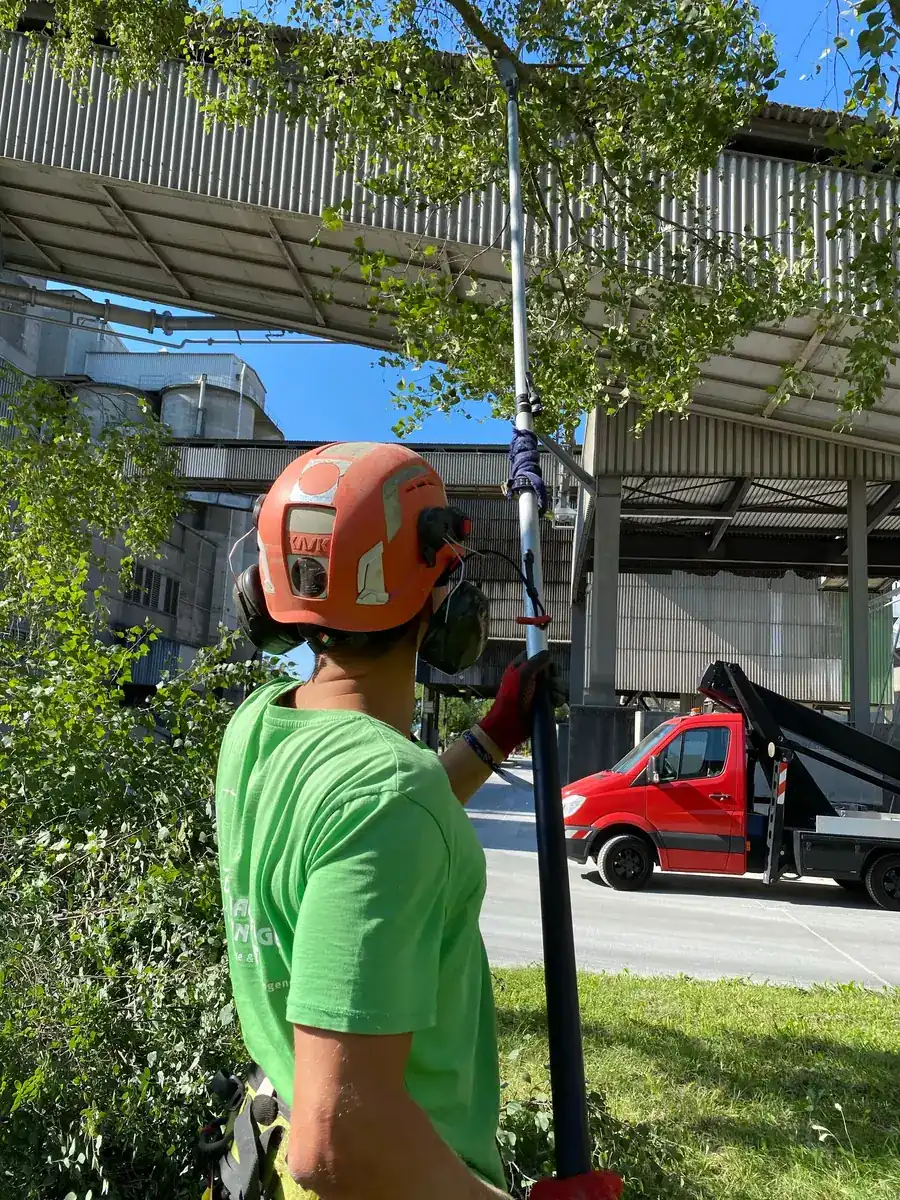
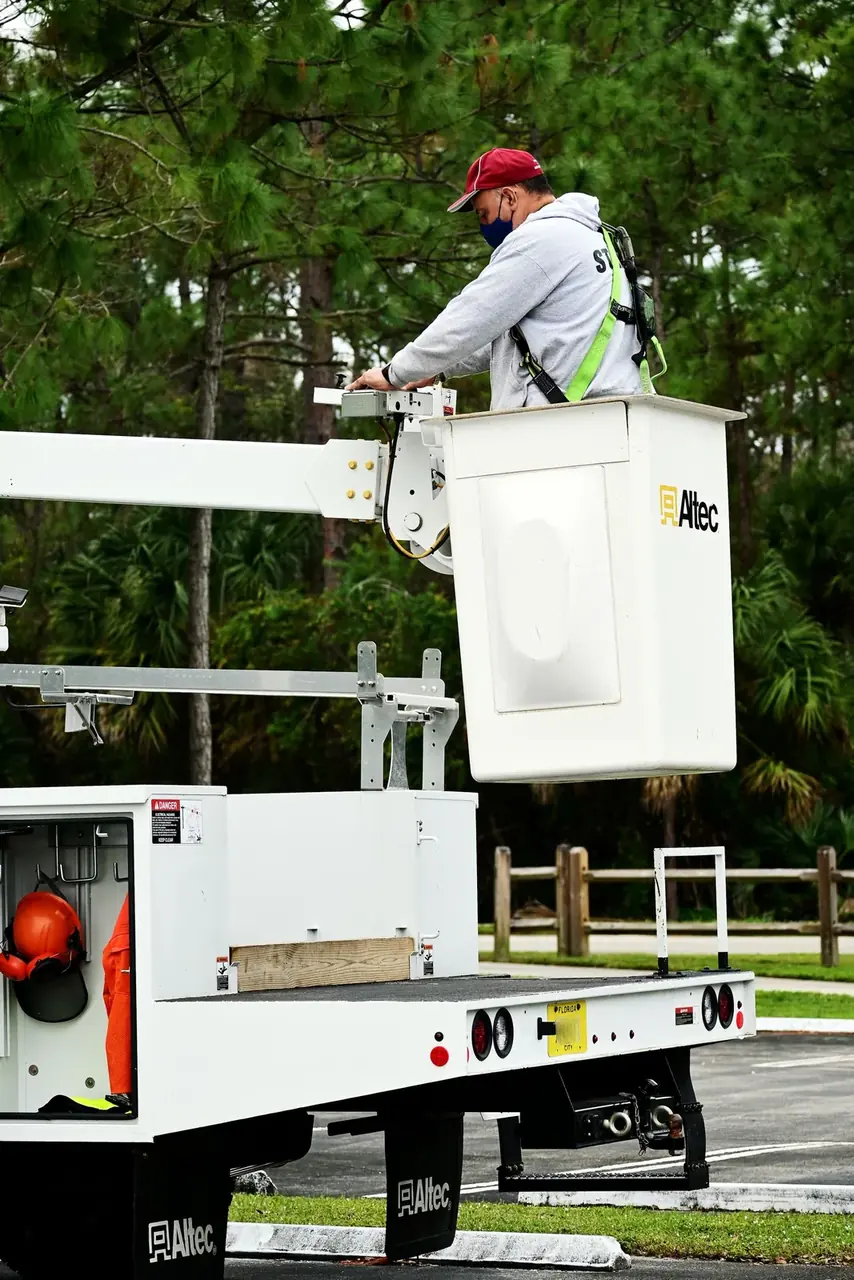
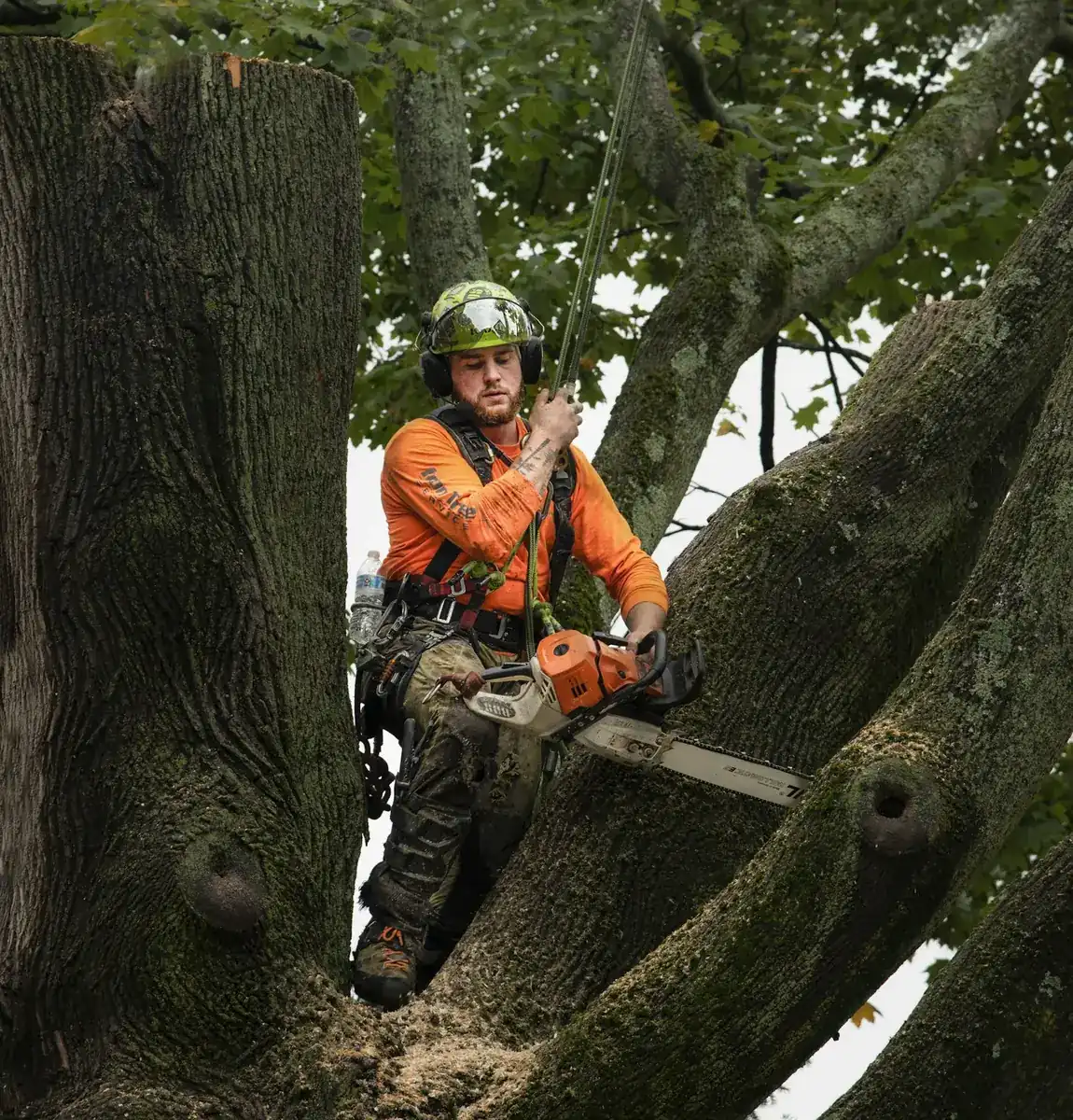
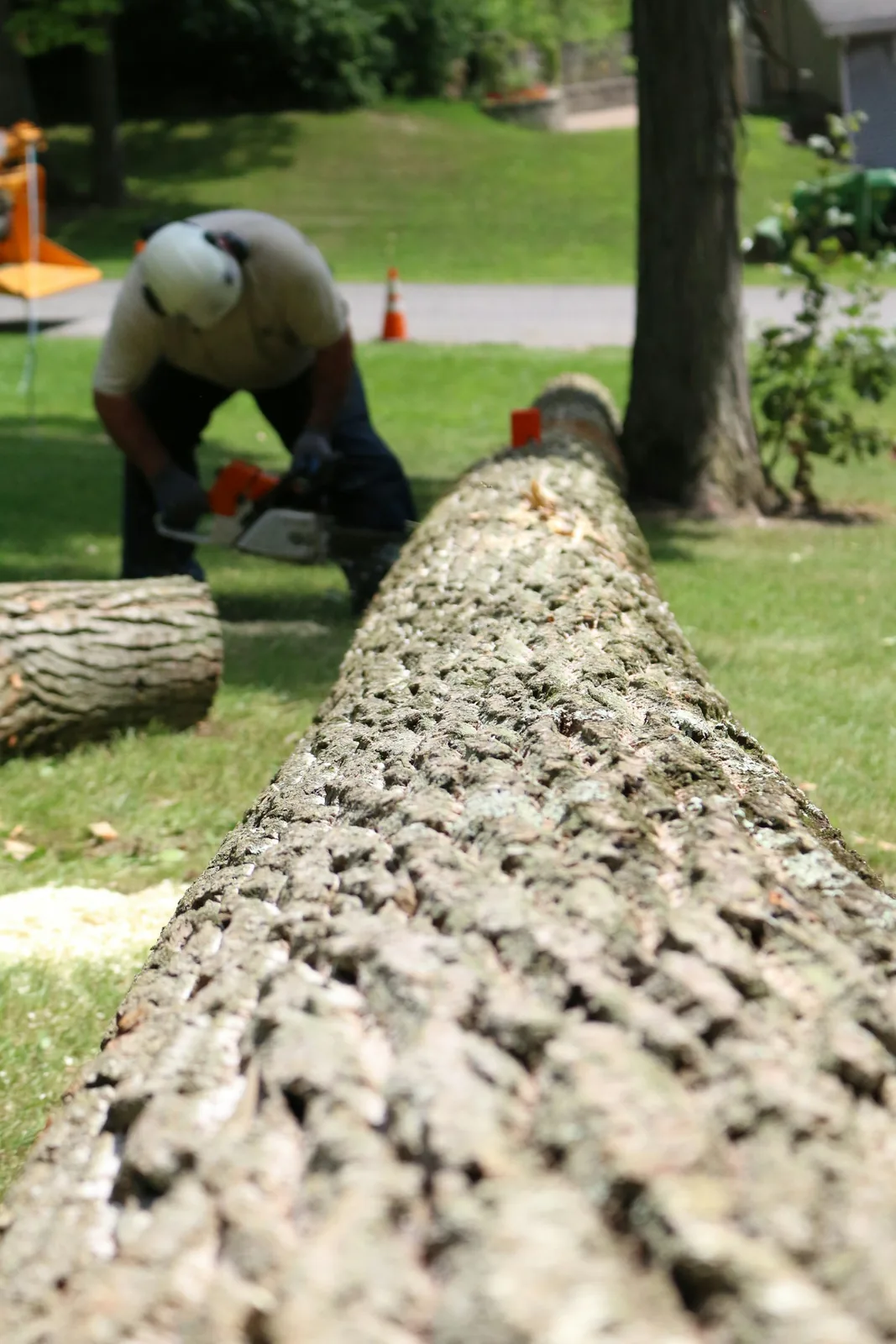
Tree Pruning in progress
Representative of the work. Real job photography replaces these as the crews document jobs.
What this costs and how long it takes
Roughly $250 to $700 for a small tree and $600 to $1,200 for a medium one
HomeGuide published ranges. Trimming several trees on one visit usually drops the per-tree price by 10 to 25 percent.
These are published cost ranges for Kansas and national industry averages, not a quote. Every tree is different, and the only way to know what yours costs is a free on-site look.
What moves the price
- Tree size and age
- Number of trees
- Whether the work needs a climber or is reachable from the ground
What moves it up or down
- Hard access or a tight spaceadds 25 to 50 percent
- Several trees on one visitsaves 10 to 25 percent per tree
- Peak season, summer into falladds 10 to 20 percent
- A crane is requiredadds $500 or more
- Same-day emergencyup to two or three times standard rate
- Permit, where one is needed$60 to $450
Free on site estimate.
Tree Pruning questions
What is the difference between pruning and trimming, and does one cost more?
Trimming is about clearance, getting limbs off a roof or a line. Pruning is about structure, making cuts that change how the tree grows. Angi prices both at roughly $200 to $800 per tree and states plainly that they tend to cost the same, because the bill is driven by crew time and tree size rather than by what the work is called. Most homeowners call for trimming and get more long term value from pruning.
How young is too young to prune?
In the first year after planting, take out only broken, dead, or rubbing material. The tree needs its full leaf area to build roots in Kansas clay, and a hard first year pruning slows establishment. Real structural work starts around year three, once the tree has settled and you can see which stem wants to be the leader.
My tree has two trunks. Is that a problem?
It depends on the union. Look at where the two stems meet. A U shaped joint with a visible ridge of bark pushed up between them is usually sound. A tight V with the bark pressed inward and no ridge means included bark, which is a weak union with no wood fiber crossing it. Those are the ones that split, and the correction is easy while the competing stem is still small.
Can I prune my own young tree?
Yes, and on a tree you can reach from the ground you probably should. Use sharp bypass pruners or a hand saw, cut just outside the branch collar, and do not seal the wound. The two mistakes worth avoiding are flush cuts into the trunk and taking too much at once. If you cannot reach it without a ladder, that is the point to call somebody.
Should I paint or seal the cuts?
No, with one exception. Wound dressings trap moisture against the cut and slow the tree's own sealing process. The exception is an oak or an elm cut during the growing season, where sealing the wound immediately blocks the beetles that carry oak wilt and Dutch elm disease. That is a storm emergency measure, not a routine one.
My tree is already mature. Is pruning still worth paying for?
The structural window has closed but three things still pay for themselves: removing deadwood before it falls, reducing end weight on long horizontal limbs, and taking out a specific hazardous limb over a target. None of those changes the tree's architecture. All of them change how likely it is to shed something onto your driveway.
When should young trees be pruned in Kansas?
Dormant season, roughly January through early March. The structure is visible without leaves, the tree is not spending energy on top growth, and the cuts have all spring to close. Oaks stay out of the April through July window entirely because of oak wilt. If you are working on a young oak, do it in February.
Request a free estimate
Free, no obligation. We call back within 15 minutes.
Got it.
We call back within 15 minutes during business hours.
That did not send. Call and we will take it down over the phone.
(785) 550-0100Coverage
Lawrence, Topeka, and everything between
We run out of Lawrence and cover 14 towns across 5 counties. If your town is not pinned, call anyway. We are usually closer than you think.
- Home base
- Lawrence, KS
- Storm calls
- 24 / 7
Often booked together
Tree Trimming
Clearing limbs off roofs, driveways, and power drops, and thinning canopies before storm season.
Crown Reduction
Bringing a tree down in height and spread without topping it, when it has outgrown its spot.
Tree Planting
Choosing and planting species that survive Kansas clay, wind, and heat.
More in Tree Care
- Tree Removal
- Tree Trimming
- Stump Grinding
- Stump Removal
- Crown Reduction
- Deadwooding
- Cabling and Bracing
- Tree Planting
- Shrub and Hedge Trimming
- Firewood