Land Services
Forestry Mulching in Lawrence and Topeka
Grinding standing brush and small trees into mulch in place, with nothing hauled off.
- Hauling
- None, material stays on site
- Best on stems
- Up to about 8 inches
- Cedar
- Killed in one pass
- Stumps
- Stay in the ground
What this is
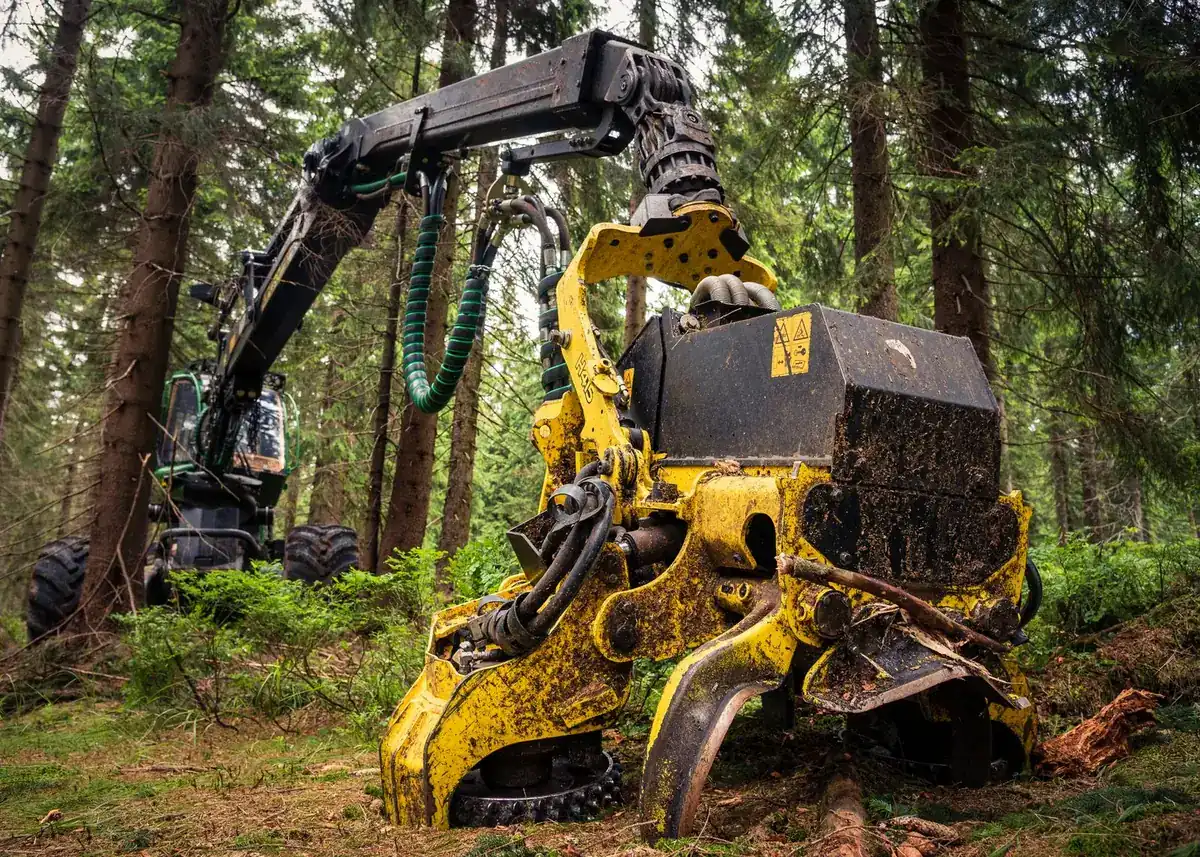
A forestry mulcher is a drum of carbide teeth on a track machine that takes standing material and turns it into a layer of chips on the ground. One machine, one pass, no burn piles and no dump trucks. It works well on cedar, brush, and small hardwood up to roughly 8 inches. Above that size, conventional clearing is faster and cheaper.
What the job includes
- Standing brush and small trees mulched in a single pass
- Nothing hauled, so no disposal cost and no trucks on the road
- Mulch layer holds soil and slows regrowth
- Low ground pressure tracks, which matters on soft or sloped ground
What the Machine Actually Does
A forestry mulcher is a rotating drum studded with carbide teeth, mounted on the front of a tracked carrier. It takes standing material at ground level and reduces it to chips in a single pass. The operator drives into the brush and the brush becomes a layer of mulch on the ground behind the machine.
There is no felling, no piling, no burning, and no hauling. That is the entire economic argument for it. On a conventional clearing job, a large share of the cost is moving material: dragging it to a pile, loading it, trucking it, and paying to dump it. Mulching removes all of that by leaving the material where it grew, in a form that will break down.
The tracks matter as much as the drum. A tracked carrier spreads its weight over a large footprint, so it can work on soft ground and moderate slopes that would rut badly under wheeled equipment. On the bottomland ground along the Kansas River and the Wakarusa, that is often the difference between working in March and waiting until July.
- Standing brush and small trees reduced to chips in one pass
- Nothing hauled, so no disposal fees and no trucks on the road
- Mulch layer holds soil on slopes and suppresses some regrowth
- Low ground pressure tracks for soft or sloped ground
- No burn piles, which matters where burning is restricted or unwelcome
Where Mulching Wins and Where It Loses
Mulching is the right tool on cedar thickets, brush, honeysuckle, volunteer elm and mulberry, overgrown fence lines, trail corridors, and any material up to roughly eight inches in diameter. Through that size class the machine moves steadily and the cost per acre is genuinely lower than conventional clearing.
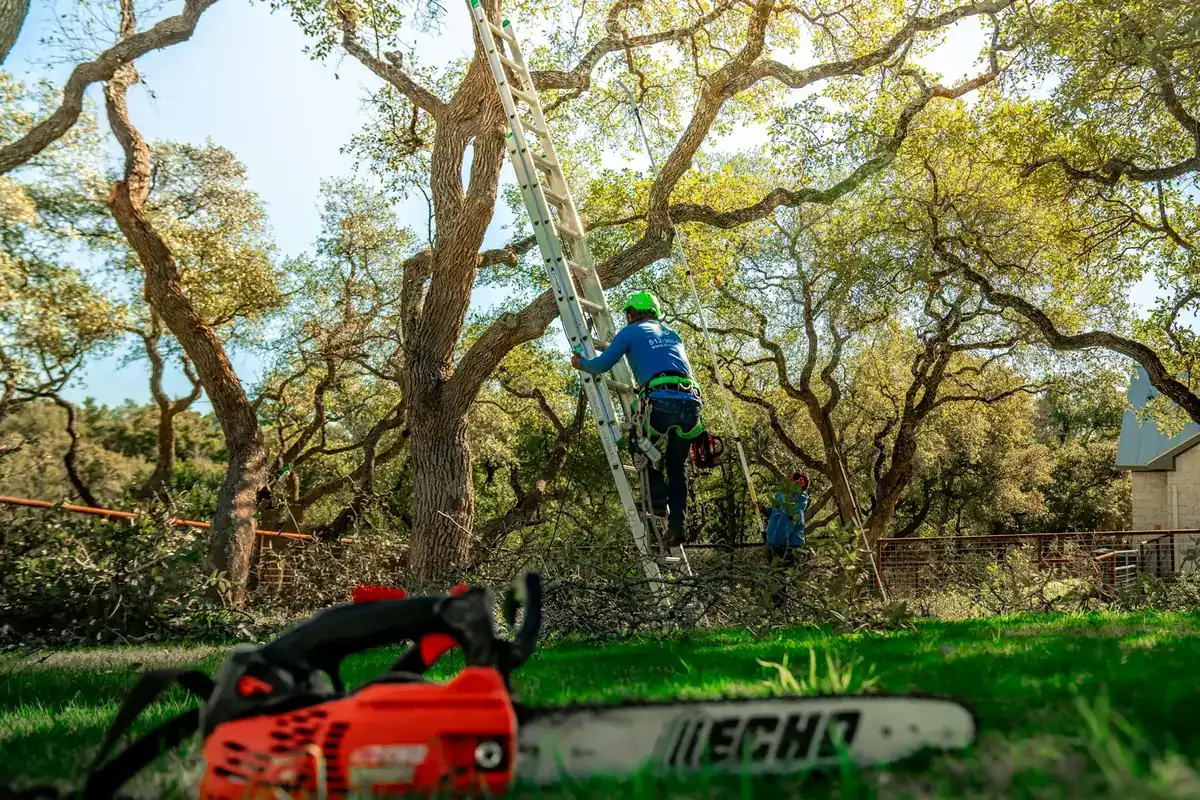
Above eight inches the math turns over. Big wood takes the drum a long time to chew through, and time is what you are paying for. A twenty inch hackberry that a saw drops in three minutes can occupy a mulcher for a long stretch. On tracts with real timber on them, felling with a saw and moving the wood with a grapple is both faster and cheaper, and the honest answer is often to do both: fell and haul the big stems, mulch everything under eight inches.
Mulching is also the wrong answer when you need clean ground. A building pad, a grading job, or anything getting fine turf does not want several inches of chips worked into the soil. Pasture, wildlife ground, trails, and fence lines do not care and benefit from the cover.
- Good fit: cedar, brush, honeysuckle, volunteer hardwood under about 8 inches, fence lines, trails
- Poor fit: mature timber, building pads, ground about to be graded or seeded to fine turf
- Mixed tracts usually get both treatments, split by stem size
- Very rocky ground is hard on teeth and shows up in the price
Cedar, and Why One Pass Finishes It
Eastern redcedar is the most common target for mulching in northeast Kansas and it is also the species this method suits best. Cedar does not resprout from a cut stump. Sever it at ground level and the tree is finished, permanently, with no stump treatment and no follow up cutting.
That is not true of most of what grows alongside it. Hackberry, elm, mulberry, honeylocust, Osage orange, and bush honeysuckle all come back from the stump, often more vigorously than before, because an established root system is now feeding a fraction of the previous top growth. A tract mulched once and then ignored can be thicker in three years than it was to start with.
So the plan for a mixed tract has two parts. Mulch it now, then either treat the hardwood stumps at the time of cutting or budget a short follow up pass in the second season. The follow up pass is cheap when it is planned and expensive when it is a surprise, because by then the sprouts are big enough to be a job again.
- Cedar: one pass, permanently killed
- Hardwoods and honeysuckle: resprout, and need cut stump treatment or a year two pass
- Standing cedar left nearby will reseed the cleared ground, so the seed trees matter
- Year two maintenance passes are a fraction of the original cost when scheduled
Hedge Rows and Fence Lines
A mulcher is the fastest way to open up a fence line that has grown shut, which is why so many of these calls come from landowners in Douglas, Shawnee, and Jefferson counties who cannot get a tractor down their own boundary anymore.
The complication in this region is Osage orange. Hedge rows were planted as living fence a century or more ago, wire was later stapled to them, and the trees have since grown around the wire. Mulching into embedded steel destroys carbide teeth quickly, and replacing a set of teeth is not a small expense.
We handle that by asking first. If the fence is coming out anyway, we can pull wire ahead of the machine and work faster. If the fence is staying, we work the brush and the small stems with the mulcher and take the material immediately against the wire with saws by hand. That is slower and it costs more, and it beats the alternative of shredding a half mile of fence you meant to keep.
Stumps, Mulch Depth, and What the Ground Looks Like After
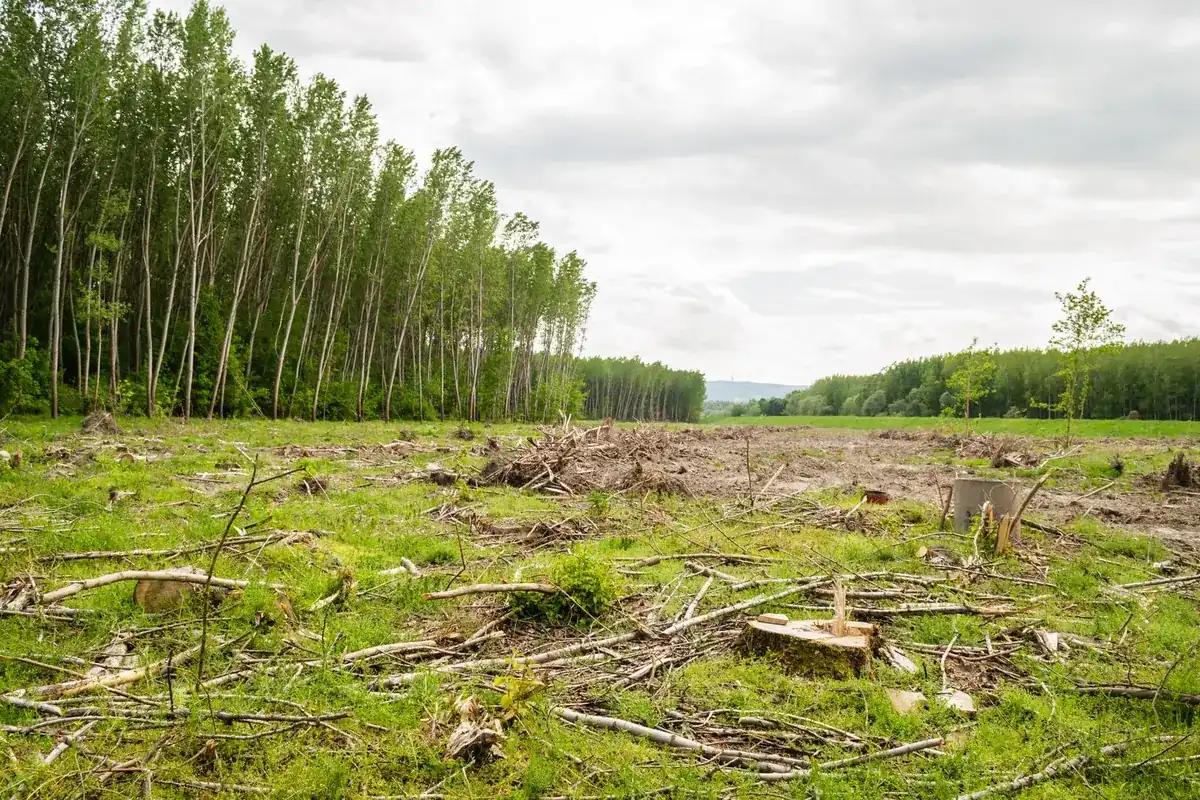
Mulching does not remove stumps. The drum cuts material at or slightly below ground level and leaves the root system in the soil, which decays over several years. For pasture, wildlife ground, trails, and fence lines, that is fine and it is the normal expectation.
It is not fine if the ground is going to be hayed, tilled, mowed with a finish mower, or built on. Those uses need the stumps ground below grade or excavated, and that is separate work with a separate machine. Decide it before you get a quote, because it is one of the largest single swings in the price.
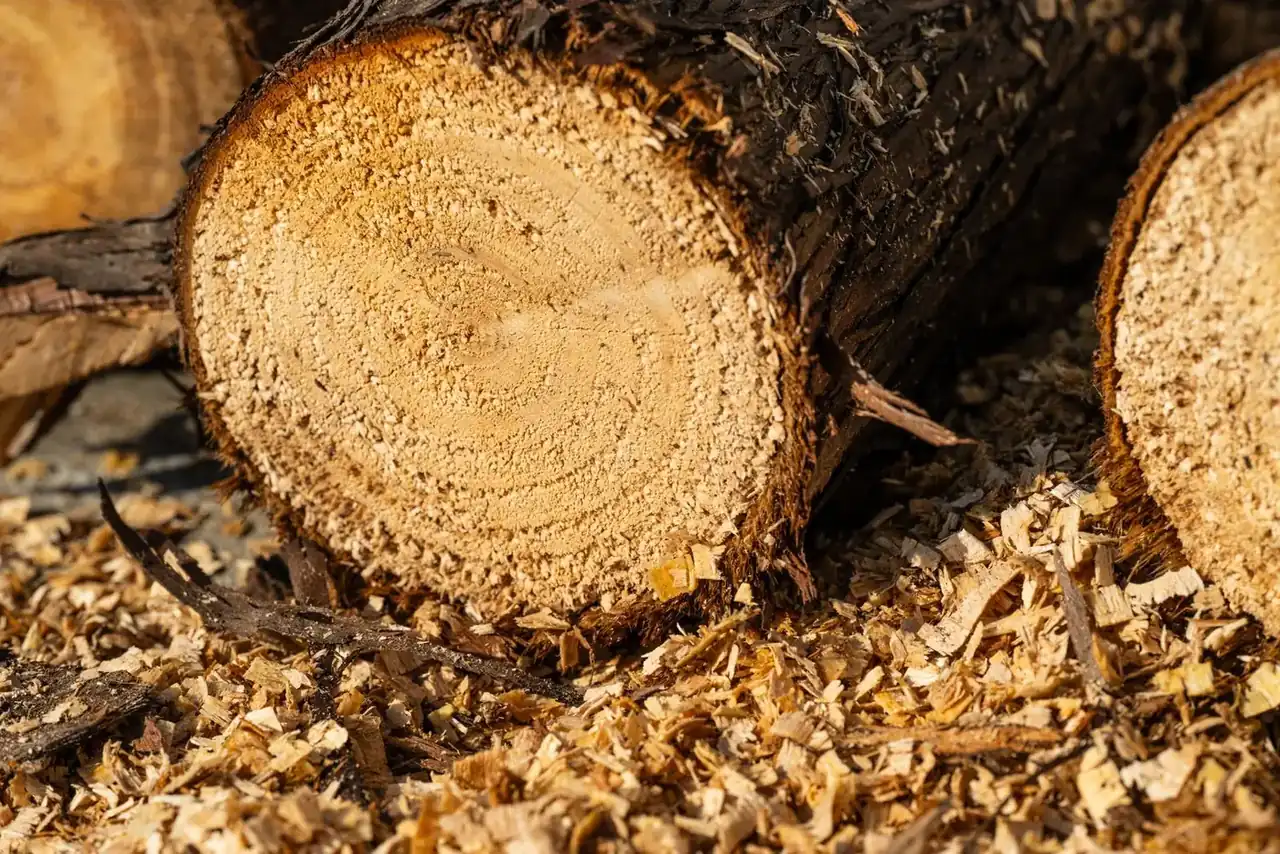
What you are left with immediately after is a layer of chips ranging from a light scatter on thin brush to several inches deep where the material was heavy. It settles and breaks down over a couple of seasons. Grass will come through a light layer without help. Through a thick layer it needs either time or a pass with a harrow to spread it out.
- Stumps stay in the ground, so plan separately if the ground is being farmed or built on
- Chip depth varies with how much material was standing
- Light chip layers reseed naturally; heavy ones benefit from spreading
- Nitrogen is temporarily tied up as chips break down, so heavy layers slow grass for a season
How a Mulching Job Runs
The work itself is one machine and one operator, which makes the planning around it the part that decides whether it goes well.
The order below is what we follow, and the boundary and locate steps at the front are the ones worth insisting on with any contractor.
- 1 Walk the tract, agree on the boundaries, and flag everything that stays.
- 2 Call utility locates and mark private lines, old water lines, and any buried debris you know about.
- 3 Identify hedge rows and any fence with wire in it, and decide whether the fence stays.
- 4 Fell and remove any stems over roughly eight inches with a saw and grapple, since the mulcher is the wrong tool for those.
- 5 Mulch the standing brush and small stems, working the tract in a pattern that avoids the wettest ground first.
- 6 Treat hardwood stumps at the time of cutting where regrowth matters.
- 7 Spread heavy chip accumulation where the layer is deep enough to smother grass.
- 8 Schedule the year two follow up pass on resprouting species while everyone still remembers it is needed.
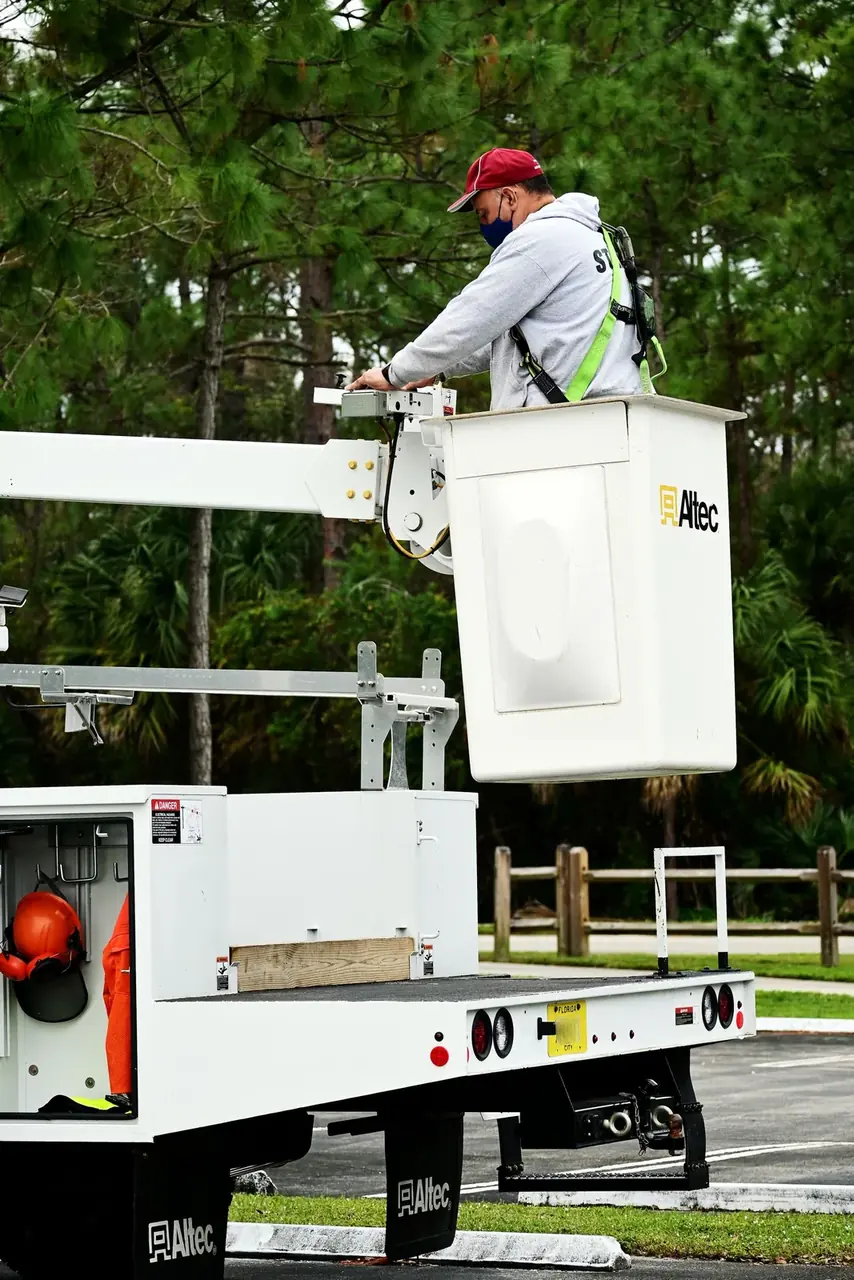
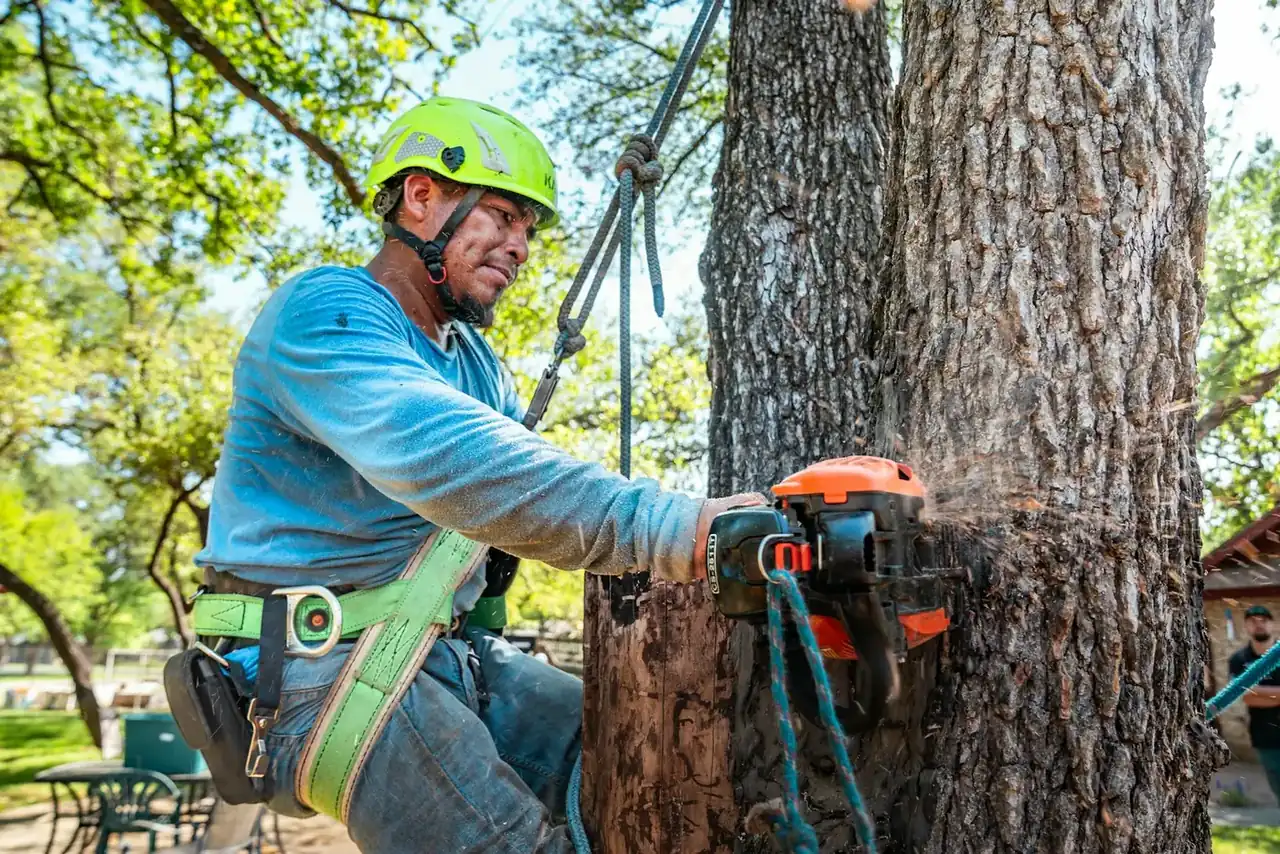
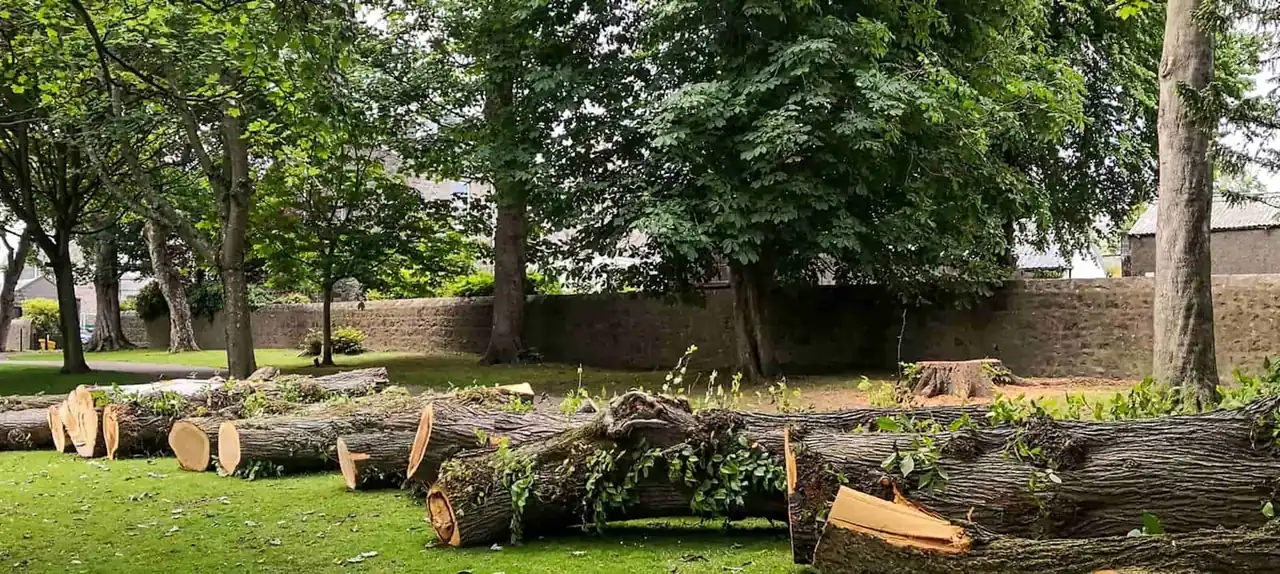
Forestry Mulching in progress
Representative of the work. Real job photography replaces these as the crews document jobs.
Forestry Mulching questions
Is mulching cheaper than conventional clearing?
On brush and small stems, usually, because there is no dragging, no piling, no trucking, and no dump fee. On mature timber it is not, since the drum works slowly through big wood while a saw does not. For reference, ProMatcher puts Kansas land clearing at roughly $1,100 to $2,300 per acre, and mulching quotes get compared against that range.
How big a tree can the mulcher handle?
It will chew larger, but roughly eight inches is where it stops being economical. Past that we fell with a saw and move the wood with a grapple, then mulch everything underneath. Most tracts around here get that combination.
Does mulching kill the cedar for good?
Yes. Eastern redcedar does not resprout from a cut stump, so one pass finishes it. What it does not stop is reseeding from cedar still standing nearby, including on adjoining ground, so clearing the seed trees is part of the plan on a tract you want to stay open.
What about brush that grows back?
Hardwoods and honeysuckle resprout from the stump, sometimes harder than the original growth. Either the stumps get treated at the time of cutting or the tract gets a short follow up pass in the second season. Planned, that pass is inexpensive. Unplanned, it is a second clearing job.
Do the stumps come out?
No. Mulching cuts at or slightly below ground level and leaves the root system in the soil to decay. That is fine for pasture, trails, and wildlife ground. Hay ground, tilled ground, finish-mowed lawn, and building sites need the stumps ground or excavated as separate work.
How deep is the mulch layer and will grass grow through it?
It ranges from a light scatter to several inches, depending on how much material was standing. Grass comes through a light layer on its own. A heavy layer ties up nitrogen while it breaks down and slows grass for a season, so it is worth spreading with a harrow where it piled up.
Can you mulch a fence line without wrecking my fence?
Yes, though it is slower and it costs more than open ground. The problem in this part of Kansas is Osage orange hedge with wire grown into the trunks. We keep the machine off the wire and cut the material immediately against the fence by hand. If the fence is being replaced anyway, tell us, because the job gets considerably faster.
Will the machine rut up my ground?
Tracked carriers spread their weight over a big footprint, which is why they can work ground that would rut under wheels. Saturated bottomland is still saturated bottomland, though. On genuinely wet ground we will reschedule rather than leave you with ruts to fix.
Can I burn instead?
Sometimes, and where county rules allow it and conditions are right, burn piles are a legitimate low cost option. Mulching is what people choose when burning is restricted, when the tract is close to houses, or when nobody wants to babysit a pile for two days.
Request a free estimate
Free, no obligation. We call back within 15 minutes.
Got it.
We call back within 15 minutes during business hours.
That did not send. Call and we will take it down over the phone.
(785) 550-0100Coverage
Lawrence, Topeka, and everything between
We run out of Lawrence and cover 14 towns across 5 counties. If your town is not pinned, call anyway. We are usually closer than you think.
- Home base
- Lawrence, KS
- Storm calls
- 24 / 7
Often booked together
Land Clearing
Clearing acreage of trees, brush, and cedar so the ground can be used.
Brush Removal
Overgrown brush, volunteer trees, and undergrowth cut and hauled.
Fence Line Clearing
Clearing trees and brush grown into fence lines and property boundaries.