Tree Care
Deadwooding in Lawrence and Topeka
Removing dead limbs from an otherwise healthy tree before they come down on their own.
- Best time to inspect
- Mid summer, full canopy
- Best time to cut
- Dormant season
- Urgent case
- Hangers after a wind event
- Cheapest way to buy
- Bundled with a scheduled trim
What this is
Every mature tree sheds lower limbs as the canopy shades them out. Dead wood in an oak over a driveway is the limb that lands on a car during the first wind event of the season. Deadwooding takes the dead material out, and it is one of the few jobs where the tree looks almost identical afterward and the risk profile is completely different.
What the job includes
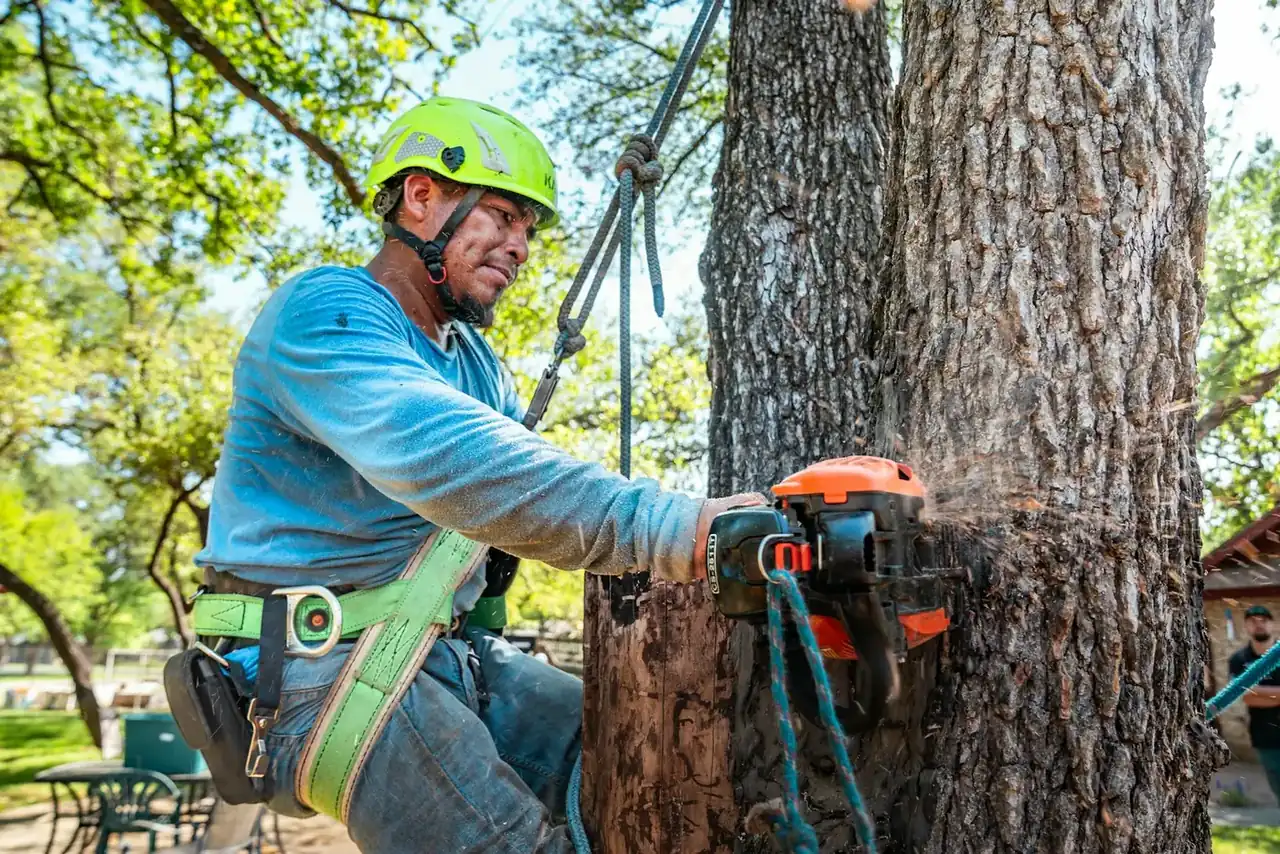
- All dead limbs above a set diameter removed
- Hangers and broken limbs caught in the canopy taken down
- Cuts at the branch collar so the tree seals the wound
- Common on mature oaks, hackberries, and honeylocusts over driveways and patios
Why mature trees shed limbs from the inside out
A tree drops lower and interior limbs as a matter of economics. As the canopy expands, the branches underneath end up shaded by the ones above them, and a branch that is not producing more energy than it costs to maintain gets abandoned. The tree walls it off at the branch collar and stops supplying it. That limb is now dead wood held in place by nothing but the strength of the dead fibers.
How long it stays up there depends on species. Bur oak and Osage orange hold dead limbs for years, because the wood is dense and rot resistant, which means an oak deadwood limb hanging over a driveway can be a decade old and still weigh what it weighed the day it died. Silver maple and cottonwood decay faster and drop sooner, often in the first significant wind after they fail. Honeylocust and hackberry are the two that most often surprise people, because their dead wood is small in diameter but long, and it comes down in a tangle.
The reason to remove it deliberately rather than wait is that a limb that falls on its own picks its own moment and its own landing spot. Deadwooding is the one job where the tree looks almost identical afterward and the risk underneath it is completely different.
- Dead limbs are shaded out branches the tree has already abandoned
- Oak and Osage orange hold their deadwood for years
- Silver maple and cottonwood drop theirs in the next real wind
- Hangers, limbs broken but caught in the canopy, are the highest priority of all
How to find it from the ground
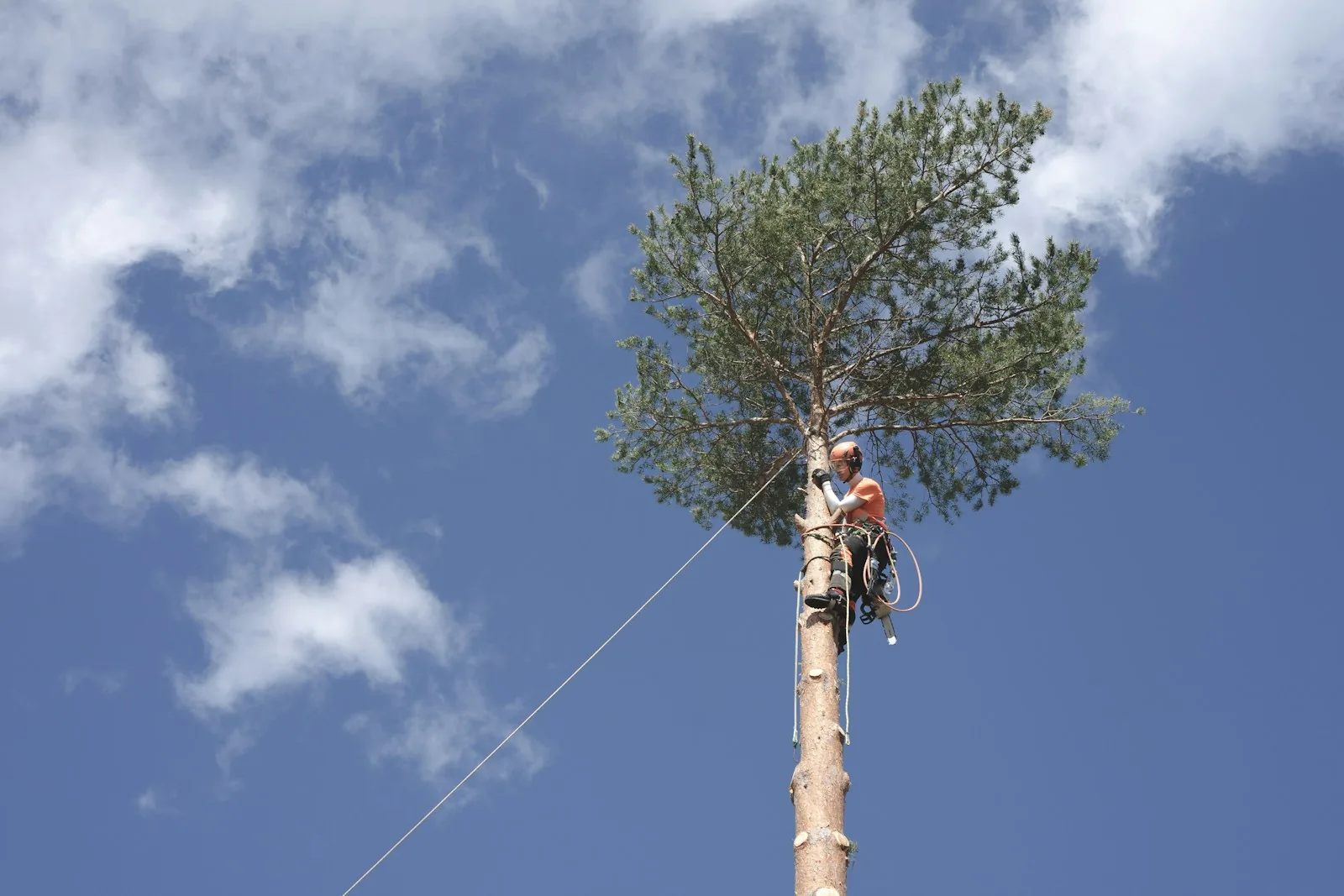
Mid summer is the diagnostic window. Stand back from the tree in July when everything is fully leafed out and look for bare limbs silhouetted against the canopy. Those are dead. In winter every limb is bare and you cannot tell the difference from the ground, which is why so many people discover their deadwood problem the hard way in April.
Bark is the second sign. A dead limb sheds its bark in sheets, leaving smooth grey or tan wood underneath. Living bark stays tight. If you can see a stretch of limb where the bark has fallen away and the wood underneath looks weathered, that limb has been dead for a while.
The third sign, and the one that means call somebody now, is a limb that is broken but hung up in the canopy. Those are called hangers, and they are the single most dangerous thing in a residential tree. A hanger has already failed. What is holding it is a fork, a vine, or another branch, and none of those were designed for the job. After any wind event in Lawrence or Topeka, walk under your trees and look up.
- Look in mid summer, when live canopy makes dead limbs obvious
- Bark peeling off in sheets means the limb is already dead
- Fungal conks growing on a limb mean decay inside it
- Hangers caught in the canopy after a storm are urgent, not routine
How a deadwooding visit runs
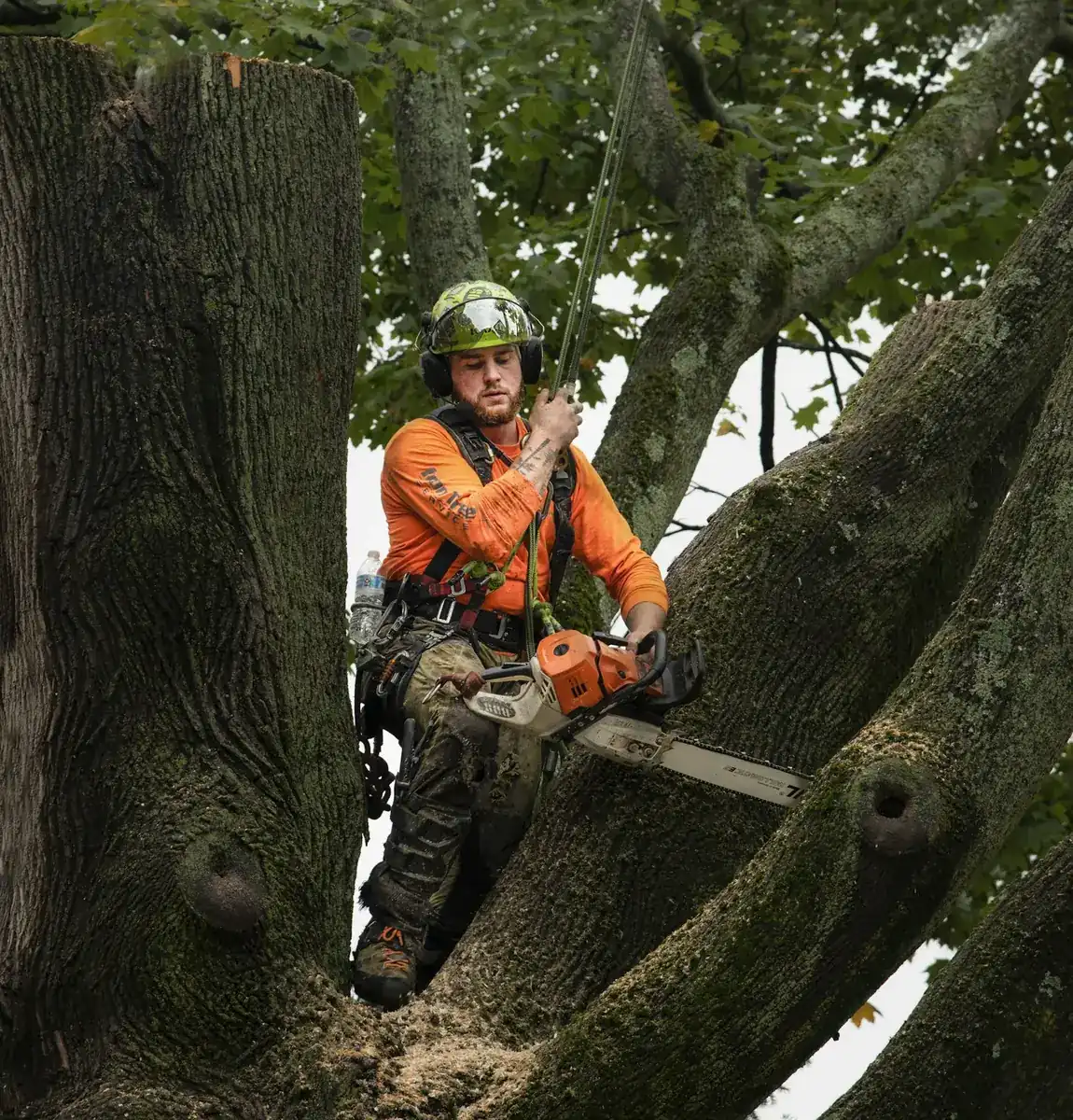
Deadwooding is climbing work with a lot of careful positioning and relatively little cutting. Most of the crew time goes into getting the climber to each limb safely, which is why access within the canopy drives the price more than the number of limbs does.
A climber never ties into dead wood. Every tie in point is live, sound wood, and the rigging is set accordingly, which is the part that takes time on a tree with widespread deadwood.
- 1 We set a diameter threshold with you. Below about an inch and a half, taking everything out is a lot of climbing time for limbs that will not hurt anything.
- 2 The climber sets a line into sound live wood well above the work and inspects the tie in point specifically, since a dead anchor is how climbers get killed.
- 3 Hangers come out first, because they are the material most likely to move on its own while somebody is working under it.
- 4 Each dead limb gets cut just outside the branch collar, the raised ring where the tree already walled it off. That ring is live tissue and it stays.
- 5 Anything over a target gets roped and lowered. Dead wood is unpredictable in freefall and it shatters on impact rather than bouncing.
- 6 The climber works the whole canopy systematically rather than by what is visible from one side, since the deadwood you can see from the patio is rarely all of it.
- 7 Brush chips on site and the area gets raked and blown down.
What it costs and how it usually gets bought
Deadwooding is normally bundled into a trimming job rather than sold on its own, which is why the major cost guides do not price it separately. If the crew is in the tree anyway, taking the dead material out costs relatively little extra, and that is the cheapest way to buy it.
GoTreeQuotes, a guide authored by a named arborist with more than fifteen years in the trade, publishes the only structured deadwooding table we found. It puts the general range at $250 to $950, broken out by size as $250 to $525 for a small tree of 10 to 20 feet, $390 to $720 for 20 to 30 feet, $500 to $1,200 for 30 to 50 feet, and $740 to $2,000 for anything from 50 to 100 feet. By species it puts oak at $850 to $1,700, maple at $400 to $1,000, pine at $400 to $750, and cottonwood at $400 to $850. Treat those as directional. GoTreeQuotes is a lead generation site, which is a real caveat, and none of it is Kansas data.
For a single limb, HomeGuide's arborist guide puts individual branch removal at $75 to $250 per branch, which will run against a minimum job fee of $100 to $300 on a small job. One dead limb over a car is worth doing regardless. Four dead limbs across three trees is worth grouping into one visit.
- Cheapest when combined with a scheduled trim on the same tree
- Oak costs more to deadwood than maple or pine, per GoTreeQuotes
- Single branch removal runs $75 to $250 per branch per HomeGuide
- Several trees in one visit cuts the per tree cost 10 to 25 percent
The timing rules still apply
Removing dead wood does not carry the disease risk that live pruning does, because the tree has already compartmentalized the connection. That said, the cut still lands on live collar tissue, so it is still a wound, and on an oak in June that wound is still an entry point for oak wilt. Dead limbs come out of oaks in the dormant season along with everything else.
The practical scheduling conflict is that mid summer is when you can see the deadwood and winter is when you should cut it. Mark it in July, photograph it, and book the work for January. On a hackberry or a honeylocust there is no seasonal restriction and you can do it whenever it is convenient.
Emergency hangers are the exception to all of it. A limb hanging over a walkway comes out the day we can get there, regardless of species or month.
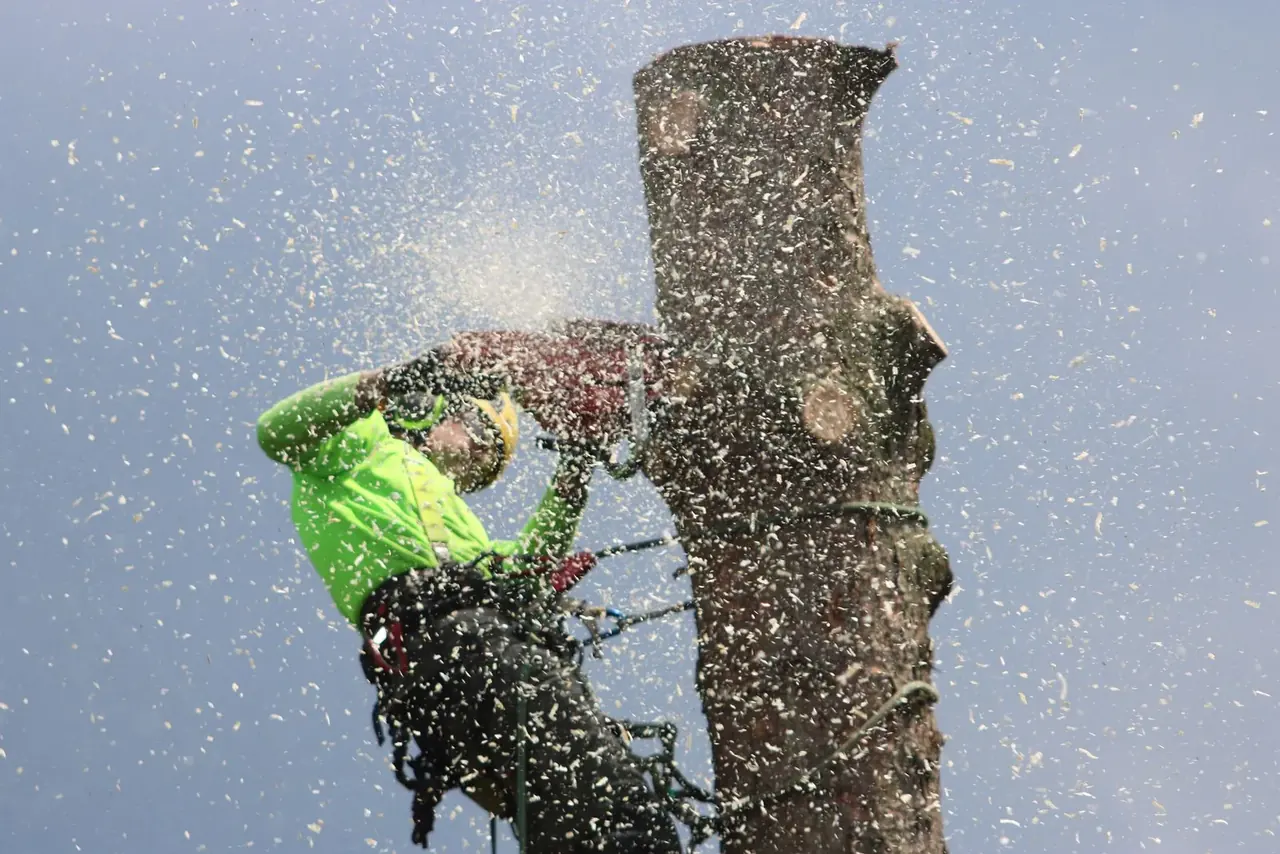
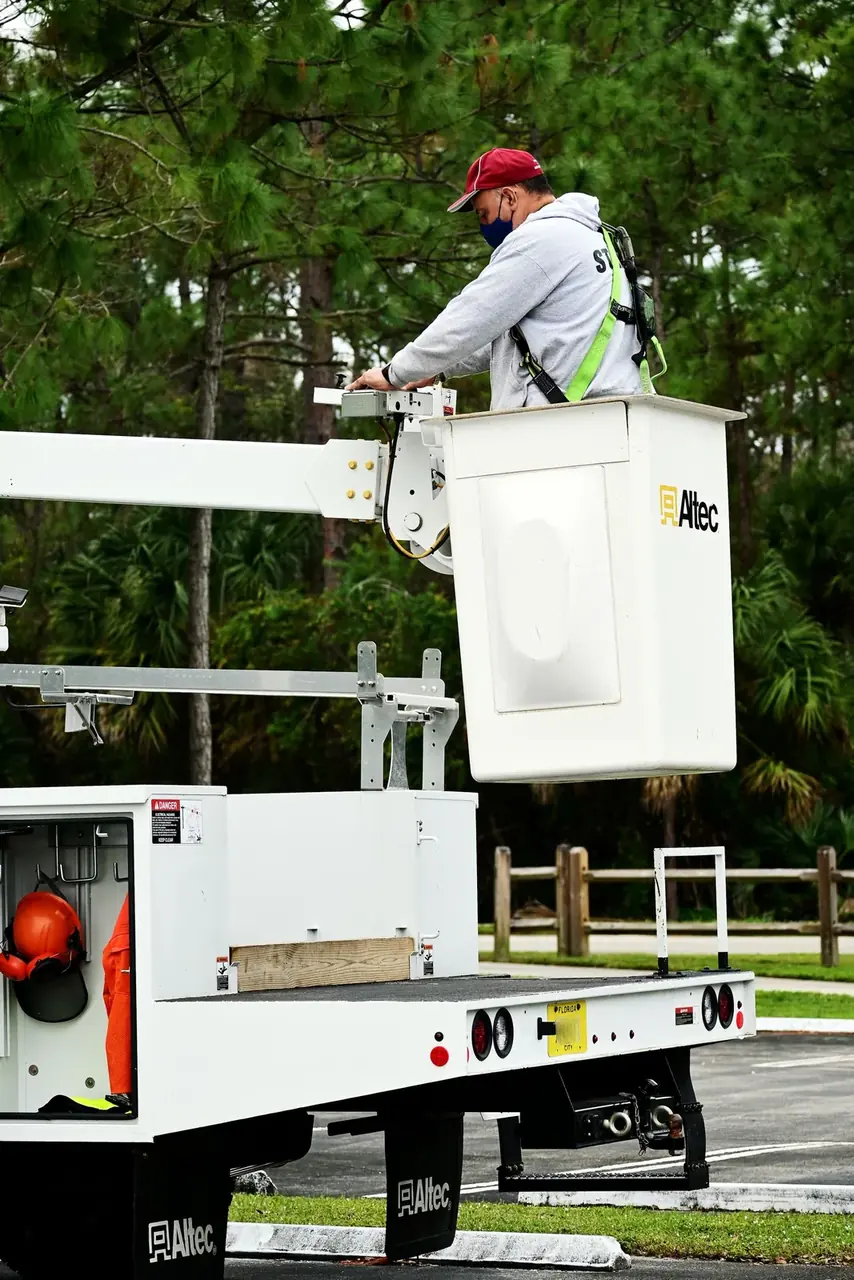
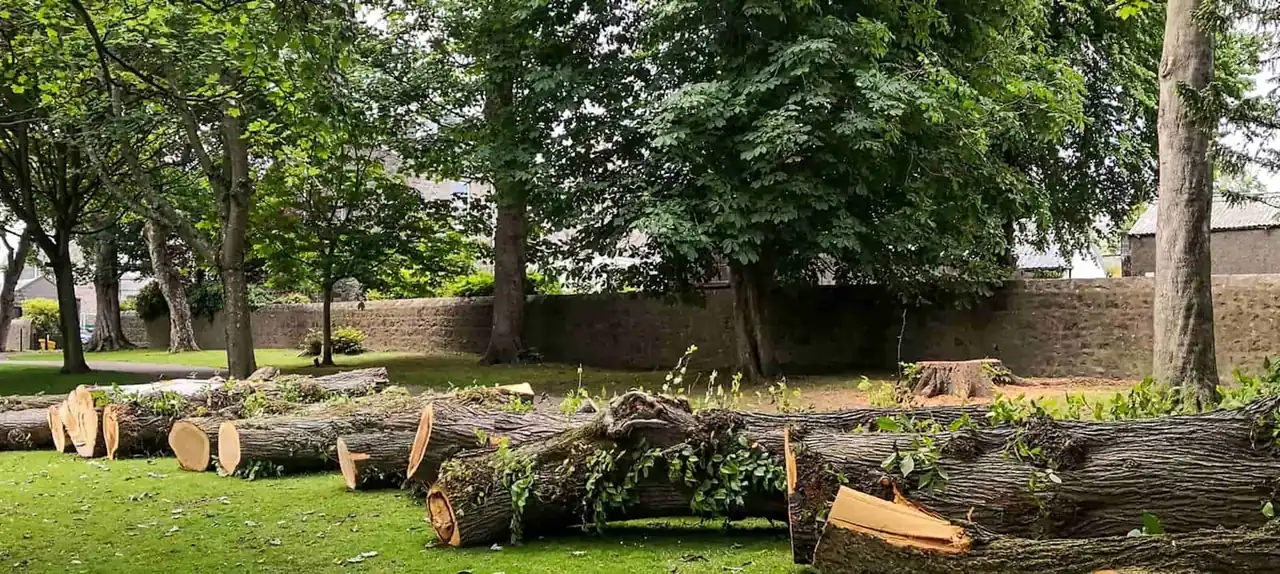
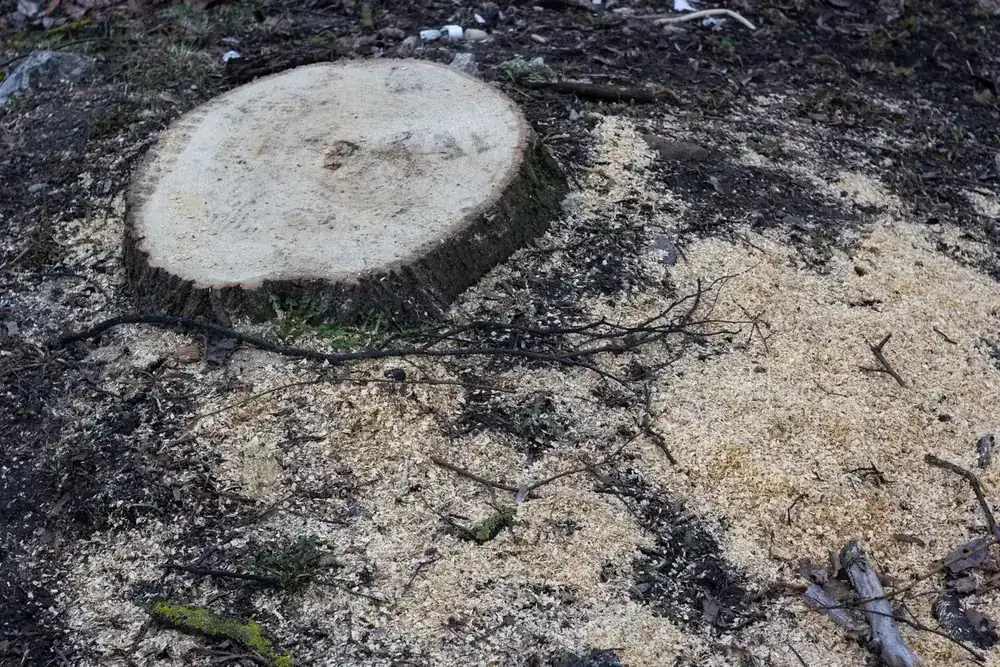
Deadwooding in progress
Representative of the work. Real job photography replaces these as the crews document jobs.
Deadwooding questions
How do I know whether my tree has dead limbs?
Look up in mid summer when the tree is fully leafed out. Bare limbs against a green canopy are dead, and they are obvious from the ground once you know to look. Bark falling away in sheets and leaving smooth weathered wood underneath is the other reliable sign. In winter you cannot tell, because everything is bare.
Is dead wood actually dangerous or does it just look bad?
It depends entirely on what is underneath it. A dead limb over open lawn will land on grass. The same limb over a driveway, a patio, a sidewalk, or a play set is a different proposition. A dead oak limb can weigh a few hundred pounds and it comes down at the moment of its choosing. That target assessment is what determines whether deadwooding is urgent or optional.
What does deadwooding cost?
It is usually bundled into a trim rather than sold separately, which is the cheapest way to buy it. GoTreeQuotes, the one guide publishing a structured table for this work, puts the general range at $250 to $950, with a 30 to 50 foot tree at $500 to $1,200 and oaks specifically at $850 to $1,700. For a single limb, HomeGuide puts individual branch removal at $75 to $250, though a small job will run against a minimum service charge of $100 to $300.
Will removing dead limbs hurt the tree?
No. The tree abandoned those limbs already and walled them off at the branch collar, so there is no live tissue being lost. The cut lands just outside that collar and leaves the collar intact, which is the tissue the tree uses to seal over the spot. Deadwooding does not count against the quarter of live canopy limit, because none of it is live.
Should I take out every dead twig?
No. Below about an inch and a half in diameter, chasing every dead twig is a lot of climbing hours for material that cannot hurt anyone or anything. We set a threshold with you before the work starts. If the objective is safety, the threshold is set by what is underneath. If the objective is appearance, it goes smaller and costs more.
My oak has a lot of dead branches on the inside. Is it dying?
Probably not. Interior shading kills lower and inner limbs on every mature tree as the canopy grows outward, and an oak that holds those dead limbs for years looks worse than it is. What would worry us is dieback starting at the top and outside of the canopy and working in, or bare limbs appearing across the whole crown in one season. That pattern is a decline problem and needs an assessment, not just a deadwooding.
A limb is broken and hanging in my tree. How fast do I need to deal with it?
Fast, and stay out from under it in the meantime. A hanger has already failed structurally and is being held by a fork or another branch that was never meant to carry it. Wind, rain, or nothing at all can release it. If it is over a driveway, a walkway, or anywhere people go, treat it as an emergency call rather than a scheduled one.
Request a free estimate
Free, no obligation. We call back within 15 minutes.
Got it.
We call back within 15 minutes during business hours.
That did not send. Call and we will take it down over the phone.
(785) 550-0100Coverage
Lawrence, Topeka, and everything between
We run out of Lawrence and cover 14 towns across 5 counties. If your town is not pinned, call anyway. We are usually closer than you think.
- Home base
- Lawrence, KS
- Storm calls
- 24 / 7
Often booked together
Tree Trimming
Clearing limbs off roofs, driveways, and power drops, and thinning canopies before storm season.
Tree Risk Assessment
A written evaluation of whether a specific tree is likely to fail, and what to do about it.
More in Tree Care
- Tree Removal
- Tree Trimming
- Tree Pruning
- Stump Grinding
- Stump Removal
- Crown Reduction
- Cabling and Bracing
- Tree Planting
- Shrub and Hedge Trimming
- Firewood