Land Services
Land Clearing in Lawrence and Topeka
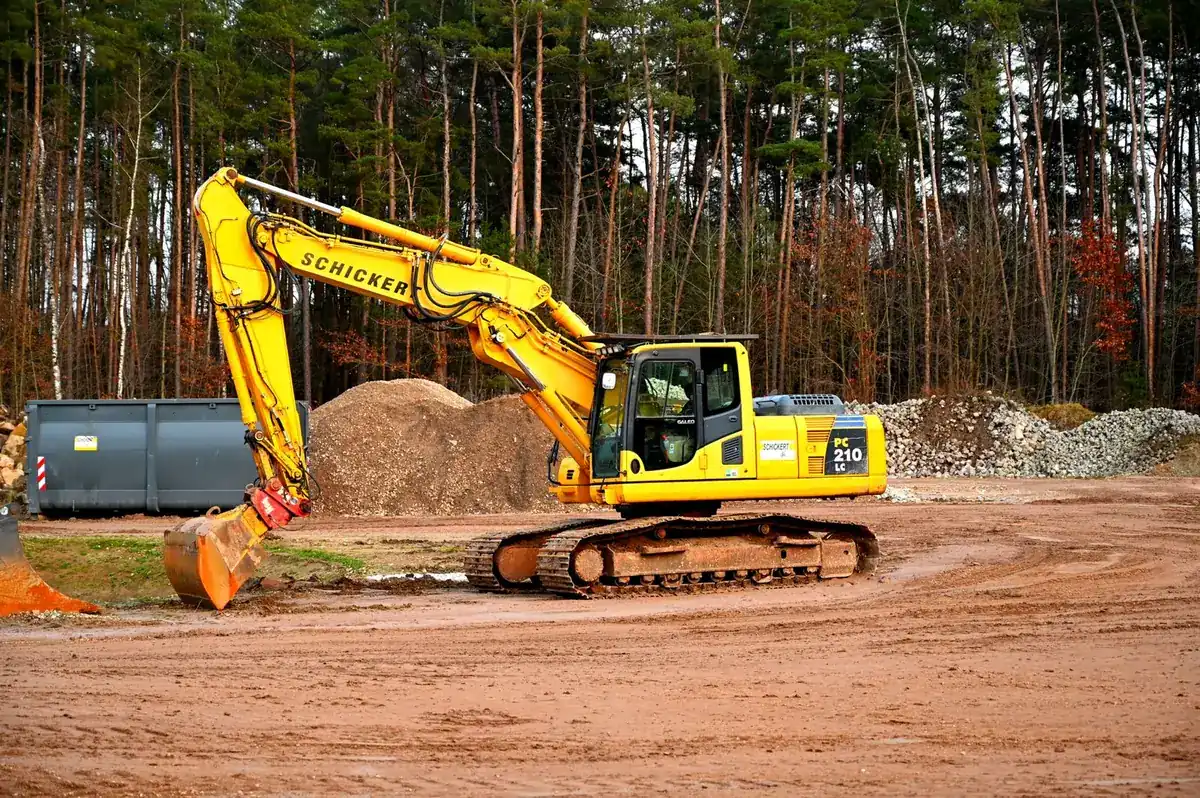
Clearing acreage of trees, brush, and cedar so the ground can be used.
- Kansas rate
- $1,100 to $2,300 per acre
- Source
- ProMatcher Kansas cost data
- Mulcher limit
- Roughly 8 inch stems
- Cedar
- Does not resprout
What this is
Eastern redcedar takes pasture in northeast Kansas faster than most owners expect, and a field that was open twenty years ago can be closed now. Clearing runs by the acre, and the price depends on stem density, how big the material is, and whether it gets mulched in place or hauled off.
What the job includes
- Full clearing by the acre for pasture, building sites, and development
- Cedar encroachment cleared out of grazing ground
- Material mulched on site or hauled, whichever costs less for your job
- Burn piles built where burning is allowed and you want it
What Clearing an Acre in Northeast Kansas Actually Involves
Very little of the ground we clear around Lawrence and Topeka is closed canopy timber. It is pasture that stopped being grazed, hedge rows planted a century ago, creek bottoms that filled in with volunteer elm and mulberry, and open ground that eastern redcedar walked into while nobody was watching. That mix is why Kansas clearing prices sit below the national numbers.
The job is defined by three things: how many stems per acre, how big the biggest of them are, and what happens to the material once it is on the ground. Stem count drives machine time. Stem size decides whether a mulcher can handle it or whether it needs a saw and a grapple. Disposal decides whether trucks are involved at all.
We walk the ground before quoting, because from the road an acre of six inch cedar and an acre of twenty inch hackberry look similar and price nothing alike. On larger tracts we walk it with you and mark what is staying.
- Pasture reclamation, building sites, hay ground, food plots, and development parcels
- Stem density and average diameter counted rather than estimated from the fence line
- Terrain, slope, and wet ground assessed, since bottomland along the Kansas River works differently than upland pasture
- Trees worth keeping flagged before any machine starts
Eastern Redcedar and What It Does to Pasture
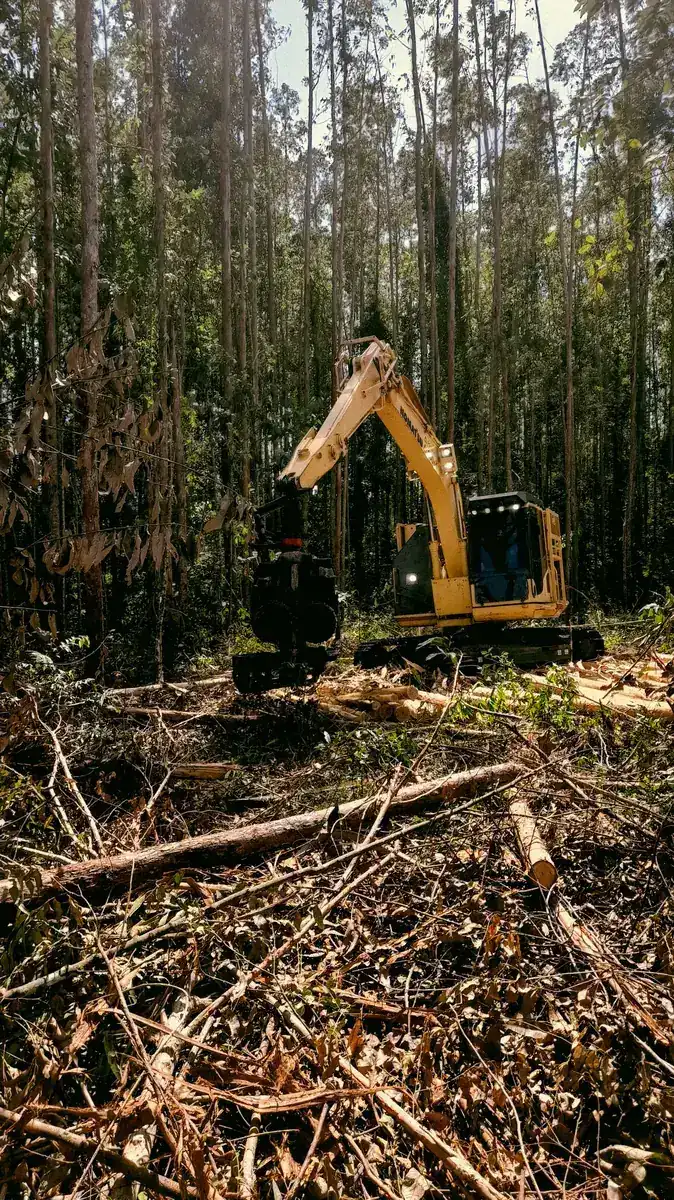
Redcedar is the reason most clearing calls in this part of Kansas happen. It is native, it is spread by birds, and without fire it moves into open grassland steadily from every fence line and draw. A pasture that was open when the current owner bought it can be closed twenty years later, and the change is slow enough that nobody notices until the grazing is gone.
The mechanism is straightforward. Cedar is evergreen, so it shades ground year round and the grass underneath simply stops. It also drinks heavily, which matters in a dry Kansas August. Once a stand closes canopy, the ground under it produces nothing and the seed source for the next acre is now standing in the middle of your pasture rather than off in the corner.
The one piece of good news is that cedar does not resprout from a cut stump. Kill it once and it is dead. Everything else we clear here, elm, hackberry, honeylocust, mulberry, Osage orange, comes back from the stump and needs either a follow up pass or a cut stump treatment.
- Cedar cut or mulched at ground level does not resprout
- Hardwood stumps do resprout and need treatment or a second pass in year two
- Small cedar under head height is the cheapest it will ever be to remove
- Clearing the seed trees first slows reinfestation of the whole tract
Osage Orange Hedge Rows
Across Douglas, Shawnee, Jefferson, and Leavenworth counties, Osage orange was planted in tight rows as living fence before wire was common. Those rows are still there, they are still on most section lines and property boundaries, and at some point somebody stapled wire to them. The wire is now inside the wood.
That makes a hedge row slower to clear than the same volume of open timber. Osage orange is one of the hardest, densest woods in North America, it is full of thorns, it multi-stems from the base, and cutting it means expecting embedded steel in every third trunk. Staples, barbed wire, and whole strands grown six inches deep destroy mulcher teeth and saw chain.
We price hedge rows separately from open acreage for that reason, and we ask before starting whether the fence is staying. Clearing beside a fence you intend to keep is careful, slow work. Clearing a row where the fence is being replaced anyway is a much faster and cheaper job, and the difference is worth a conversation before you get a number.
Pricing by the Acre
Land clearing in Kansas runs roughly $1,100 to $2,300 per acre according to ProMatcher's Kansas cost data. That range covers what most of this region actually is: scattered cedar, hedge row, volunteer hardwood, and workable terrain. It is well below the national figures, and the reason is that we are not clearing dense closed canopy timber here.
Heavier ground prices above that range and there is no honest way around it. Mature hardwood with a closed canopy, a steep creek bank, saturated bottomland that needs mats, or a tract full of eighteen inch Osage orange all take more machine hours per acre. National cost guides quote up to several thousand dollars per acre for heavily wooded ground, and that applies here too where the timber is genuinely thick.
The other big lever is disposal. Mulching in place carries no hauling and no dump fees. Hauling off means trucks, fuel, and disposal costs, and on a big tract that difference can be larger than everything else on the invoice combined.
- Acreage and stem density
- Average and maximum trunk diameter
- Terrain, slope, and soil moisture
- Mulched in place versus hauled off
- Stumps left, ground, or excavated
- Embedded wire, old fence, and buried debris
Mulch It In Place or Haul It Off
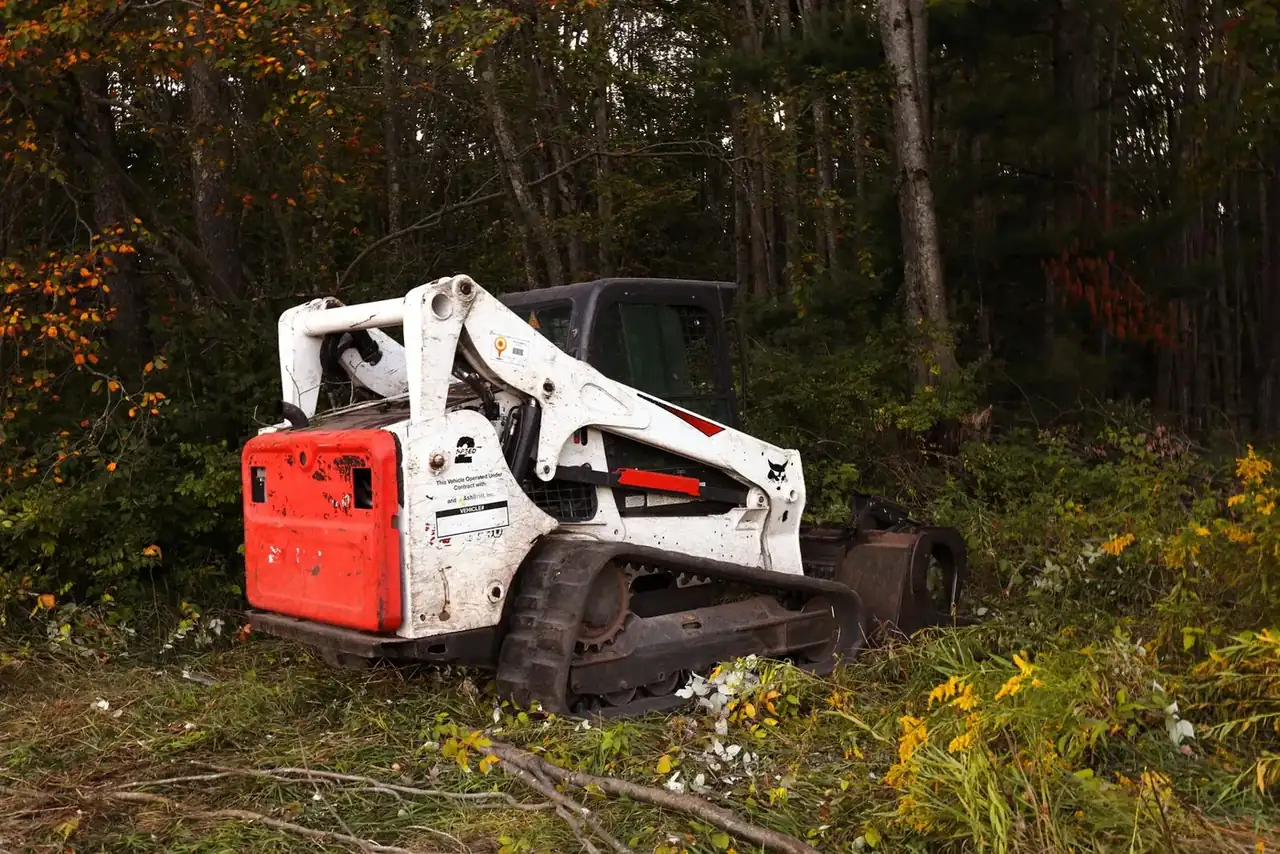
Mulching in place means a track machine with a carbide drum turns standing material into a layer of chips where it stood. One machine, one pass, no burn piles, no dump trucks, no disposal fee. The chip layer holds soil on slopes, suppresses some regrowth for a season or two, and breaks down into the ground over a few years.
It has a ceiling. Mulchers work efficiently through cedar, brush, and hardwood up to roughly eight inches. Above that, the machine grinds slowly through big wood and conventional felling with a saw and grapple is faster and cheaper. Mulching also leaves everything on the ground, which is fine for pasture and wrong if you are about to run a scraper over the site.
Hauling off costs more but leaves you clean dirt. That is the right call for building sites, anything getting seeded to a fine turf, and any tract where the chip layer would interfere with what comes next. On most jobs the answer ends up being both: mulch the brush and small stems, haul the big wood.
- Mulch in place: no disposal cost, good for pasture, holds soil, works to roughly 8 inches
- Haul off: clean ground for building or grading, higher cost, trucks on the road
- Burn piles where county rules allow it and you want the ash
- Big wood can go to firewood rounds instead of the chipper if you want it
How a Clearing Job Runs
Clearing is measured in days and machines rather than hours and crews, so the sequence matters more than it does on a residential removal. Here is how the work actually goes.
The one step people skip is the first one. Marking boundaries and utilities before a machine moves prevents the two most expensive mistakes in this business, which are clearing across a line onto someone else's ground and finding a buried line with a mulcher.
- 1 Walk the tract together, flag the trees that stay, and mark the boundaries you want held.
- 2 Call for utility locates and mark anything buried, including old water lines and abandoned service that no locate service knows about.
- 3 Agree what happens to the material: mulched in place, piled, burned, or hauled.
- 4 Decide the stump question in writing before anyone starts, because it changes both the machine and the price.
- 5 Cut and remove the big wood first with saw and grapple, since it is the material a mulcher handles worst.
- 6 Mulch or clear the brush and small stems, working in a pattern that keeps the machine off wet ground.
- 7 Grind or excavate stumps where the plan calls for it, and mark any that are being left.
- 8 Grade, backfill holes, and reseed disturbed ground if the tract is going back to grass.
- 9 Come back in year two for hardwood resprouts, which is a short and cheap visit if it is planned and an expensive one if it is a surprise.
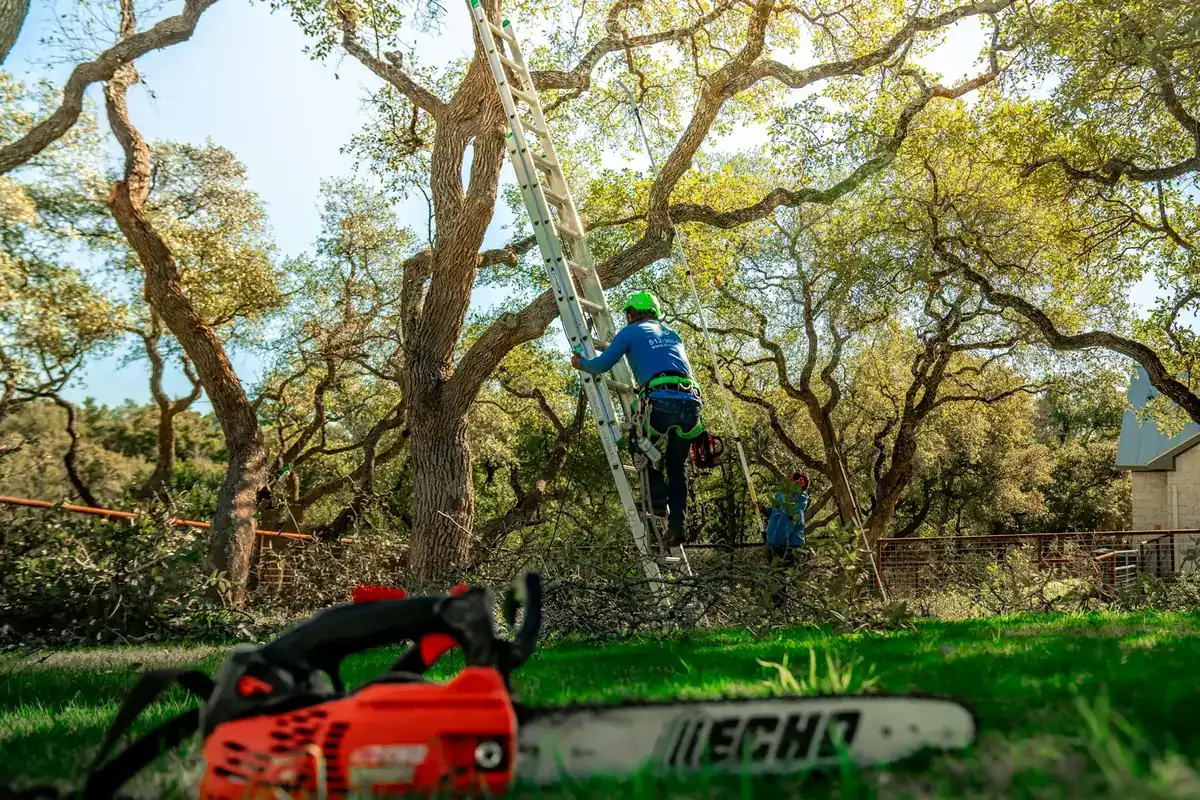
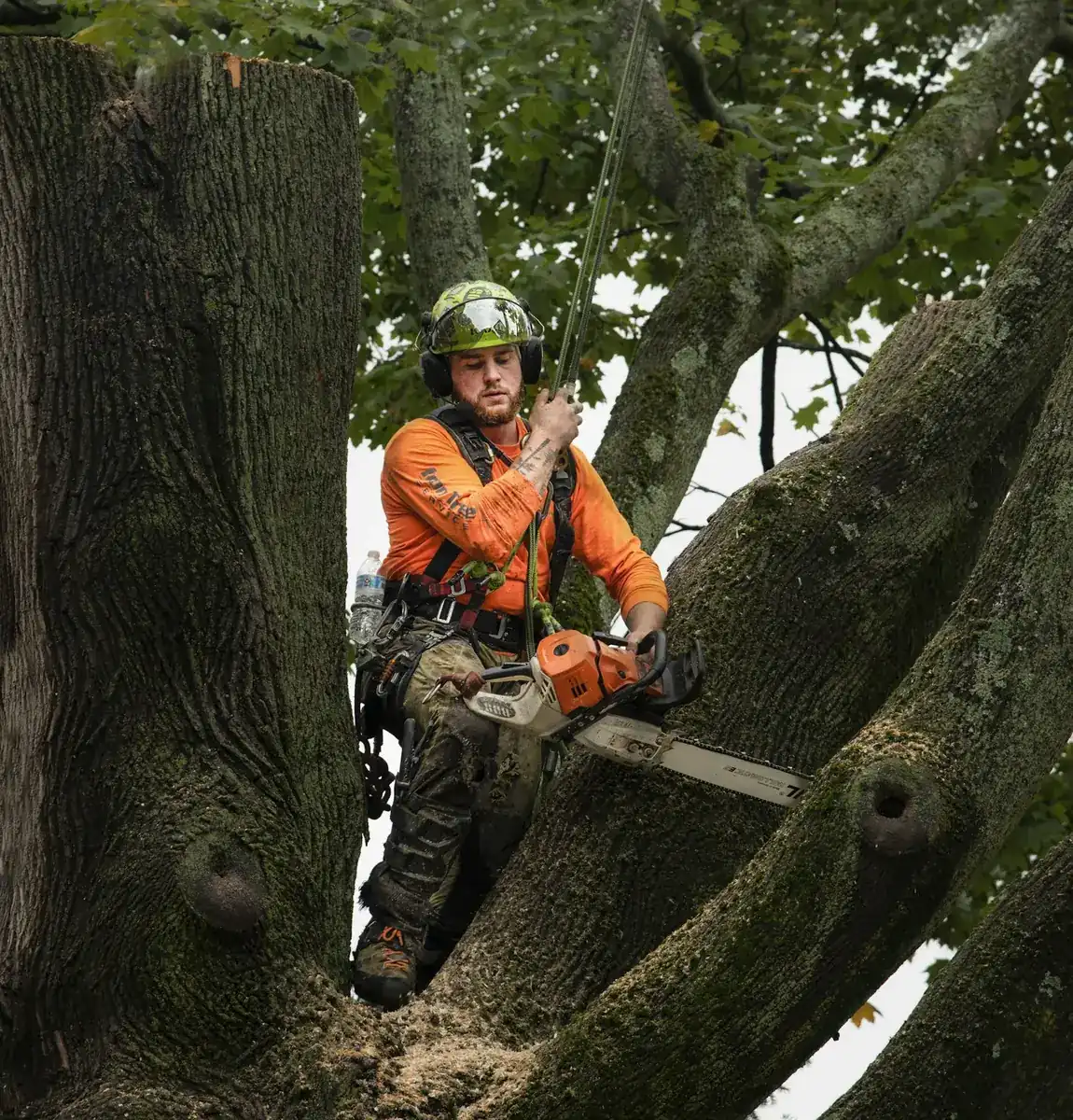
Land Clearing in progress
Representative of the work. Real job photography replaces these as the crews document jobs.
What this costs and how long it takes
$1,100 to $2,300 per acre for typical northeast Kansas ground
ProMatcher Topeka at $1,675 and Lawrence at $1,726 per acre, corroborated by an independent Midwest light-clearing band. Those quotes date from 2018 to 2021, so treat them as a floor. Kansas runs below national figures because most of what we clear is hedgerow, volunteer cedar and scattered hardwood rather than dense timber. Thick closed-canopy ground prices higher.
These are published cost ranges for Kansas and national industry averages, not a quote. Every tree is different, and the only way to know what yours costs is a free on-site look.
What moves the price
- Acreage
- Stem density and average trunk size
- Terrain and slope
- Whether material is mulched in place or hauled off
- Whether stumps are ground, dug, or left
What moves it up or down
- Hard access or a tight spaceadds 25 to 50 percent
- Several trees on one visitsaves 10 to 25 percent per tree
- Peak season, summer into falladds 10 to 20 percent
- A crane is requiredadds $500 or more
- Same-day emergencyup to two or three times standard rate
- Permit, where one is needed$60 to $450
Cleared ground rarely stays bare. Seeding, grading, and drainage are the usual next step. Clean Cut Lawn Care handles that side, and shares our ownership.
Land Clearing questions
How much does it cost to clear an acre in Kansas?
ProMatcher's Kansas data puts land and lot clearing at roughly $1,100 to $2,300 per acre, which fits the region because most of what we clear here is cedar, hedge row, and scattered volunteer hardwood rather than dense timber. Heavy closed canopy, steep ground, or big Osage orange prices above that. We walk it and quote per acre.
Do the stumps come out?
Only if you ask. Stumps left in place are cheaper and fine for pasture, hunting ground, and anything that will not be mowed. Ground or excavated stumps are necessary before hay ground, turf, tillage, or construction. Tell us which one you have and we will price accordingly.
Is mulching in place cheaper than hauling everything off?
On brush and small stems, usually, because there is no hauling, no dump fee, and no trucks. On mature timber it is not, since a mulcher works slowly through large wood while a saw and grapple do not. Most tracts end up split: mulch the small material, haul or burn the big wood.
Will the cedar grow back?
Not from the stumps. Eastern redcedar does not resprout once it is cut at ground level, which is why mulching kills it outright. It will reseed from any cedar still standing nearby, including on your neighbor's ground, so clearing the seed trees matters as much as clearing the thicket.
What about hedge rows with old fence grown into them?
Common across Douglas and Shawnee counties and priced separately. Osage orange planted as living fence with wire stapled to it eventually grows around the wire, and cutting it means hitting embedded steel regularly. It is slow work and it is much cheaper if the fence is being replaced rather than preserved.
How long does clearing take?
Machine days rather than crew hours. Light cedar in open pasture moves quickly. Heavy hedge row, wet bottomland, and anything with stump work in it moves slowly. We give you a day count with the quote and we tell you when weather is going to move it, since wet ground is the usual reason a clearing job slips.
Can you leave some trees?
Yes, and it is worth thinking about before we start. Walk it with us and flag what stays. Scattered bur oak and hackberry in a pasture are worth keeping for shade and for the livestock. Once a machine has been through, a tree you meant to keep cannot be put back.
Do I need a permit to clear my own land?
Clearing on private rural ground is generally the owner's decision, but burning is regulated separately and county rules vary, and anything in a floodplain, a drainage easement, or a conservation program has its own requirements. Tell us if the tract is enrolled in a program, because those rules can bind you in ways nobody mentions until later.
How do I check out a clearing contractor in Kansas?
Kansas has no state licensing requirement for tree removal companies, so ask for a certificate of liability insurance and workers compensation from the carrier, and ask what machine they are bringing. A quote for an acre without a stated machine and a stated disposal plan is a number, not a bid.
Request a free estimate
Free, no obligation. We call back within 15 minutes.
Got it.
We call back within 15 minutes during business hours.
That did not send. Call and we will take it down over the phone.
(785) 550-0100Coverage
Lawrence, Topeka, and everything between
We run out of Lawrence and cover 14 towns across 5 counties. If your town is not pinned, call anyway. We are usually closer than you think.
- Home base
- Lawrence, KS
- Storm calls
- 24 / 7
Often booked together
Forestry Mulching
Grinding standing brush and small trees into mulch in place, with nothing hauled off.
Lot Clearing
Clearing a residential or commercial lot to build-ready condition.
Brush Removal
Overgrown brush, volunteer trees, and undergrowth cut and hauled.