Tree Care
Tree Planting in Lawrence and Topeka
Choosing and planting species that survive Kansas clay, wind, and heat.
- Best season
- Fall, September to early November
- Watering period
- One year per inch of caliper
- Hole width
- Two to three times the root ball
- Never plant
- Ash, Scots pine, or Bradford pear
What this is
Most young trees that die in northeast Kansas die from being planted too deep or being the wrong species for the site. Our clay soils drain slowly, summers run hot and dry, and the wind is constant. Bur oak, chinkapin oak, Kentucky coffeetree, and hackberry all handle that. Bradford pear does not, and it splits apart around year fifteen anyway.
What the job includes
- Species selected for the soil, exposure, and the mature size the spot can take
- Root flare set at grade, which is the single most common planting mistake
- Mulched in a ring, never piled against the trunk
- Watering schedule written down and handed to you
The two things that kill young trees here
Planting depth is the first and it is by far the most common. Every tree has a root flare, the point where the trunk widens and the first structural roots leave it. That flare belongs at or slightly above finished grade. Nursery stock frequently arrives with the flare already buried four to six inches down inside the container or the root ball, because it got buried during the growing and potting process, and if you plant the ball at grade you have now buried it twice.
A buried flare kills slowly. Bark that was never meant to be underground stays wet, the trunk tissue at that point begins to break down, and roots that would have gone outward instead circle upward toward the oxygen and eventually girdle the trunk. The tree looks fine for six or eight years and then declines with no obvious cause. By then nobody connects it to planting day.
Species selection is the second. Our soils are heavy clay with high pH, drainage is slow, summers run hot and dry, and the wind never stops. Pin oak planted in that soil turns yellow between green veins within a few years because alkaline soil locks up iron it cannot reach. Bradford pear grows fast, looks tidy, and splits itself apart around year fifteen because its branches all originate from nearly the same point on the trunk.
- Root flare at or slightly above finished grade, always
- Soil excavated off the top of the ball until the flare is found
- Species matched to clay soil, alkaline pH, heat, and constant wind
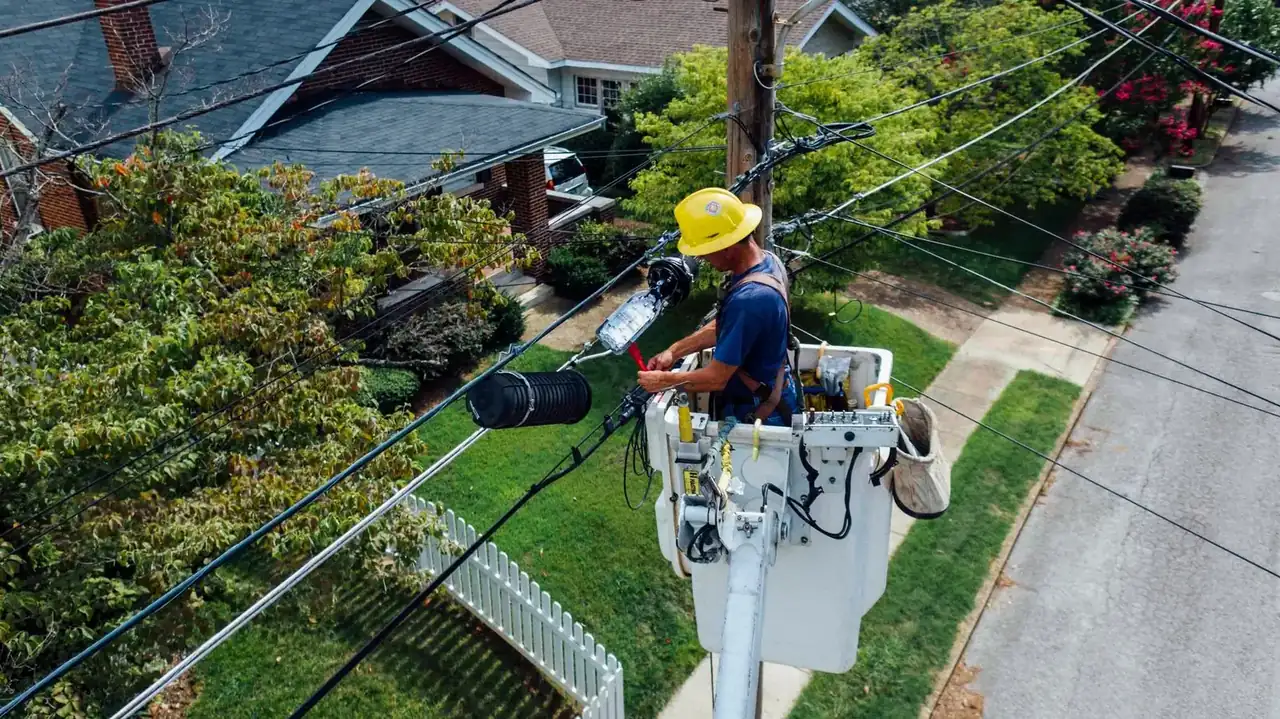
- Mature size checked against the space, including overhead lines
What actually thrives in northeast Kansas
Bur oak is the benchmark. It is native, it handles the clay, it tolerates drought once established, it holds strong branch structure, and it lives long enough that planting one is a gift to somebody you will never meet. Chinkapin oak is close behind and stays a bit smaller. Kentucky coffeetree handles urban conditions well and casts light shade. Hackberry is unglamorous, native, and nearly indestructible, which is why it shows up on Today's Homeowner's list of the most common species in Lawrence alongside Osage orange and American elm.
For smaller lots, serviceberry and eastern redbud both stay under the wires and both flower. American hornbeam works in shade. If you want something that grows fast enough to notice, honeylocust does, though it needs structural pruning in its first decade or it will build the same weak unions everything else does.
The trees to avoid here have specific reasons. Green ash and white ash, because emerald ash borer is confirmed in 13 northeast Kansas counties and planting one now commits you to permanent treatment. Scots pine, because pine wilt kills it. Silver maple and Siberian elm, because they are fast, weak, and already over represented in the canopy. Bradford pear, for the structural failure and the fact that it has escaped into fence rows across the region. Kansas Forest Service publishes a preferred trees list specifically for northeast Kansas that is worth reading before you buy.
- Large shade: bur oak, chinkapin oak, Kentucky coffeetree, hackberry
- Under wires or small lots: serviceberry, eastern redbud, American hornbeam
- Avoid: ash of any kind, Scots pine, silver maple, Siberian elm, Bradford pear
- Check the mature spread against the house, the drive, and the property line
How we plant a tree
The planting itself is not complicated and most of the important decisions happen before the shovel comes out. What separates a tree that establishes from one that struggles is depth, hole width, and water.
Fall, roughly September through early November, is the best window here. Roots keep growing in warm soil after the top has gone dormant, which gives the tree a head start before it has to support a full canopy through a Kansas July. Spring is the second best option.
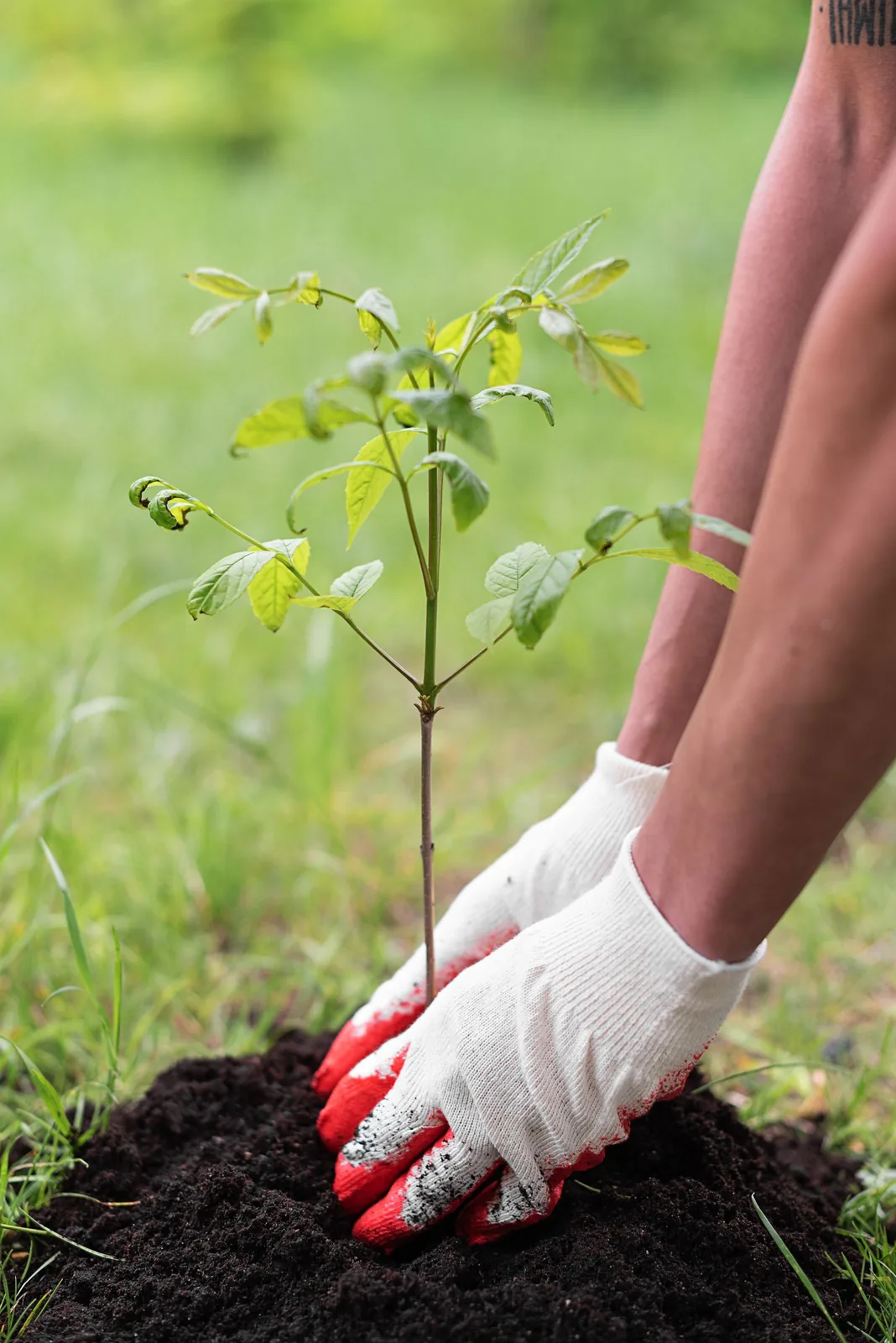
- 1 We pick the location against the mature size of the species, checking overhead lines, the house, the drive, the septic, and the property line.
- 2 Soil comes off the top of the root ball until the root flare is visible. That is the reference point for depth, not the top of the container.
- 3 The hole gets dug two to three times the width of the ball and no deeper than the distance from the flare to the bottom of the ball. Wide and shallow, because roots spread sideways, not down.
- 4 The sides of the hole get roughed up rather than left slick, since a smooth walled hole in clay behaves like a pot and roots will circle inside it.
- 5 The tree goes in with the flare at or just above grade, gets straightened from two directions, and any circling roots on the outside of the ball get cut.
- 6 Backfill is the native soil that came out of the hole, not amended potting mix, watered in as it goes to remove air pockets. Amended backfill discourages roots from ever leaving the hole.
- 7 Mulch goes down two to three inches deep in a ring out to the edge of the hole and further if you can, pulled back several inches clear of the trunk so nothing touches the bark.
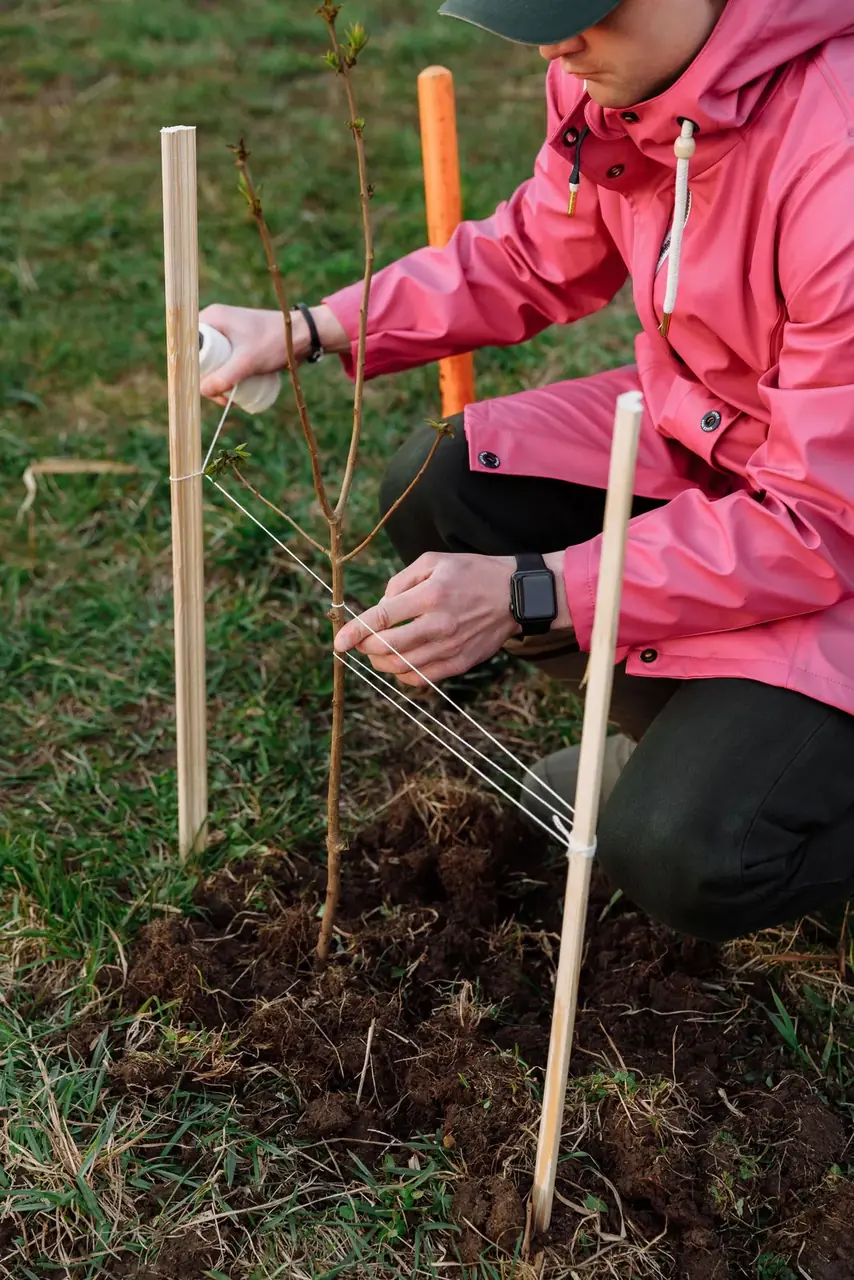
- 8 Staking only if the site is genuinely windy or the tree is top heavy, using a wide flexible tie, and it comes off after one growing season.
The first three summers decide it
A newly planted tree has a root system sized for the container it came out of and a canopy sized for a tree that had a full nursery bed. It cannot draw enough water to support its own leaves in a Kansas August until the roots have spread, and that takes roughly one year per inch of trunk caliper. A two inch tree is on watering duty for about two years, a three inch tree for three.
Water deeply and infrequently rather than a little every day. A slow soak that wets the whole root ball and the soil around it, every seven to ten days without rain, encourages roots to go outward and down. Daily sprinkler water keeps the top two inches wet and produces a shallow root system that fails in the first drought.
Do not fertilize a newly planted tree. It has no root system to take up nutrients and pushing top growth before roots is exactly backwards. Mulch, water, and leave it alone. We write the watering schedule down and hand it to you, because the schedule is the part people forget in October and need again in July.
- Roughly one year of supplemental watering per inch of trunk caliper
- Deep soak every 7 to 10 days without rain, not daily sprinkling
- No fertilizer in the first season
- Mulch ring maintained at two to three inches, never against the trunk
What planting costs
HomeGuide's arborist guide puts the cost to plant a tree at $200 to $700 per tree, installed. The tree itself is a separate variable. HomeGuide puts a bare sapling at $10 to $40 and a 10 to 20 foot specimen at $250 to $800 for the tree alone, before anyone digs a hole.
Buying a bigger tree buys you less than people expect. A small tree establishes faster, catches up to a larger one planted at the same time within a few years, and costs a fraction as much to plant. The larger the ball, the higher the proportion of the root system that got left behind in the field when it was dug.
Transplanting an existing tree is a different service with wildly inconsistent published pricing, from $90 at one national guide to over $5,000 at another. Those figures describe entirely different jobs sharing a name, which is why we look at it and quote it rather than publishing a number.
- HomeGuide puts installed planting at $200 to $700 per tree
- The tree itself runs $10 to $40 as a sapling, $250 to $800 at 10 to 20 feet
- Smaller stock establishes faster and costs less to install
- Transplanting is quoted on site, since published ranges span $90 to $5,000
Tree Planting in progress
Representative of the work. Real job photography replaces these as the crews document jobs.
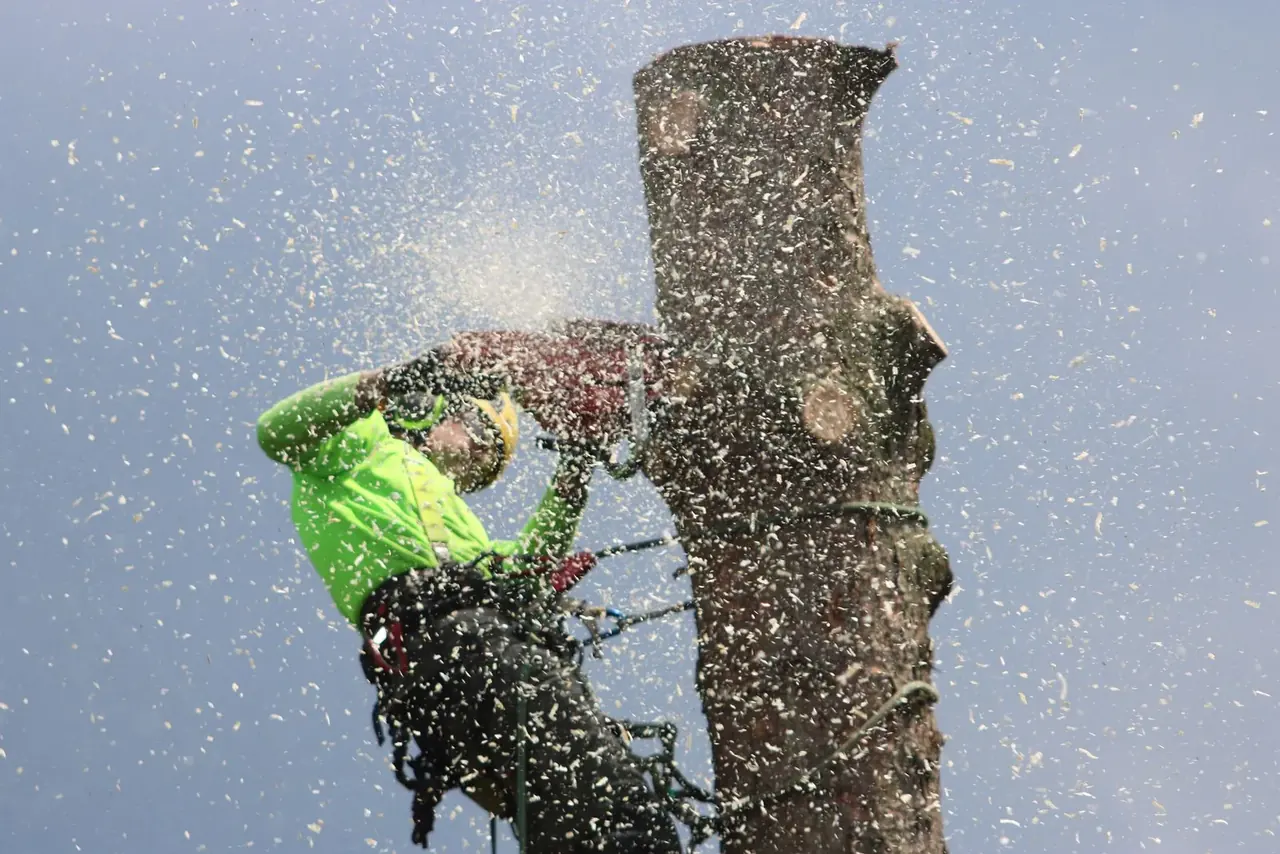
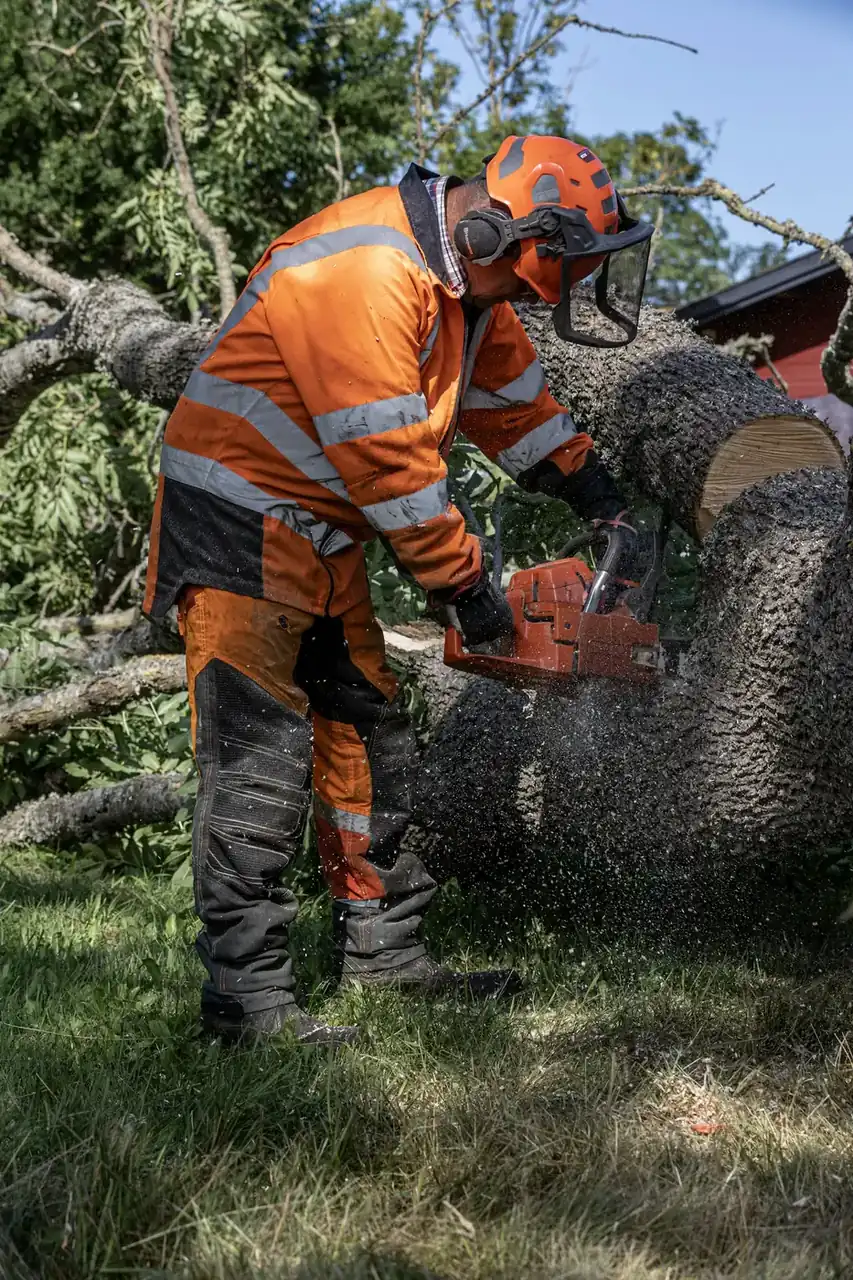
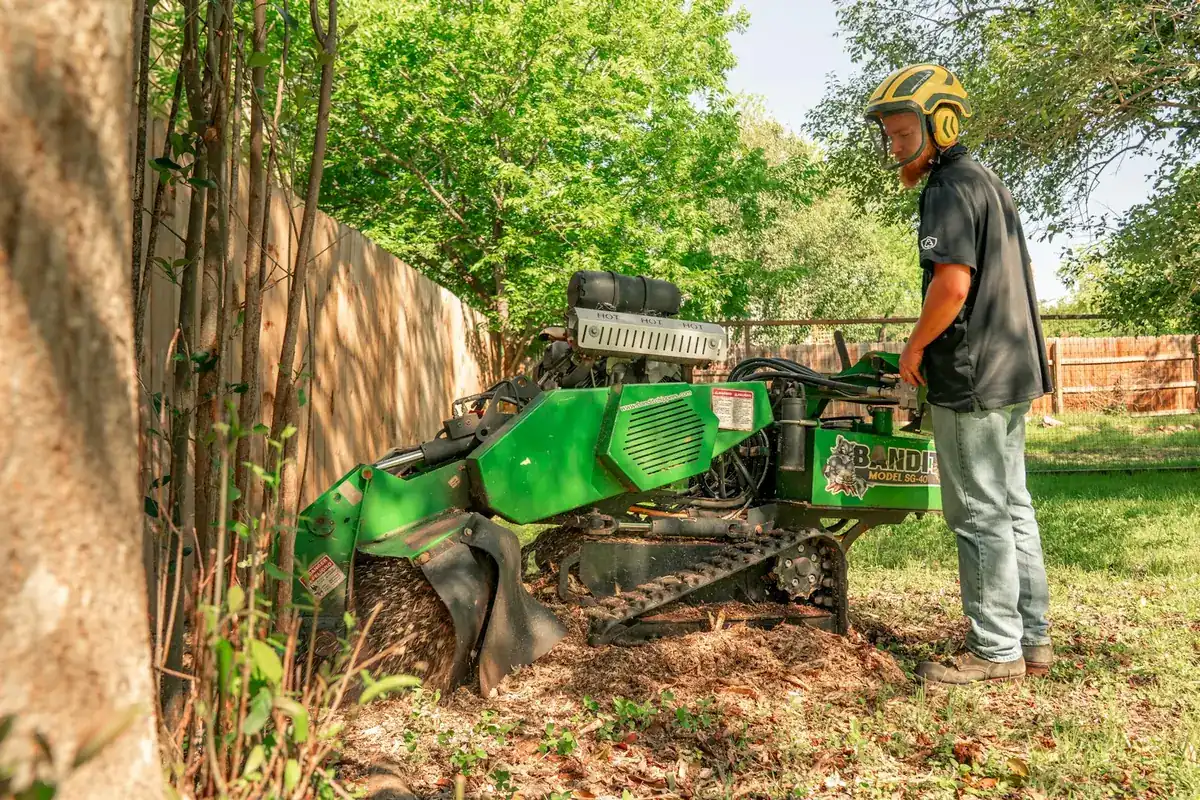
A newly planted tree needs consistent water for its first two summers, and the turf around it usually needs repairing. Clean Cut Lawn Care handles that side, and shares our ownership.
Tree Planting questions
Which trees should I avoid planting in northeast Kansas?
Green and white ash, because emerald ash borer is confirmed in 13 northeast Kansas counties per K-State Research and Extension and planting one now commits you to treating it every couple of years forever. Scots pine, because pine wilt kills it here. Silver maple and Siberian elm, because they are fast, weak wooded, and already over represented in the canopy. Bradford pear, because its branches all originate from nearly the same point and it splits itself apart around year fifteen.
Do I need to amend the soil in the planting hole?
No, and doing it works against you. If you fill the hole with rich amended mix surrounded by heavy Kansas clay, the roots stay in the comfortable pocket you built and circle inside it rather than pushing out into the native soil where they need to go. Backfill with the soil that came out of the hole, water it in to settle air pockets, and put your effort into digging the hole wide instead of rich.
Should I plant in the same hole where the old tree was?
Move over a few feet if you can. The old root plate is still in the ground decaying, which makes for uneven soil and settling, and the stump grindings tie up nitrogen while they break down. If you must use the same spot, grind deeper than the standard six to 12 inches, pull the grindings out, and backfill with clean topsoil before planting.
How big a tree should I buy?
Smaller than you want to. A one to two inch caliper tree establishes faster, needs less water, costs less to plant, and typically catches up to a larger tree planted the same day within about five years. The reason is that a bigger ball leaves a larger share of the original root system behind in the nursery field. HomeGuide puts a 10 to 20 foot specimen at $250 to $800 for the tree alone, which buys a lot of smaller stock.
How much water does a new tree need?
A deep soak every seven to ten days when it has not rained, enough to wet the entire root ball and the soil around it, continued for roughly one year per inch of trunk caliper. A two inch tree is on that schedule for about two years. Frequent shallow watering is worse than useless, because it trains roots to stay in the top couple of inches where they cook in July.
Should I stake it?
Only if the site is genuinely windy or the tree is too top heavy to stand on its own. Trees build trunk strength in response to movement, so a rigidly staked tree develops a weaker trunk than an unstaked one. Where staking is needed, use a wide flexible tie that will not cut into the bark, and take the whole system off after one growing season.
Do you fertilize new trees?
Not in the first season. A newly planted tree has almost no functioning root system, so there is nothing there to take up nutrients, and pushing top growth before the roots can support it is backwards. Mulch and water do more in year one than any product. Once the tree is established, deep root feeding is a reasonable conversation.
How deep should the mulch be?
Two to three inches, spread out in a ring as wide as you can stand to make it, and pulled back several inches so nothing touches the trunk. Mulch piled up against the bark holds moisture against tissue that was never meant to stay wet and invites the same decay a buried root flare does. Wide and flat, never a cone.
Request a free estimate
Free, no obligation. We call back within 15 minutes.
Got it.
We call back within 15 minutes during business hours.
That did not send. Call and we will take it down over the phone.
(785) 550-0100Coverage
Lawrence, Topeka, and everything between
We run out of Lawrence and cover 14 towns across 5 counties. If your town is not pinned, call anyway. We are usually closer than you think.
- Home base
- Lawrence, KS
- Storm calls
- 24 / 7
Often booked together
Tree Pruning
Structural cuts on young and mid-age trees so they grow strong instead of needing removal later.
Stump Grinding
Grinding the stump below grade so you can mow over it, replant, or lay sod.
More in Tree Care
- Tree Removal
- Tree Trimming
- Tree Pruning
- Stump Grinding
- Stump Removal
- Crown Reduction
- Deadwooding
- Cabling and Bracing
- Shrub and Hedge Trimming
- Firewood