Tree Care
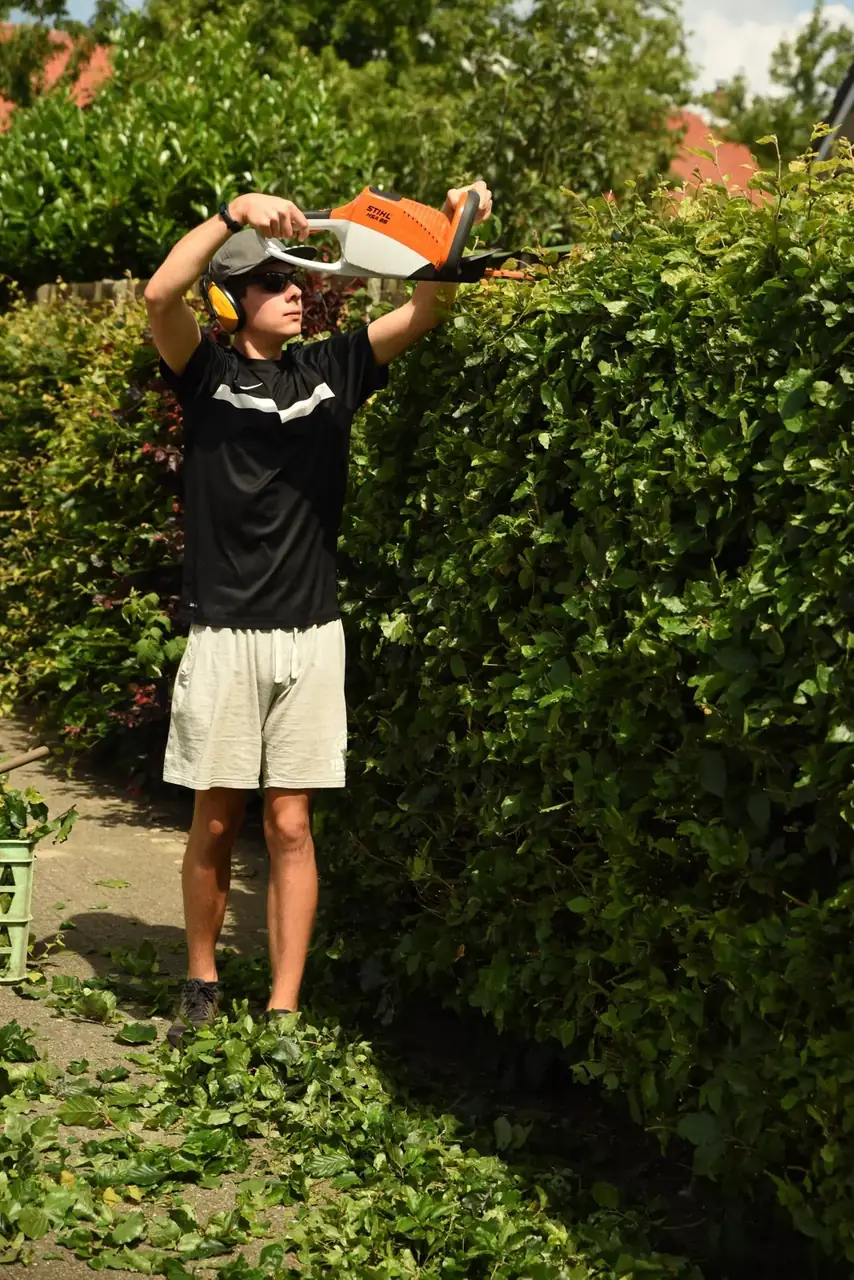
Shrub and Hedge Trimming in Lawrence and Topeka
Shaping and reducing overgrown shrubs, hedges, and ornamentals.
- Bagworm window
- Mid June, not August
- Spring bloomers
- Prune right after flowering
- Summer bloomers
- Prune in late winter
- Typical job
- Half a day for most properties
What the job includes
- Hedges shaped with the base wider than the top so the bottom keeps its leaves
- Overgrown foundation shrubs cut back off siding and windows
- Ornamentals thinned rather than sheared into balls
- Clippings hauled
Why hedges go bare at the bottom
Nearly every neglected hedge in Lawrence and Topeka has the same shape, wide on top and thin and leggy underneath. That is a light problem, not a health problem. A hedge sheared with vertical or outward sloping sides shades its own base, the lower leaves stop producing, and the plant abandons them. Once that has happened for a couple of seasons the lower wood is bare and, on many species, it will not releaf.
The fix is geometry. Cut the hedge so the base is wider than the top, sloping in slightly as it rises, and every part of the plant gets light. That single change is the difference between a hedge that stays full for twenty years and one that has to be replaced.
The same principle applies to foundation shrubs. Yews, boxwood, and junipers planted three feet off the siding and sheared into balls for a decade end up as a shell of green over a hollow interior of dead wood. When somebody finally cuts them back to fit under the window, there is nothing living left to grow from.
- Base cut wider than the top so light reaches the lower foliage
- Foundation shrubs cut back off siding, windows, and gutters
- Interior thinning on shrubs that have become a shell over dead wood
- Clippings hauled off rather than left in beds
Shearing versus thinning, and which one your plant needs
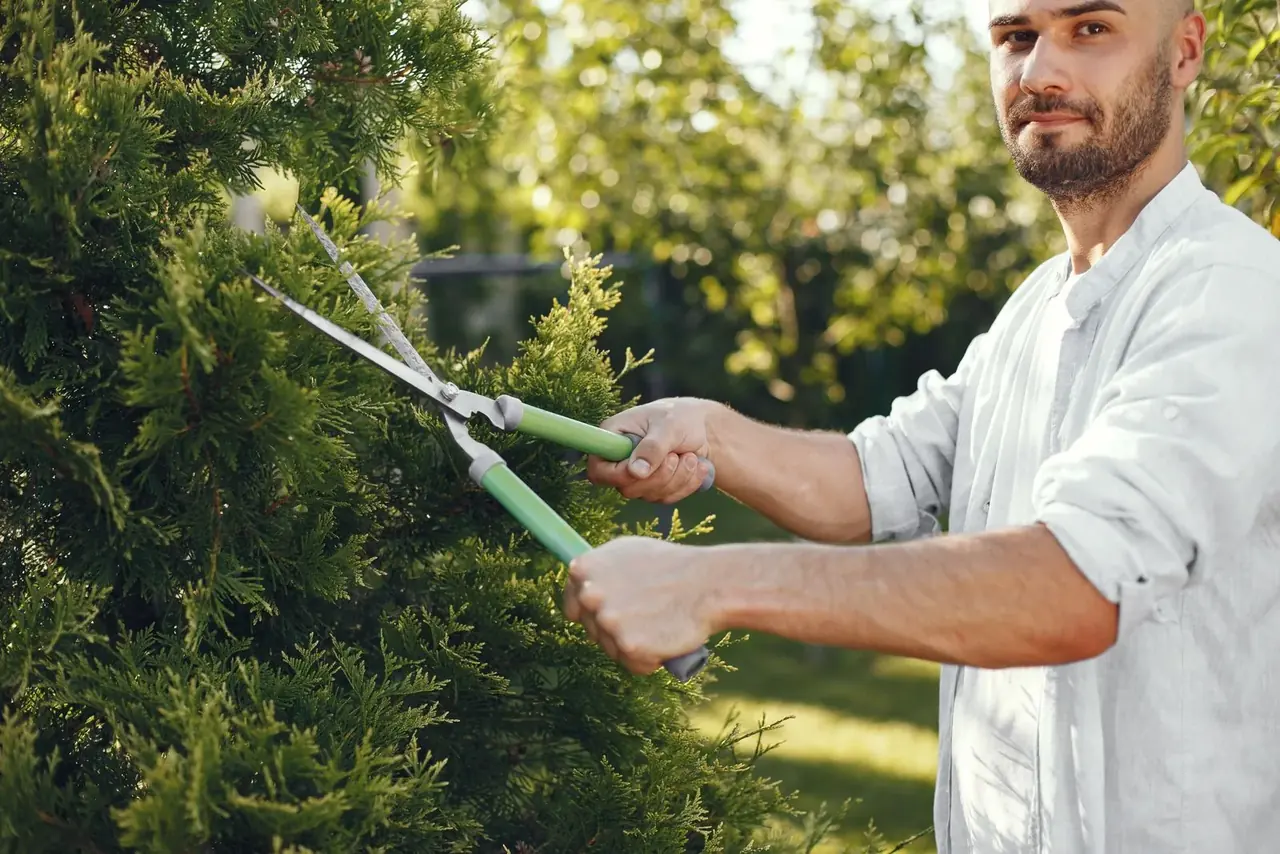
Shearing cuts everything at one plane with a hedge trimmer. It is the right tool for a formal hedge, a privet, a boxwood edge, or anything meant to read as a green wall. It produces dense growth at the surface, which is exactly what a hedge is for and exactly what ruins a specimen plant.
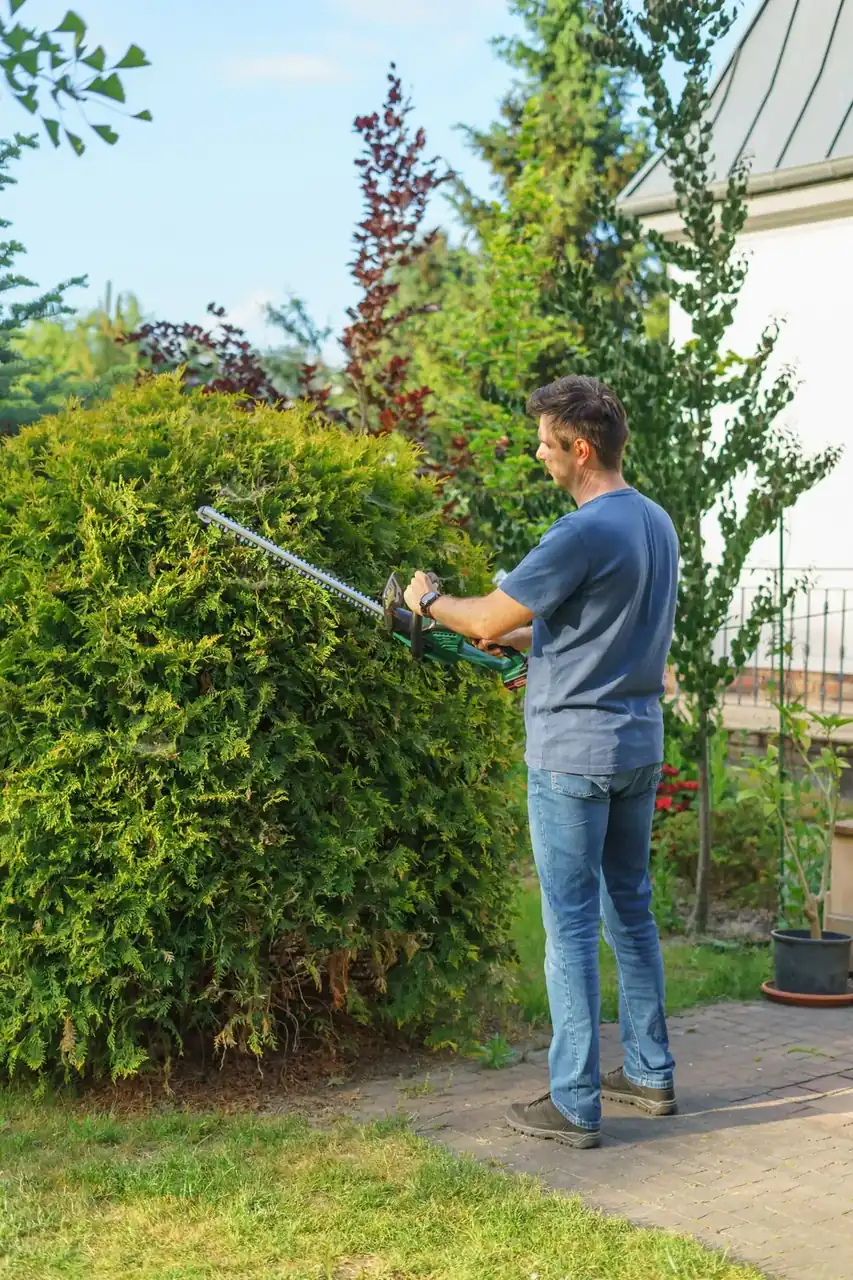
Thinning removes whole branches back to their origin, using hand pruners and loppers rather than a shear. It opens the interior, keeps the natural form, and lets light into the middle of the plant. Viburnum, forsythia, lilac, hydrangea, spirea, and every flowering shrub in a Kansas front yard wants this and gets sheared instead.
The visible difference shows up in the flowers. Shearing a lilac in the wrong month cuts off every flower bud it set the previous summer, which is why so many lilacs in older Topeka neighborhoods have not bloomed properly in years. Spring flowering shrubs set their buds the season before, so they get pruned right after they finish flowering. Summer flowering shrubs bloom on new wood and get pruned in late winter.
- Shear formal hedges, thin flowering and specimen shrubs
- Spring bloomers pruned right after flowering, since buds are set the year before
- Summer bloomers pruned in late winter, since they flower on new wood
- Evergreens like yew and juniper cut back only into wood that still holds green
How a hedge and shrub visit runs
Most residential shrub work is a half day or less, and it is one of the few services where doing the whole property at once is meaningfully cheaper than doing it piecemeal.
We walk the beds with you first, because the difference between a shrub you want kept low and one you want grown into a screen is a decision only you can make.
- 1 We identify what is actually planted, since the pruning rule follows the species and the bloom time rather than the season.
- 2 Dead, damaged, and diseased wood comes out of every plant first, regardless of what else is happening.
- 3 Formal hedges get sheared to a profile with the base wider than the top, and the line gets set with a string or an eye rather than by following last year's mistakes.
- 4 Specimen and flowering shrubs get thinned by hand, taking the oldest stems out at the base and leaving the natural outline intact.
- 5 Overgrown foundation plantings get cut back off the siding, the windows, and the gutter line, staged across seasons where a hard cut would leave bare wood.
- 6 Anything growing into a walkway, a driveway sight line, or an AC condenser gets cleared.
- 7 Clippings get raked out of the beds and hauled, and the beds get blown down.
Bringing back an overgrown hedge
Whether a badly overgrown hedge can be recovered depends on what it is. Privet, boxwood, forsythia, and most deciduous hedges will resprout from old wood, so they can be cut hard, sometimes to a foot or two off the ground, and rebuilt over two or three seasons. It looks alarming for a year.
Yew is the one evergreen that reliably breaks from old wood, which is why the hundred year old yews around older houses can be brought back. Juniper and arborvitae will not. Cut those back past the green and you have a permanent bare patch, so overgrown junipers are reduced only into foliage bearing wood, and if that does not achieve what you need, replacement is the answer.
Staged renewal is the safer route on anything valuable. Take a third of the oldest stems out at the ground each year for three years, and the plant rebuilds from the base while never losing its whole canopy at once. It costs three visits instead of one and it does not gamble the plant.
- Privet, boxwood, forsythia, and yew resprout from old wood
- Juniper and arborvitae do not, so cutting past the green leaves permanent bare wood
- Staged renewal takes a third of the oldest stems per year for three years
- Timing matters, since a hard cut on a spring bloomer costs a year of flowers
Bagworms, which are a shrub problem here more than a tree problem
Bagworms hit juniper, arborvitae, and spruce hardest in this part of Kansas, and they are the single most common thing we find while trimming evergreens. The bags look like small cones made of the plant's own foliage, hanging from the branch tips, and each one holds hundreds of eggs over winter.
The treatment window is mid June, when the larvae have hatched and are feeding openly. Spray then and it works. Spray in August and the insect has already sealed itself inside a bag that the product cannot penetrate, so you have paid for nothing. That timing is the whole game with this pest.
In winter and early spring, picking the bags off by hand and destroying them is genuinely effective on a small hedge or a few shrubs, because every bag you remove is a few hundred eggs that will not hatch in your yard. On a mature arborvitae screen it is not practical, and that is when treatment timing matters.
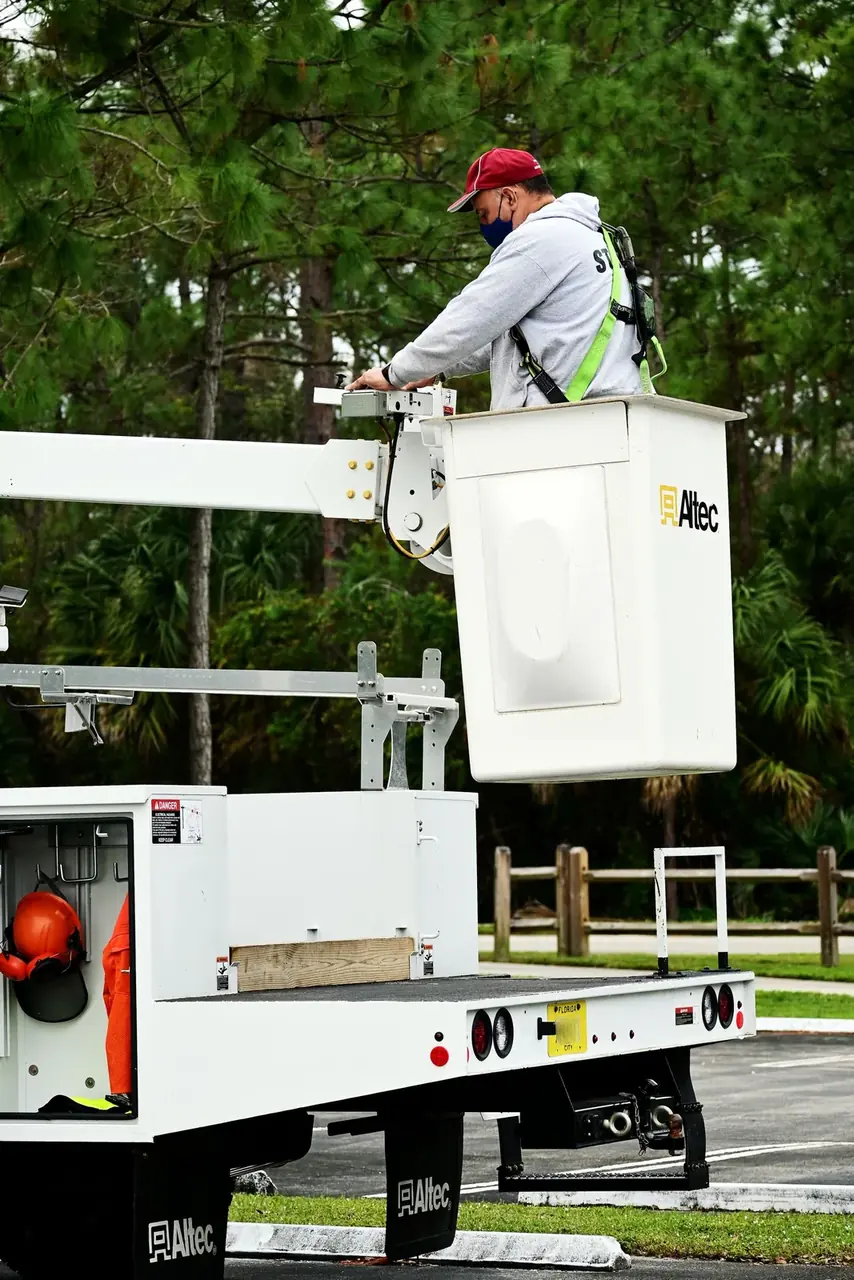
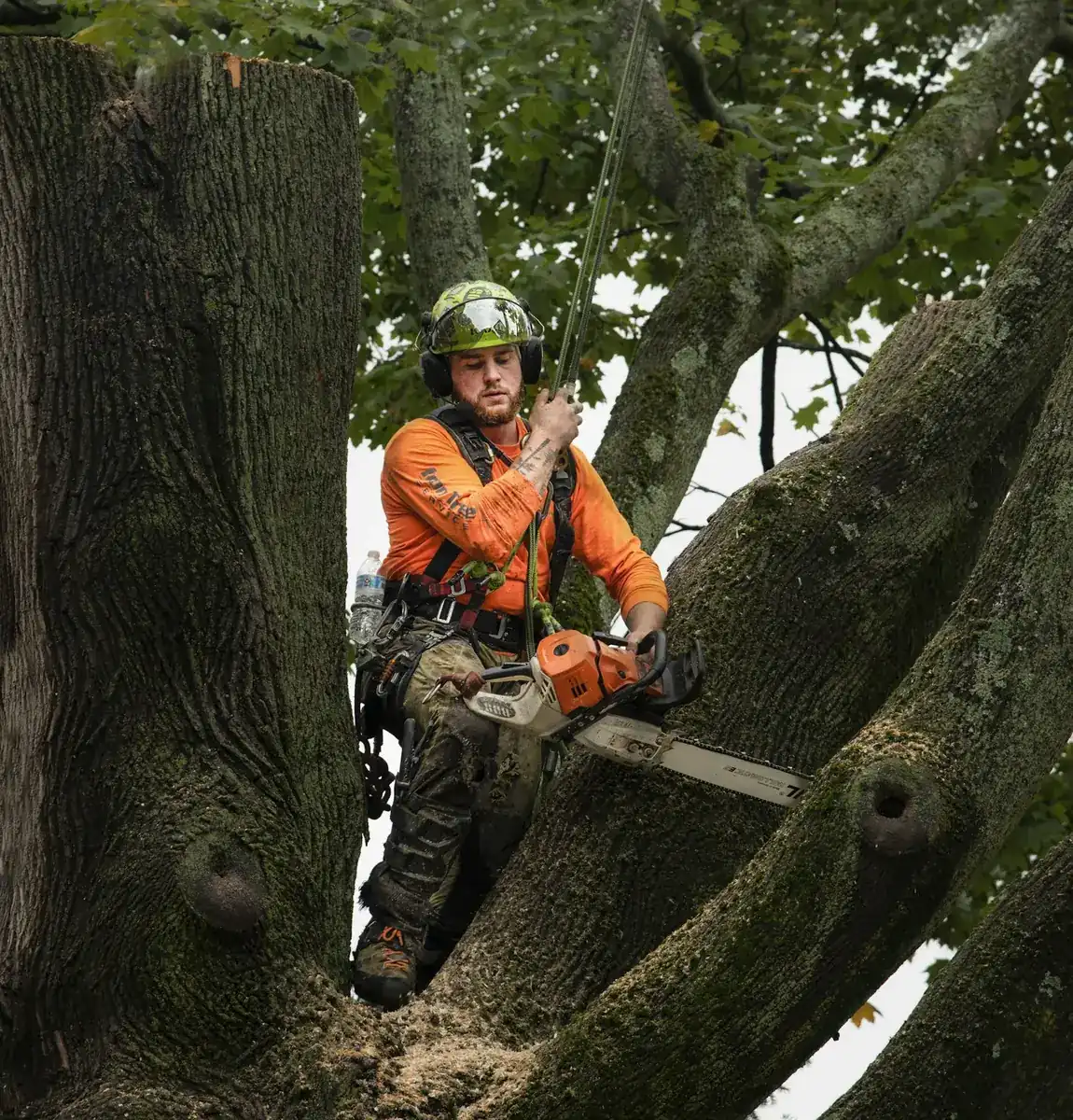
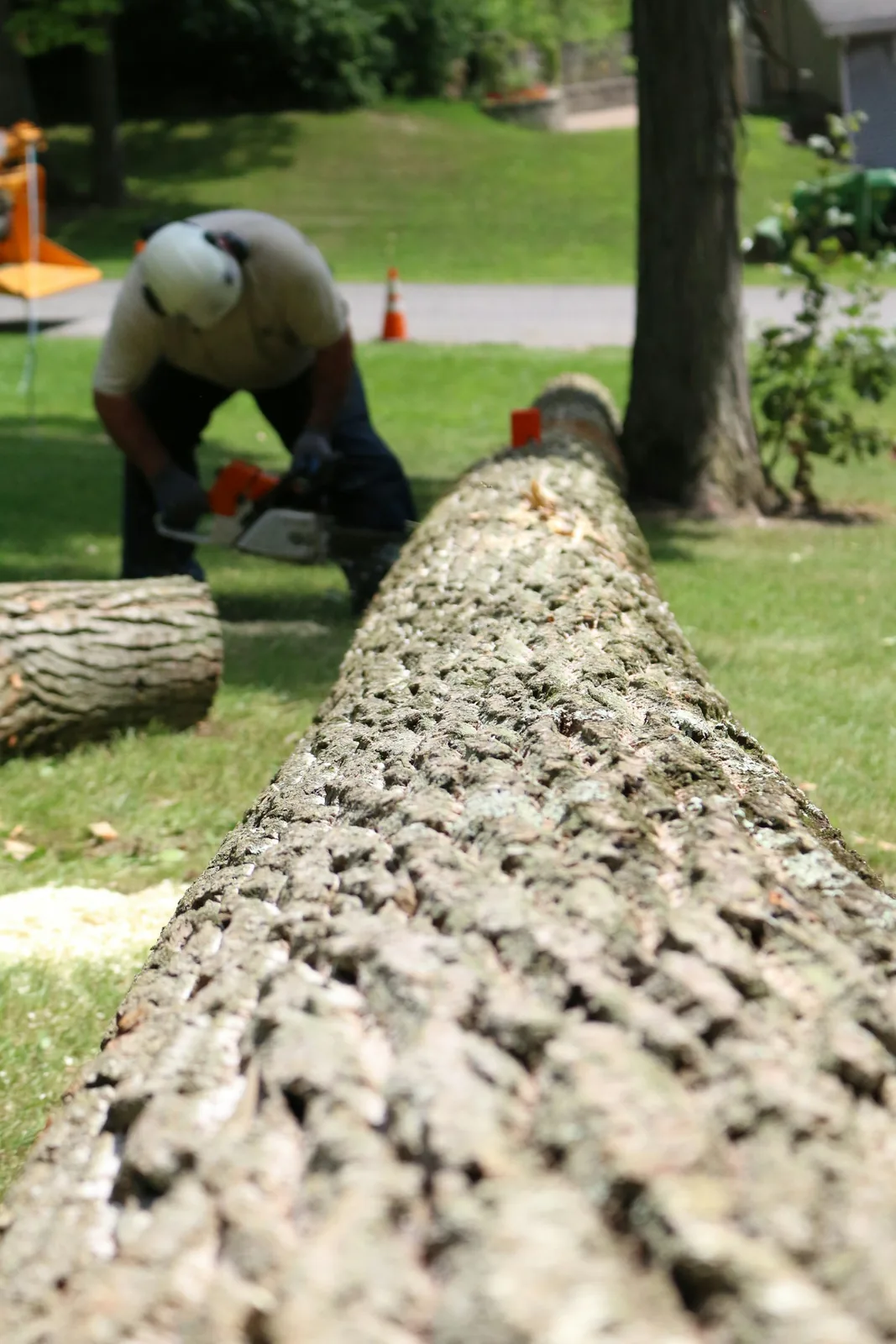
Shrub and Hedge Trimming in progress
Representative of the work. Real job photography replaces these as the crews document jobs.
Shrub and Hedge Trimming questions
My juniper has a bare patch. Will it fill back in?
No. Juniper and arborvitae carry almost no dormant buds in old wood, so once a section has gone bare it stays bare, whether that came from shading, winter damage, or someone cutting back too far. Those plants can be reduced only into wood that still holds green foliage. If the bare area is where you need coverage, replacement is the honest answer. Yew is the one common evergreen here that does break from old wood, which is why century old yews around older houses can be brought back.
When should shrubs be pruned in Kansas?
It follows the bloom, not the calendar. Spring flowering shrubs like lilac, forsythia, and viburnum set their buds the previous summer, so they get pruned right after they finish flowering. Summer flowering shrubs bloom on new wood and get pruned in late winter before growth starts. Formal hedges get sheared once or twice through the growing season, and dead wood comes out any time.
Why does my lilac not flower anymore?
Most often because it is being pruned at the wrong time. Lilac sets its flower buds during the summer for the following spring, so any cutting done in late summer, fall, or late winter removes next year's flowers before they open. Prune it within a few weeks of the blooms fading. The other common cause is too much shade as surrounding trees have grown.
When should bagworms be treated?
Mid June in this part of Kansas, when the larvae have hatched and are feeding out in the open. Treatment applied later in the season hits a sealed bag that the product cannot get into, which accomplishes nothing. Through winter and early spring you can pick bags off by hand on a small planting, and every bag removed is hundreds of eggs that will not hatch.
Can you cut my shrubs back off the house?
Yes, and it is worth doing before the growth actually touches the siding. Shrubs pressed against a wall hold moisture against it, block airflow, and give insects a bridge from the mulch into the structure. Where the plant has grown so far past its space that a single hard cut would leave bare wood, we stage the reduction across two or three visits.
Do you haul the clippings away?
Yes. Clippings get raked out of the beds and loaded, and the beds and any adjacent hard surfaces get blown down before we leave. Leaving shear clippings sitting on a bed looks tidy for a week and then mats down into a layer that holds moisture against the crowns of everything underneath.
How often do hedges need trimming?
A formal sheared hedge in this climate usually wants two cuts a season to hold a crisp line, and a single cut a year if you can live with a softer look. Informal and flowering shrubs are on a much longer cycle, often a thinning every two or three years. Fast growers like privet and honeysuckle need more than boxwood or yew.
Request a free estimate
Free, no obligation. We call back within 15 minutes.
Got it.
We call back within 15 minutes during business hours.
That did not send. Call and we will take it down over the phone.
(785) 550-0100Coverage
Lawrence, Topeka, and everything between
We run out of Lawrence and cover 14 towns across 5 counties. If your town is not pinned, call anyway. We are usually closer than you think.
- Home base
- Lawrence, KS
- Storm calls
- 24 / 7
Often booked together
More in Tree Care
- Tree Removal
- Tree Trimming
- Tree Pruning
- Stump Grinding
- Stump Removal
- Crown Reduction
- Deadwooding
- Cabling and Bracing
- Tree Planting
- Firewood