Tree Care
Firewood in Lawrence and Topeka
Seasoned hardwood, cut and split, delivered and stacked.
- Hottest local wood
- Osage orange, called hedge
- Seasoning time
- A year or more for oak
- Standard length
- 16 inch splits, or cut to your firebox
- Your own tree
- Rounds cut and stacked free
What the job includes
- Oak, hackberry, honeylocust, and Osage orange
- Cut to length and split
- Delivered, and stacked where you want it
- Wood from your own removal cut into rounds at no charge if you want to keep it
Seasoning is the only thing that matters
Freshly cut hardwood is roughly half water by weight. Burn it and most of the energy in the fire goes into boiling that water off instead of into your room, the fire runs cool, and the unburned volatiles condense in the flue as creosote. That is the mechanism behind chimney fires, and it comes almost entirely from burning wet wood.
Properly seasoned wood sits around 20 percent moisture or below. Getting there means splitting the rounds first, since bark is a moisture barrier and an unsplit round will sit in a pile for two years and still be wet in the middle, then stacking it off the ground with air moving through it and the top covered. In the Kansas climate, split and stacked oak takes a year or more. Hackberry, honeylocust, and ash dry faster, often in six to nine months.
The tells are easy to check. Seasoned wood is grey and checked on the ends, noticeably lighter than green wood of the same size, and two pieces knocked together ring rather than thud. Bark that comes loose easily is another sign. If a fresh split face feels cool and damp to the back of your hand, it needs more time.
- Split first, then stack, because bark holds moisture in
- Stacked off the ground with the top covered and the sides open
- Oak takes a year or more, hackberry and honeylocust dry faster
- Grey checked ends, light weight, and a ringing knock mean it is ready
What burns well in northeast Kansas
Osage orange, called hedge locally, is the hottest firewood in this region by a wide margin. It throws sparks, so it belongs in a stove rather than an open fireplace, and it burns so hot that a stove full of it can overfire. Most people who burn hedge use it mixed with something milder or reserve it for the coldest nights. There is a lot of it around here because of the hedge rows planted as living fence across Douglas, Shawnee, and Leavenworth counties.
Oak is the standard. Bur oak and red oak both burn long and steady with good coal beds, which is what you want for an overnight burn, and both take the longest to season. Honeylocust burns hot and clean and splits reasonably. Hackberry is a good middle of the road wood that seasons fast, which makes it useful when you did not plan far enough ahead. Mulberry burns well and sparks like hedge.
What to avoid is the soft fast growing stuff. Silver maple, cottonwood, and Siberian elm all burn quickly with low heat output, and elm in particular is famously difficult to split by hand because of its interlocked grain. They are not useless, they just are not what you want to fill a rack with. Pine is fine for kindling and a bad choice for a sustained fire in a stove.
- Hottest: Osage orange, which sparks and belongs in a stove
- Best all round: bur oak, red oak, honeylocust
- Fast seasoning: hackberry, ash, mulberry
- Avoid filling the rack with silver maple, cottonwood, or elm
How a delivery works
Firewood is straightforward to buy and easy to get wrong, mostly on volume and on moisture. We will tell you what species you are getting and how long it has been split and stacked before you commit to anything.
Stacking is included. Dumping a load in a driveway and driving off leaves you with a day of work you did not budget for.
- 1 You tell us roughly how much you burn in a season and what you burn it in, since a fireplace and an airtight stove eat very differently.
- 2 We confirm species and how long the wood has been split and stacked, and we tell you plainly if something is not fully seasoned yet.
- 3 We agree the length. Most stoves and fireplaces here take 16 inch splits, and we cut to what your firebox actually holds rather than to a default.
- 4 Delivery gets scheduled with access sorted in advance, since a loaded truck needs a driveway that will take the weight and turning room.
- 5 The load gets stacked where you want it, ideally off the ground on rack or pallets, with the rows oriented so air moves through them.
- 6 You get told which pile is ready to burn now and which needs another season, if the delivery includes both.
Stacking it so it stays dry
Wood needs to be off the ground. Stacked directly on soil, the bottom course wicks moisture up and rots, and you lose the layer that has been sitting the longest. Pallets, a purpose built rack, or a couple of rails made from the crooked rounds nobody wants to split all work.
Cover the top and leave the sides open. A tarp wrapped over the whole stack traps evaporating moisture inside and keeps the wood wet indefinitely, which is a common and expensive mistake. Cover the top eighteen inches or so and let the wind, which we have plenty of, do the rest.
Keep the stack away from the house. Firewood against a foundation or a wall is a bridge for carpenter ants, termites, and mice, and it holds moisture against the siding. Six to ten feet away is enough. Bring in what you need for a few days at a time rather than storing a week of wood indoors.
- Off the ground on pallets, rails, or a rack
- Top covered, sides open to the wind
- Stacked away from the house rather than against it
- Oldest wood placed where you will reach it first
Wood from your own removal
If we are taking a tree down on your property and you burn, say so before the crew starts. We will cut the trunk and the larger limb wood into rounds at whatever length you specify and stack them wherever you want them, at no additional charge. It costs us less to leave that wood than to load it and haul it, which is why this is a genuine no charge item rather than a favor.
Two exceptions apply and both are about not spreading a problem. Wood from a pine killed by pine wilt cannot be kept for firewood. K-State is explicit that a dead pine has to be chipped or burned before May 1, because the pine sawyer beetles carrying the nematode will hatch out of stacked wood and move to the next living pine in the neighborhood. Ash from a tree killed by emerald ash borer is fine to burn where it stands, but moving it any distance risks carrying the insect somewhere it is not yet established.
Rounds are not firewood. Splitting is a separate job and it is real work, particularly on Siberian elm. If you want your own tree split rather than left in rounds, tell us and we will price it. Otherwise you get rounds, stacked, and the maul is yours.
- Rounds cut to your length and stacked at no extra charge
- Tell us before the crew starts, since it changes how the trunk is bucked
- Pine wilt wood cannot be kept, per K-State sanitation guidance
- Splitting is separate work and gets priced separately
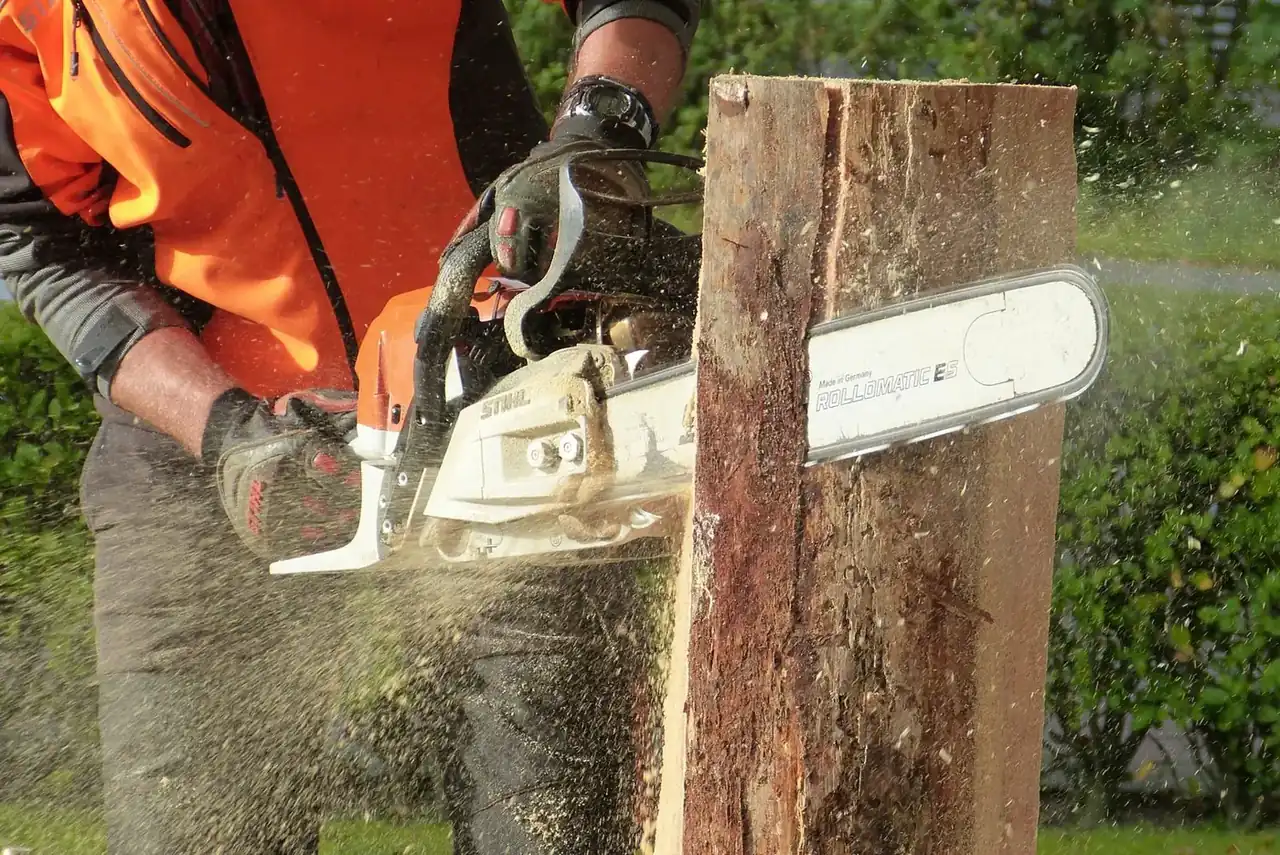
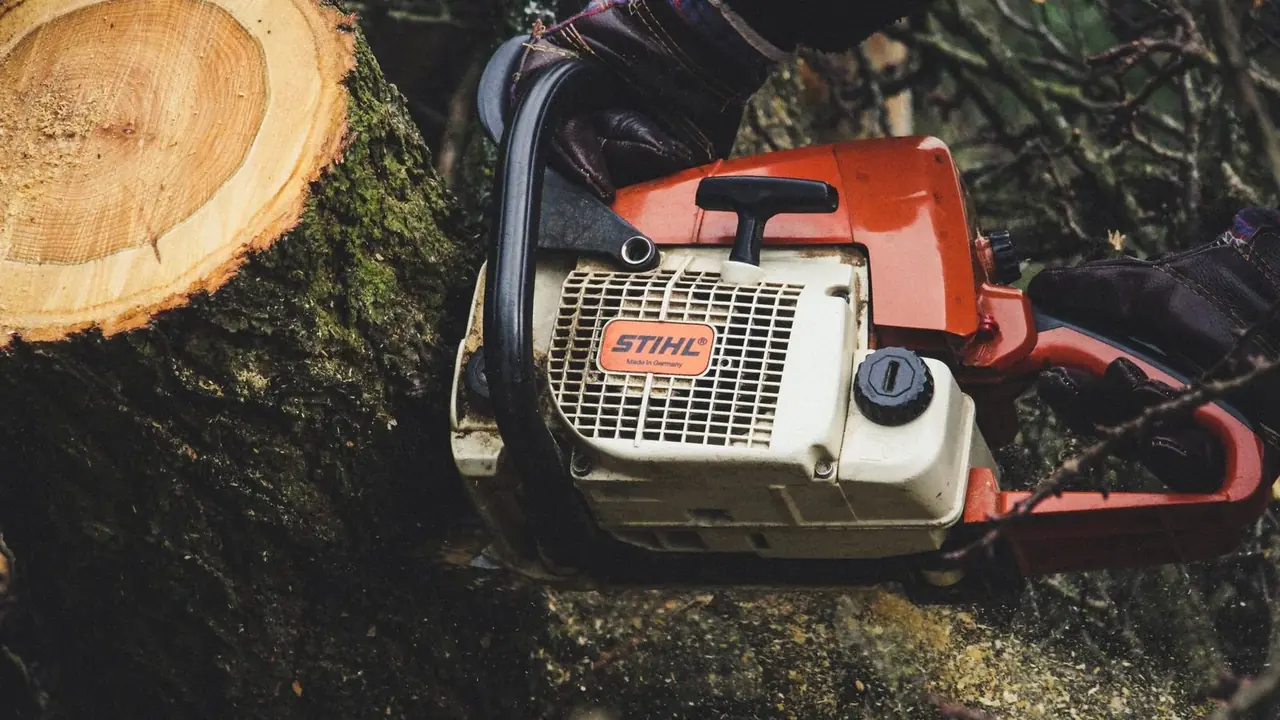
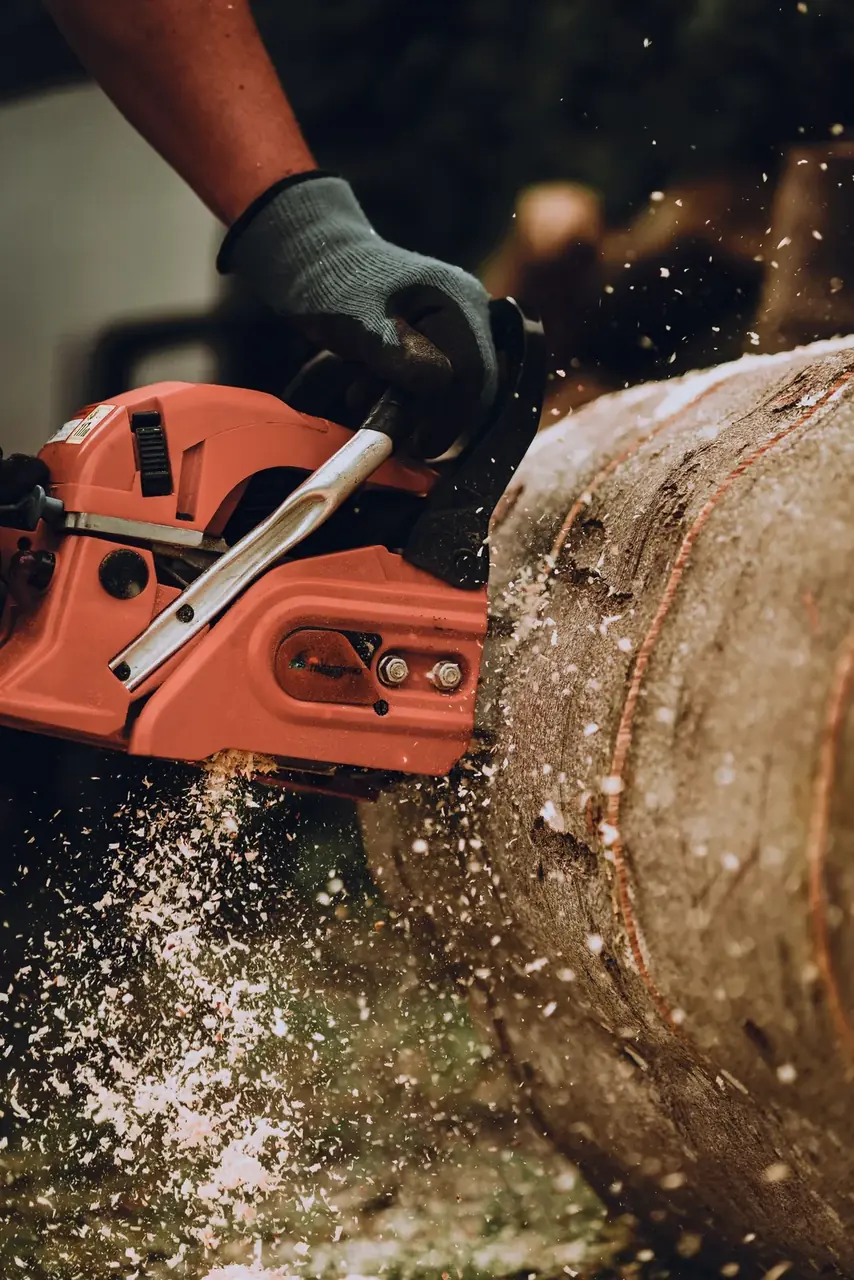
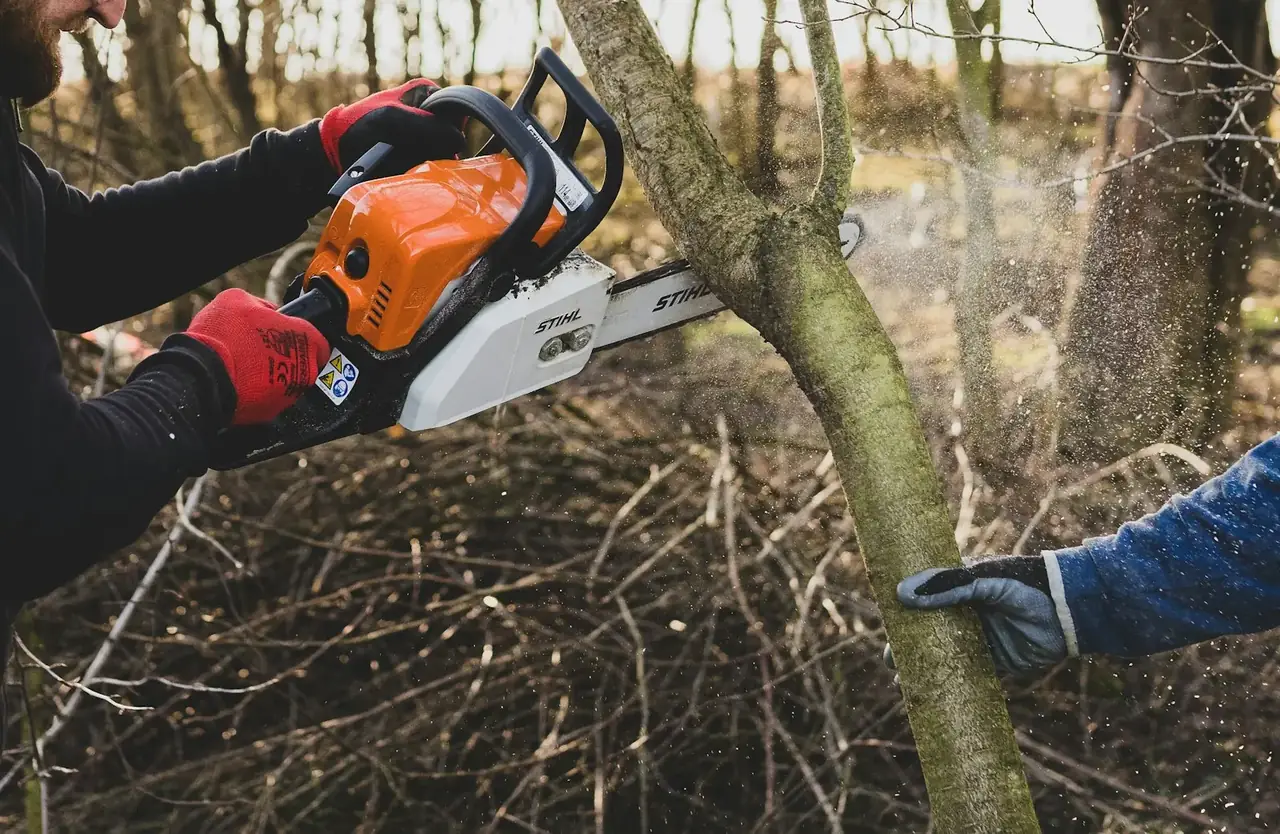
Firewood in progress
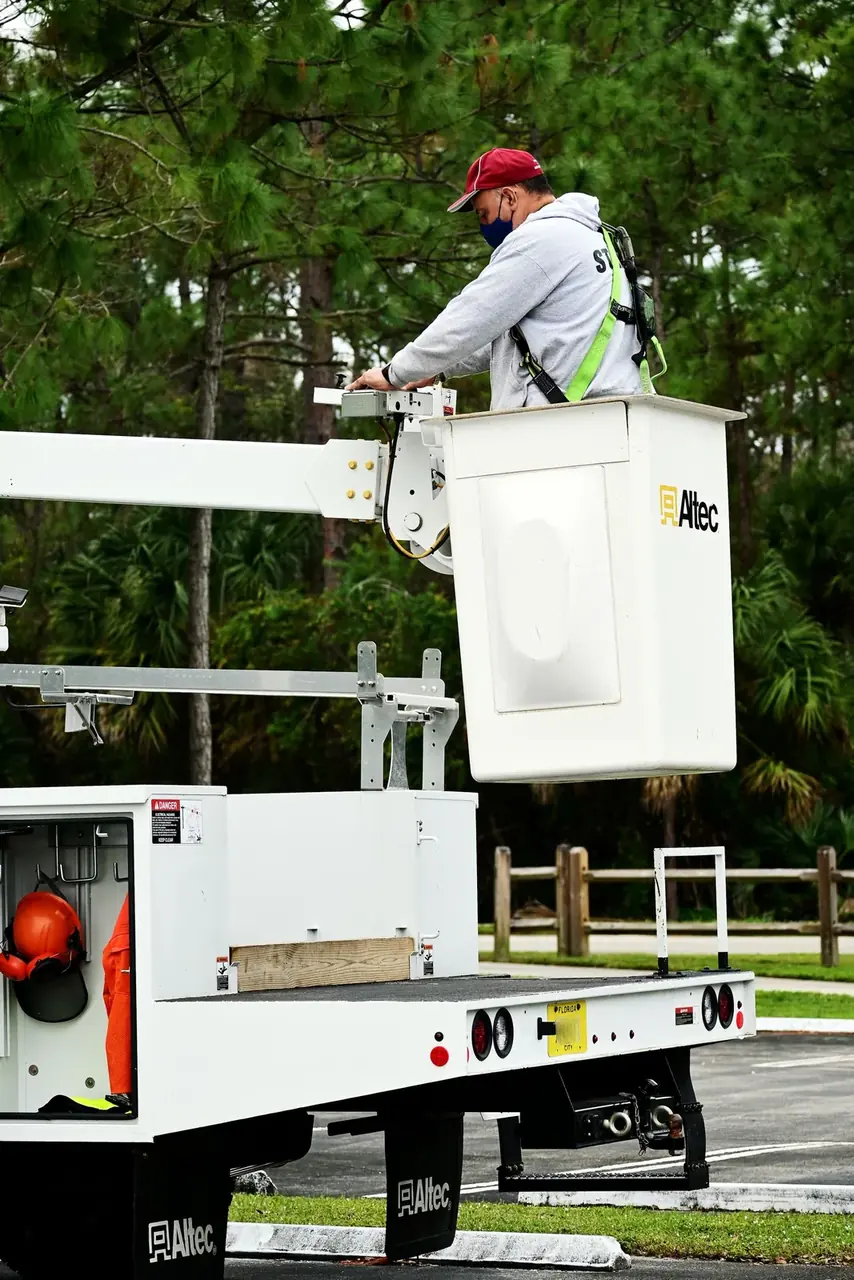
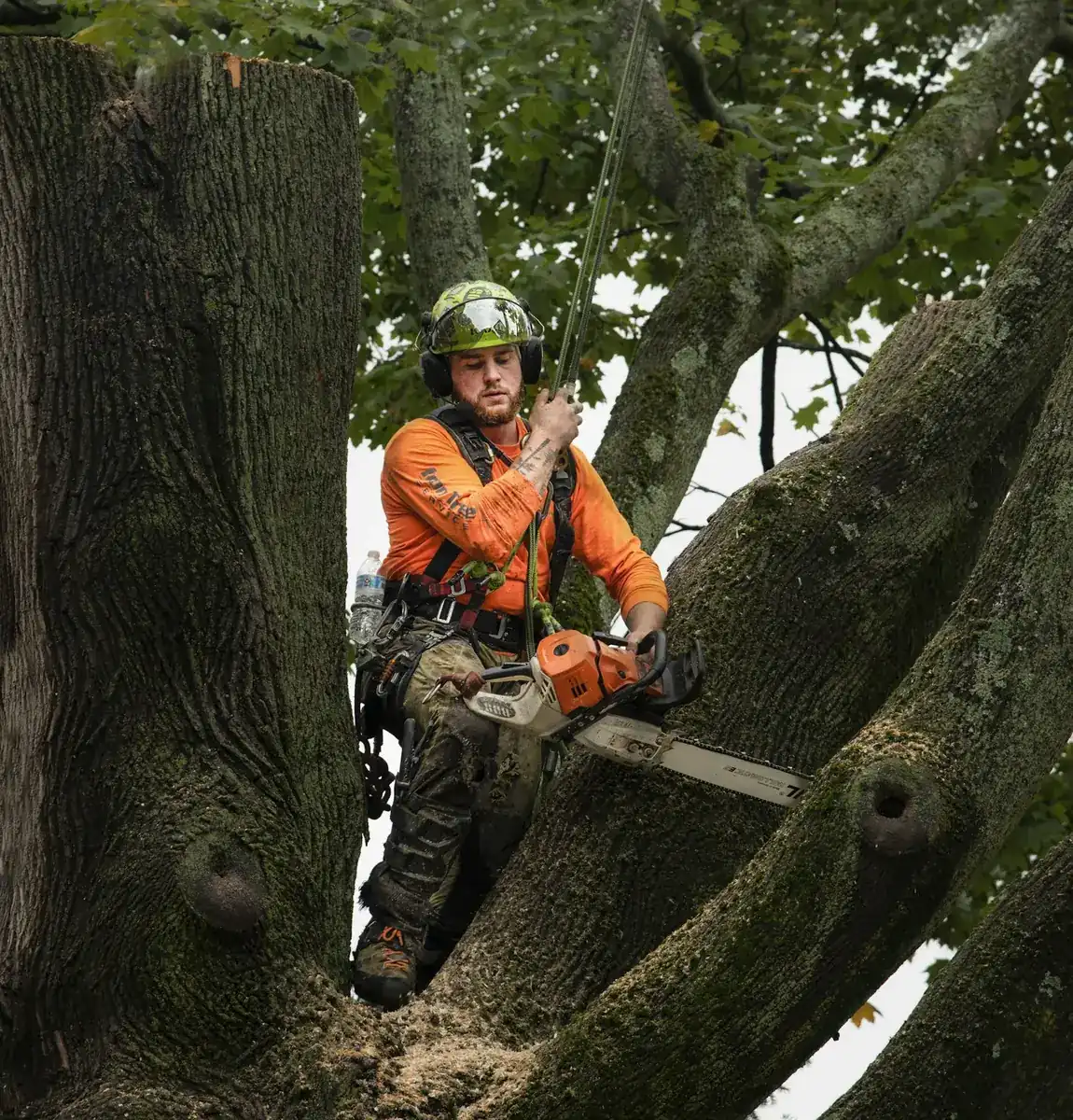
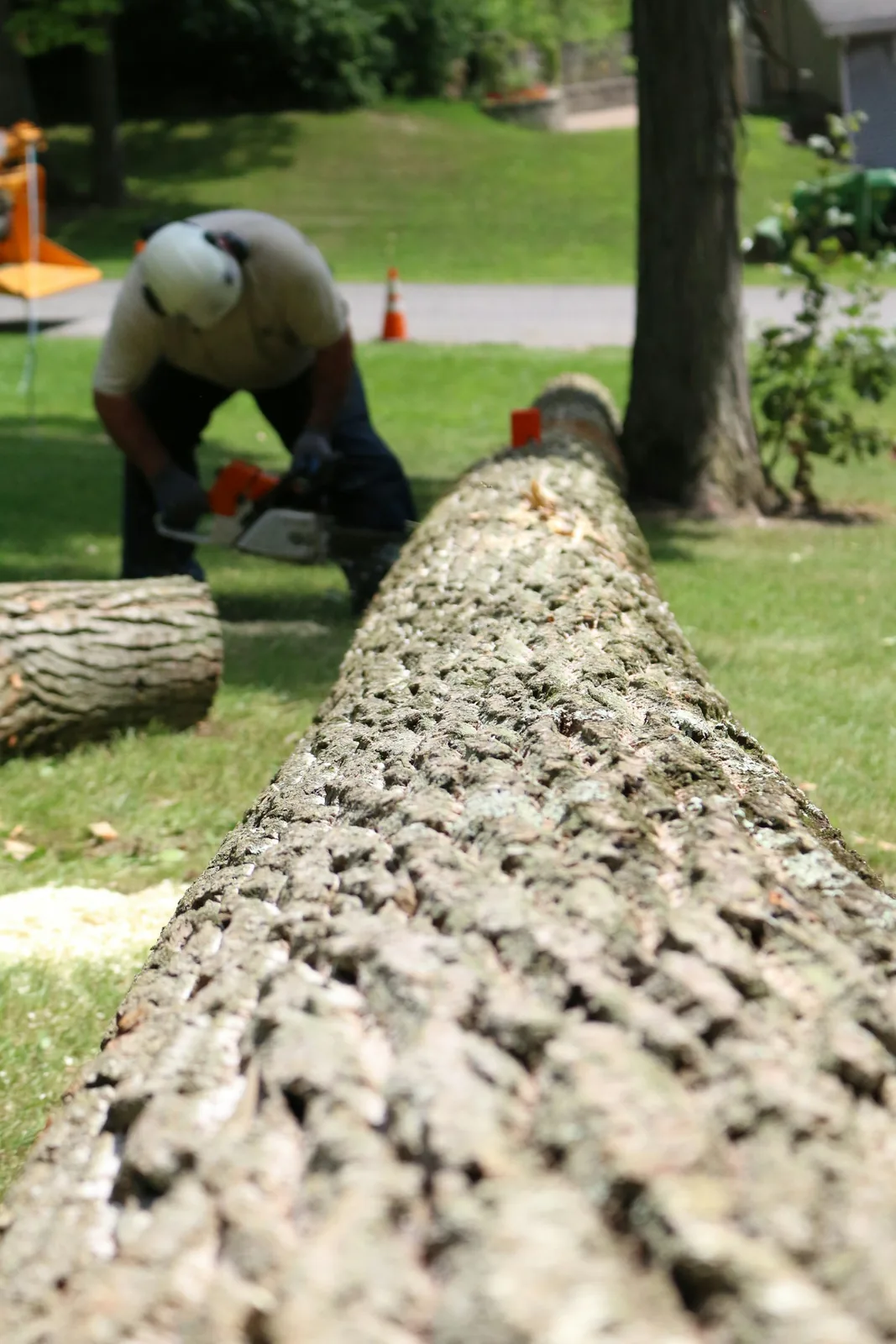
Representative of the work. Real job photography replaces these as the crews document jobs.
Firewood questions
If I keep the wood from my own removal, do you split it too?
Rounds are included, splitting is not. Cutting the trunk into rounds at your length and stacking them costs us nothing extra, since leaving that wood is cheaper than loading and hauling it. Splitting is separate work and it is genuinely hard on some species, Siberian elm in particular, because of its interlocked grain. If you want your own tree split rather than left in rounds, say so and we will price it.
How long does firewood need to season?
It depends on the species and on whether it was split before stacking. Oak split and stacked takes a year or more in this climate. Hackberry, ash, honeylocust, and mulberry often get there in six to nine months. Unsplit rounds take far longer regardless of species, because bark is a moisture barrier and the middle of the round never dries.
How do I tell if wood is actually seasoned?
Look at the ends for grey color and radial cracks running out from the center. Pick a piece up, since seasoned wood is noticeably lighter than green wood of the same size. Knock two pieces together, and a sharp ring means dry while a dull thud means wet. Loose bark is another sign. A moisture meter on a fresh split face should read around 20 percent or below.
What is the best firewood around here?
Osage orange, called hedge locally, throws more heat than anything else in this region, though it sparks badly and suits a stove rather than an open fireplace. Bur oak and red oak are the standard for long steady burns with good coals. Honeylocust burns hot and clean. Hackberry is a solid middle option that seasons quickly. Silver maple, cottonwood, and elm all burn fast and cool and are not worth filling a rack with.
Do you stack it or just dump it?
We stack it where you want it. A dumped load in a driveway is a day of work handed to you, and it also means the wood spends its first week piled where air cannot get through it. Tell us where the rack is and how you want the rows run.
Should I cover my woodpile with a tarp?
Cover the top only, and leave the sides open. A tarp wrapped over the whole stack traps the moisture the wood is trying to give off and keeps it wet indefinitely, which is one of the most common reasons a stack that has sat for two years still will not burn properly. Cover the top eighteen inches or so and let the Kansas wind do the rest.
Is it safe to burn ash wood from a tree killed by emerald ash borer?
Burning it where it stands is fine, and the borer does not survive in the split, dried wood indefinitely. The concern is moving it. Emerald ash borer is confirmed in 13 northeast Kansas counties per K-State Research and Extension, and hauling untreated ash firewood any real distance is one of the main ways the insect reaches new areas. Burn local ash locally and do not take it to a cabin three counties over.
How much wood do I need for a season?
It depends entirely on what you are burning it in and how you use it. An occasional weekend fire in an open fireplace uses a small fraction of what a stove heating a house through a Kansas winter goes through, and an open fireplace loses most of its heat up the flue regardless. Tell us how you burn and roughly how much you got through last year and we will size the delivery from there.
Request a free estimate
Free, no obligation. We call back within 15 minutes.
Got it.
We call back within 15 minutes during business hours.
That did not send. Call and we will take it down over the phone.
(785) 550-0100Coverage
Lawrence, Topeka, and everything between
We run out of Lawrence and cover 14 towns across 5 counties. If your town is not pinned, call anyway. We are usually closer than you think.
- Home base
- Lawrence, KS
- Storm calls
- 24 / 7
Often booked together
More in Tree Care
- Tree Removal
- Tree Trimming
- Tree Pruning
- Stump Grinding
- Stump Removal
- Crown Reduction
- Deadwooding
- Cabling and Bracing
- Tree Planting
- Shrub and Hedge Trimming