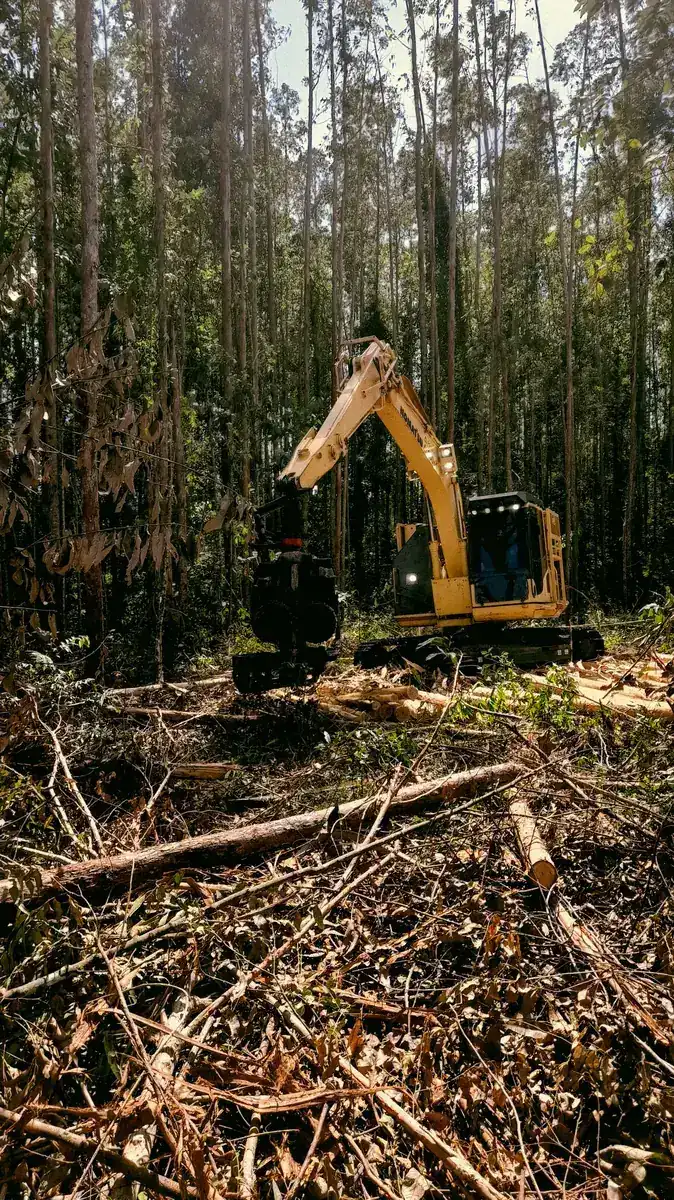
Land Services
Lot Clearing in Lawrence and Topeka
Clearing a residential or commercial lot to build-ready condition.
- Kansas clearing
- $1,100 to $2,300 per acre
- Under a slab
- Stumps excavated, not ground
- Saved trees
- Root zone fenced before day one
- Debris
- Hauled, since build lots need clean dirt
What the job includes
- Trees, brush, and undergrowth removed to the lot lines
- Stumps ground or excavated depending on what is going in
- Trees you want kept flagged and protected before the machines start
- Debris hauled and the lot left clean
Build Ready Means Something Specific
Clearing a lot for construction is a different standard than clearing pasture. A pasture can carry stumps and a chip layer indefinitely. A building lot has to give a grading crew clean dirt to work with, and anything organic left in the footprint becomes a settlement problem after the slab is poured.
So the first conversation is about what is going on the lot and where. House footprint, garage, drive, septic and lateral field if you are outside city sewer, utility trench routes, and where the spoil pile is going. Those lines determine what has to come out completely and what can be handled more cheaply.
Most of the lots we clear around Lawrence and Topeka fall into two categories. Infill lots inside the city, usually a fraction of an acre with mature trees, tight access, and neighbors on both sides. And rural lots on acreage at the edge of Douglas or Shawnee county, which are typically pasture with cedar coming in and an Osage orange hedge row on at least one boundary.
- Footprint, drive, utility runs, and septic field marked before anything is cut
- Full clearing to the lot lines, or selective clearing to a marked envelope
- Stumps removed inside the build footprint rather than ground
- Debris hauled, since a construction lot cannot carry a chip layer
- Erosion control on sloped lots once the cover is gone
Flag What Stays Before Anything Starts
A mature bur oak on a lot is worth real money to the finished house and cannot be replaced in a lifetime. It is also the tree most likely to be dead three years after the builder leaves, and the reason is almost never the chainsaw. It is compaction.
A tree's feeder roots live in the top foot of soil and run out well past the edge of the canopy. Driving loaded equipment across that zone squeezes the pore space out of the soil, and roots cannot function in soil with no air in it. The tree looks fine through the build, thins the following summer, and dies the year after. Trenching through the root zone for a utility run does the same thing faster.
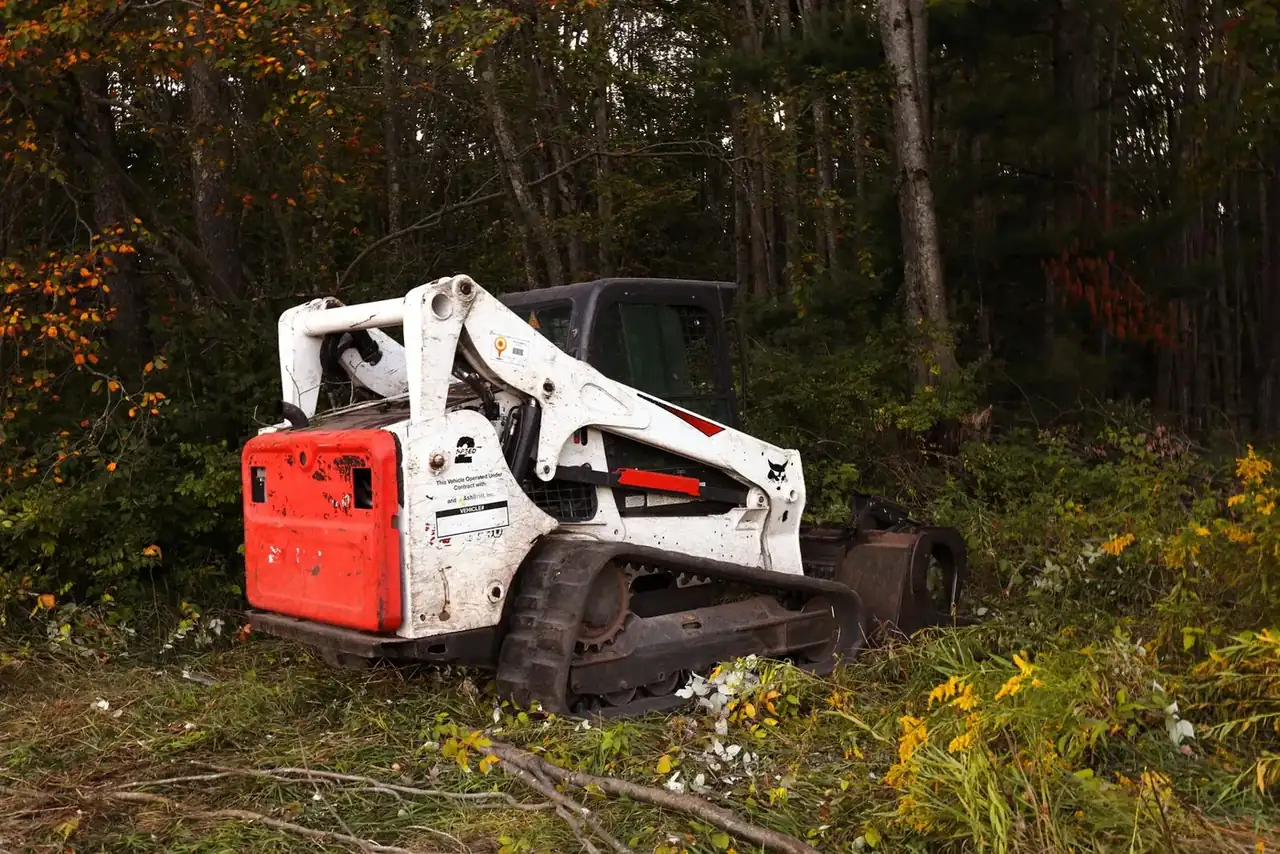
Protecting a saved tree means fencing the root zone before the first machine arrives and keeping everything outside it: no traffic, no material storage, no spoil pile, no washout. That fence is the whole intervention. Flagging a tree with ribbon and then parking a skid steer under it is how builders produce dead trees they genuinely believed they had saved.
- Walk the lot and mark keepers before equipment mobilizes
- Protective fencing set at the drip line or wider, and left up through the build
- No traffic, storage, spoil, or washout inside the protected zone
- Utility routes planned around root zones rather than through them
- Honest assessment of which trees will actually survive the build, since some will not regardless
Stumps: Ground, Dug, or Left
On a building lot the answer depends on where the stump is. Inside the footprint of anything structural, the stump and root plate come out entirely with an excavator, and the hole gets backfilled and compacted. Grinding is not enough there, because the root system stays in the ground and decays over years, and a slab sitting over decaying roots settles unevenly.
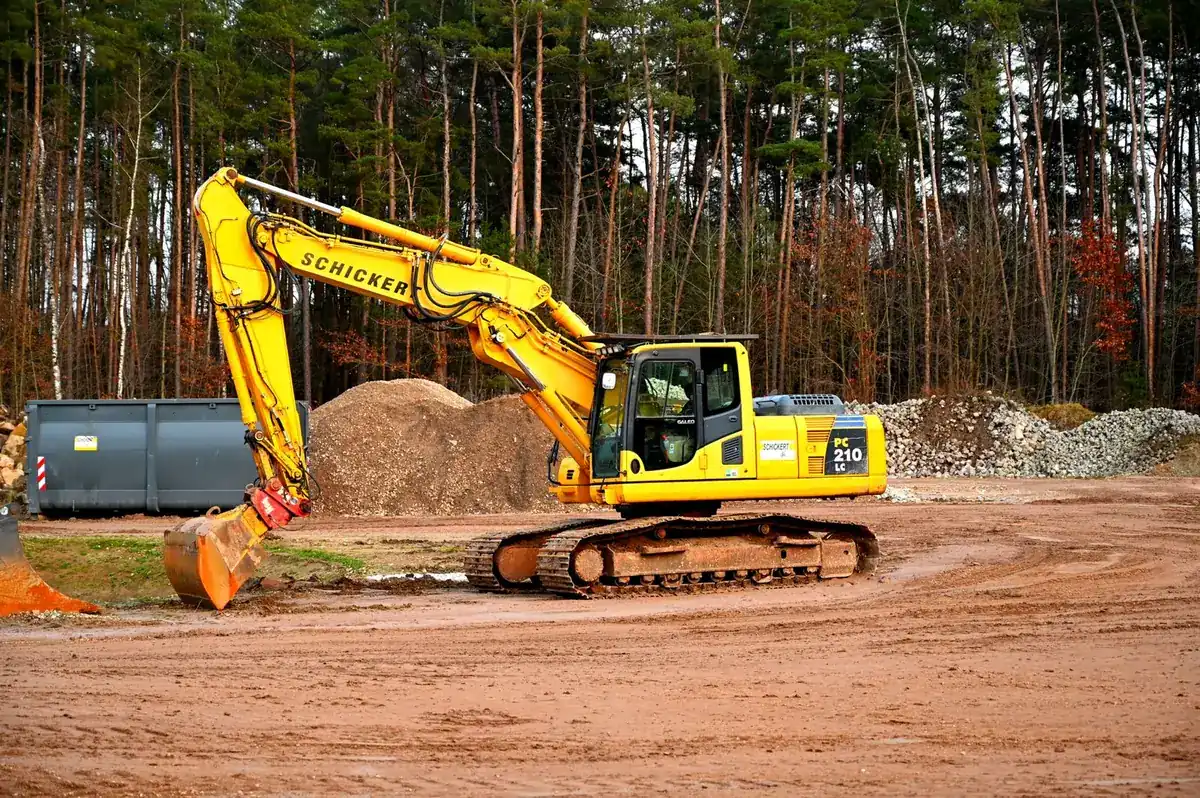
Outside the footprint, in what will be lawn, grinding six to twelve inches below grade is sufficient. You can sod or seed over it. The chips need pulling out and replacing with topsoil first, since chips tie up nitrogen as they break down and grass seeded straight into them comes in thin.
In the back corner of a two acre rural lot that is staying rough, leaving the stump is a legitimate choice and it saves money. Just decide it deliberately rather than discovering it later, because a bidder who did not include stumps is not cheaper, only less complete.
- Under a slab, footing, drive, patio, or pool: excavate the stump and root plate
- In future lawn: grind below grade, remove chips, backfill with topsoil
- In rough ground staying rough: leaving the stump is fine and cheaper
- Get the stump scope in writing on every bid you compare
Mulch In Place or Haul Off on a Lot
Mulching in place is the cheap option on acreage because nothing leaves the property. On a building lot it is usually the wrong option, because a grading contractor does not want a foot of chips over the pad and organic material worked into fill is a compaction problem.
The workable compromise on a rural lot is to mulch the areas that are staying natural and haul from the areas being built and graded. On a one acre home site with two acres of surrounding cedar, that split saves real money: the cedar thicket gets mulched and stays where it is, the building envelope gets cleared clean and hauled.
Inside city limits in Lawrence or Topeka, mulching is rarely practical anyway. Access for a track mulcher between two existing houses is usually not there, and the material has to leave regardless because there is nowhere to put it. Hauling and disposal run to real money on a wooded infill lot and it belongs in the budget from the start.
What Lot Clearing Costs
Clearing in Kansas runs roughly $1,100 to $2,300 per acre according to ProMatcher's Kansas cost data. Most residential lots are a fraction of an acre, which does not mean a fraction of that price, because a quarter acre job still requires mobilizing equipment, a crew, and trucks. Small lots price closer to a per job number than a per acre one.
Rural lots on multiple acres are where the per acre figure holds up, and where the mix matters. Open pasture with scattered cedar sits at the low end. Closed canopy hardwood, wet bottomland, or a boundary lined with mature Osage orange sits well above it, since hedge row work is slow and hard on equipment thanks to a century of wire grown into the wood.
The variables that move the number most are stump scope, whether material is hauled, and access. A lot a truck and chipper can back onto costs less than one where every stick is carried out.
- Lot size, and whether the whole lot or only an envelope is being cleared
- Stem density and the size of the largest trees
- Stump scope: excavated, ground, or left
- Haul off versus mulch in place
- Access for trucks, chipper, and machines
- Hedge row on the boundary, which is priced separately from open ground
How a Lot Clearing Job Runs
Sequence matters on a build lot because every step constrains the ones after it. Clearing before the survey means clearing the wrong ground. Removing cover before erosion control is in place means the first thunderstorm moves your topsoil into the ditch.
This is the order we work, and the order we would want a bidder to describe to us.
- 1 Get the survey and the site plan, and mark the lot lines and the build envelope on the ground.
- 2 Call utility locates, and mark private lines the locate service does not cover, including old septic, water, and irrigation.
- 3 Walk the lot with you and flag every tree that is staying.
- 4 Install protective fencing around the root zones of saved trees, before any machine enters the lot.
- 5 Set erosion control at the low side of the lot if there is any slope or a ditch nearby.
- 6 Remove trees, working from the far side of the lot back toward the access point so the crew is never working behind the debris.
- 7 Chip and haul, or mulch the areas designated to stay natural.
- 8 Excavate stumps inside the build footprint, grind those in future lawn, and backfill and compact every hole.
- 9 Rough grade the disturbed ground and hand the lot over to the grading contractor with the boundaries and saved trees still marked.
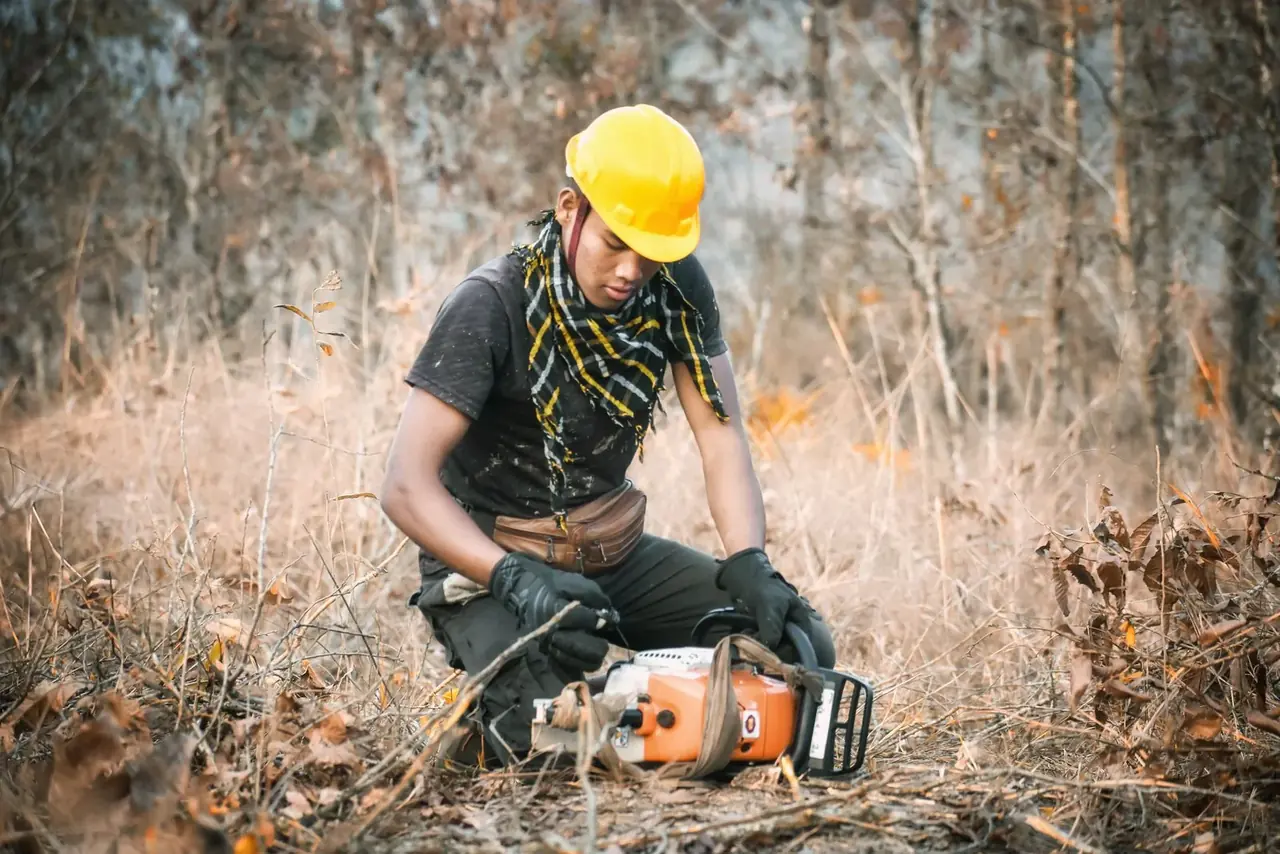
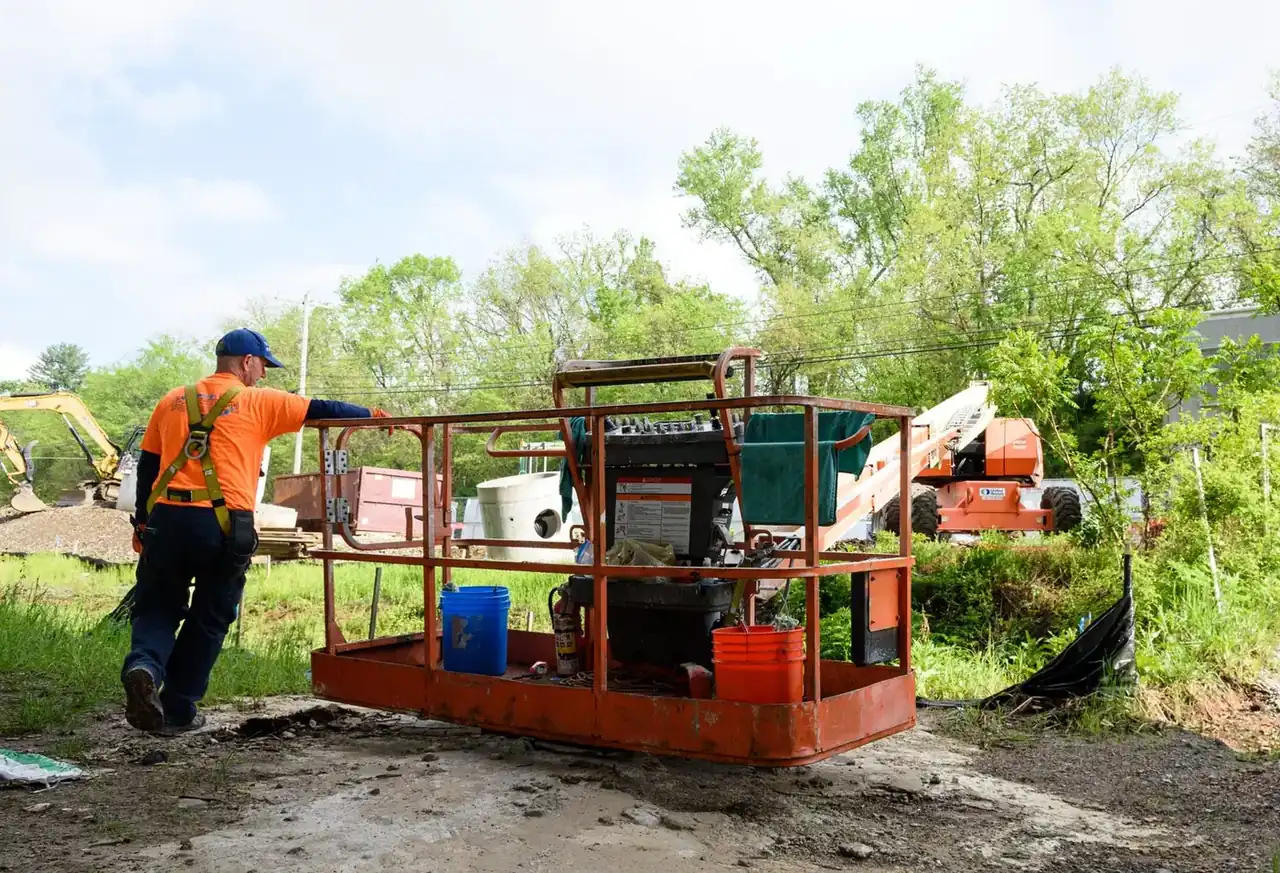
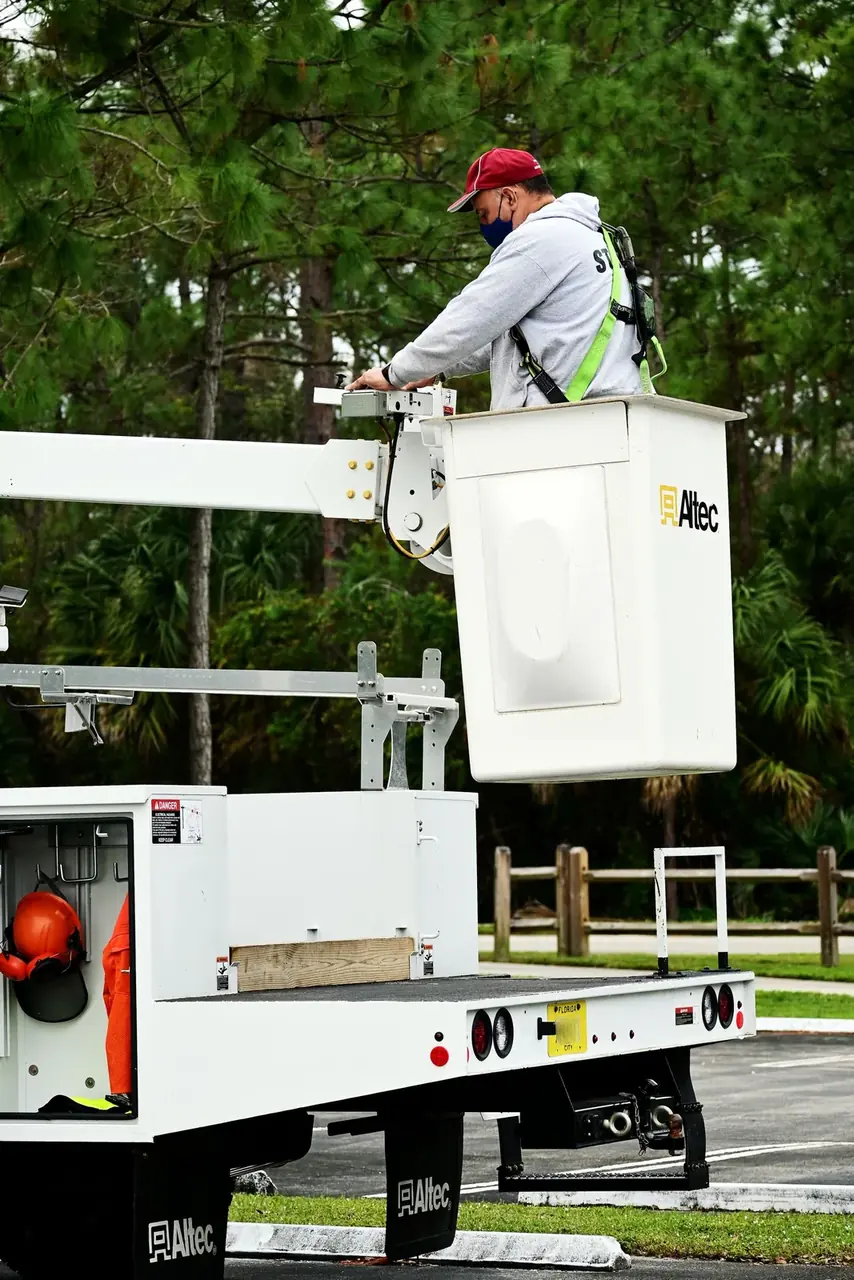
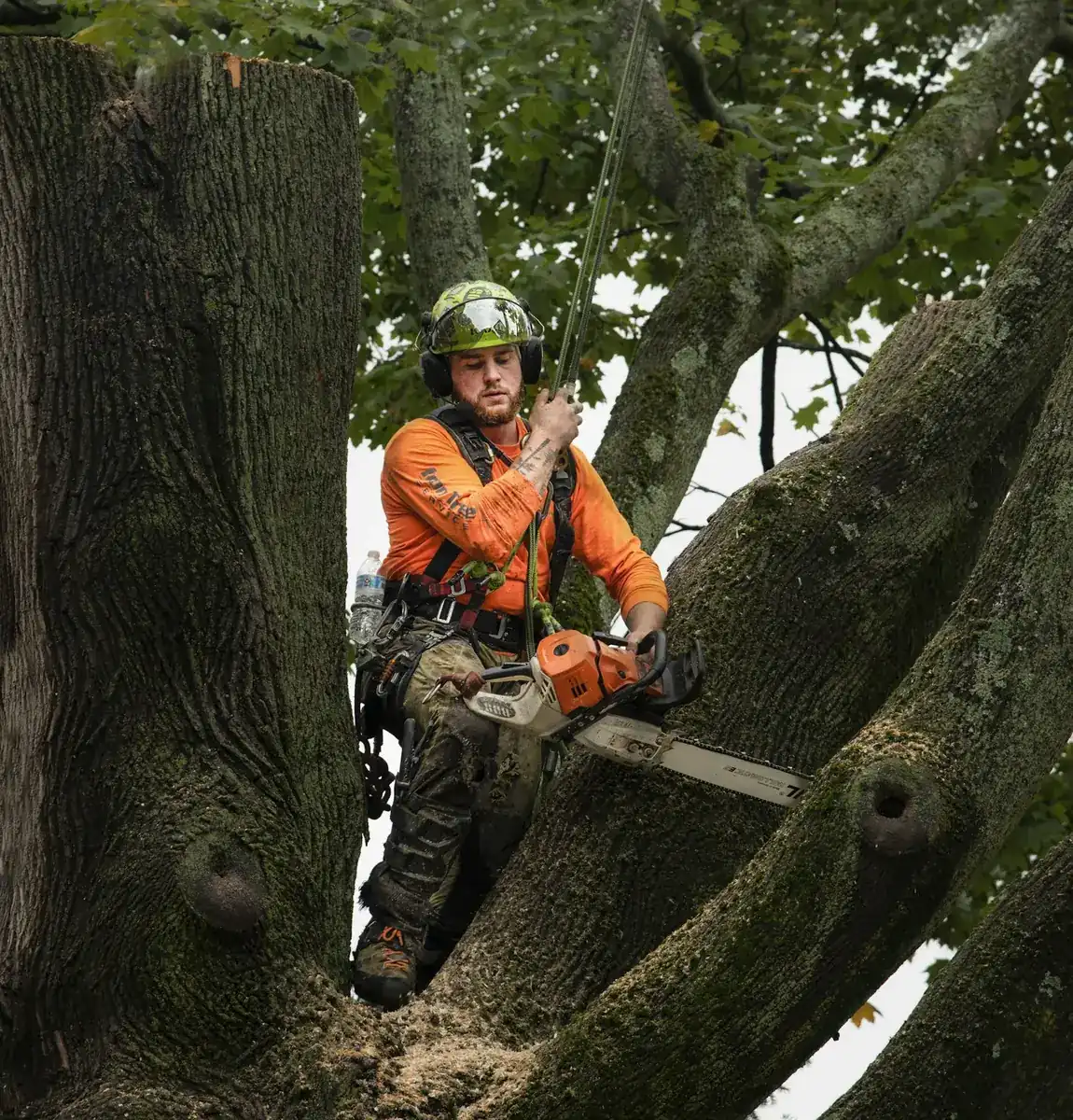
Lot Clearing in progress
Representative of the work. Real job photography replaces these as the crews document jobs.
What this costs and how long it takes
$1,100 to $2,300 per acre for typical Kansas ground
ProMatcher Kansas state average of $1,685 per acre.
These are published cost ranges for Kansas and national industry averages, not a quote. Every tree is different, and the only way to know what yours costs is a free on-site look.
What moves it up or down
- Hard access or a tight spaceadds 25 to 50 percent
- Several trees on one visitsaves 10 to 25 percent per tree
- Peak season, summer into falladds 10 to 20 percent
- A crane is requiredadds $500 or more
- Same-day emergencyup to two or three times standard rate
- Permit, where one is needed$60 to $450
Lot Clearing questions
Can you save specific trees on the lot?
Yes, and it is worth planning properly. Walk the lot with us and flag what stays. Then we fence the root zone before any equipment arrives and keep it fenced through the build. Skipping the fence is why so many builder-saved trees die three years after the house is finished.
Do stumps have to come out on a building lot?
Inside the footprint of anything structural, yes, and they need excavating rather than grinding. Ground stumps leave the root system in the soil to decay, which causes uneven settlement under a slab. Outside the footprint, grinding below grade is enough for future lawn.
What does clearing a residential lot cost?
ProMatcher's Kansas data puts clearing at roughly $1,100 to $2,300 per acre. Small city lots price closer to a per job number than a per acre one, because mobilizing a crew, a chipper, and trucks costs the same whether the lot is a quarter acre or a full one.
Can you mulch the material in place instead of hauling it?
On the parts of a rural lot staying natural, yes, and it saves the hauling cost. On the building pad, no. Grading contractors need clean dirt, and organic material worked into fill causes compaction problems. On a city infill lot, mulching is rarely possible anyway because a track machine cannot get in.
There is an old hedge row along the property line. Does that change the price?
Yes, and it is priced separately. Osage orange rows planted as living fence across Douglas and Shawnee counties have wire grown into the trunks, and hitting embedded steel destroys saw chain and mulcher teeth. It is slower work. It also gets cheaper if the fence itself is being replaced rather than preserved.
How much cedar is on a typical rural lot around here?
More than the seller told you, usually. Eastern redcedar moves into ungrazed ground steadily and a lot that looked open from the road is often carrying a heavy understory. The upside is that cedar does not resprout from the stump, so clearing it once settles it, apart from reseeding from trees still standing nearby.
Do I need to be there while you work?
Only for the walk-through where we flag saved trees and confirm boundaries. That one matters and we would rather do it with you than from a plan. After that we can work without you on site.
Who is responsible if you clear onto my neighbor's property?
We are, which is why we will not start without marked lot lines. If the survey pins are missing or nobody is certain where the line runs, get it surveyed first. Cutting a neighbor's trees by mistake is one of the more expensive errors available in this trade, and Kansas treats it seriously.
How do I compare two lot clearing bids?
Line them up on three questions: are stumps included and at what depth, is haul off and disposal included, and is protective fencing for saved trees included. Kansas has no licensing requirement for tree removal companies, so also ask both bidders for a certificate of liability insurance and workers compensation from the carrier.
Request a free estimate
Free, no obligation. We call back within 15 minutes.
Got it.
We call back within 15 minutes during business hours.
That did not send. Call and we will take it down over the phone.
(785) 550-0100Coverage
Lawrence, Topeka, and everything between
We run out of Lawrence and cover 14 towns across 5 counties. If your town is not pinned, call anyway. We are usually closer than you think.
- Home base
- Lawrence, KS
- Storm calls
- 24 / 7
Often booked together
Land Clearing
Clearing acreage of trees, brush, and cedar so the ground can be used.
Stump Removal
Excavating the stump and root ball out entirely when grinding is not enough.
Forestry Mulching
Grinding standing brush and small trees into mulch in place, with nothing hauled off.