Tree Care
Stump Removal in Lawrence and Topeka
Excavating the stump and root ball out entirely when grinding is not enough.
- Use it when
- Something structural is going in the spot
- Skip it when
- You just want lawn or a bed
- Access needed
- Excavator path, wider than a gate
- After the dig
- Backfilled in compacted lifts
What this is
Grinding leaves the root system in the ground. That is fine for a lawn and not fine if you are pouring a footing, laying a patio, or putting in a pool. Full removal means bringing in an excavator, digging the root plate out, and hauling it off, which leaves a hole that needs backfilling and compacting.
What the job includes
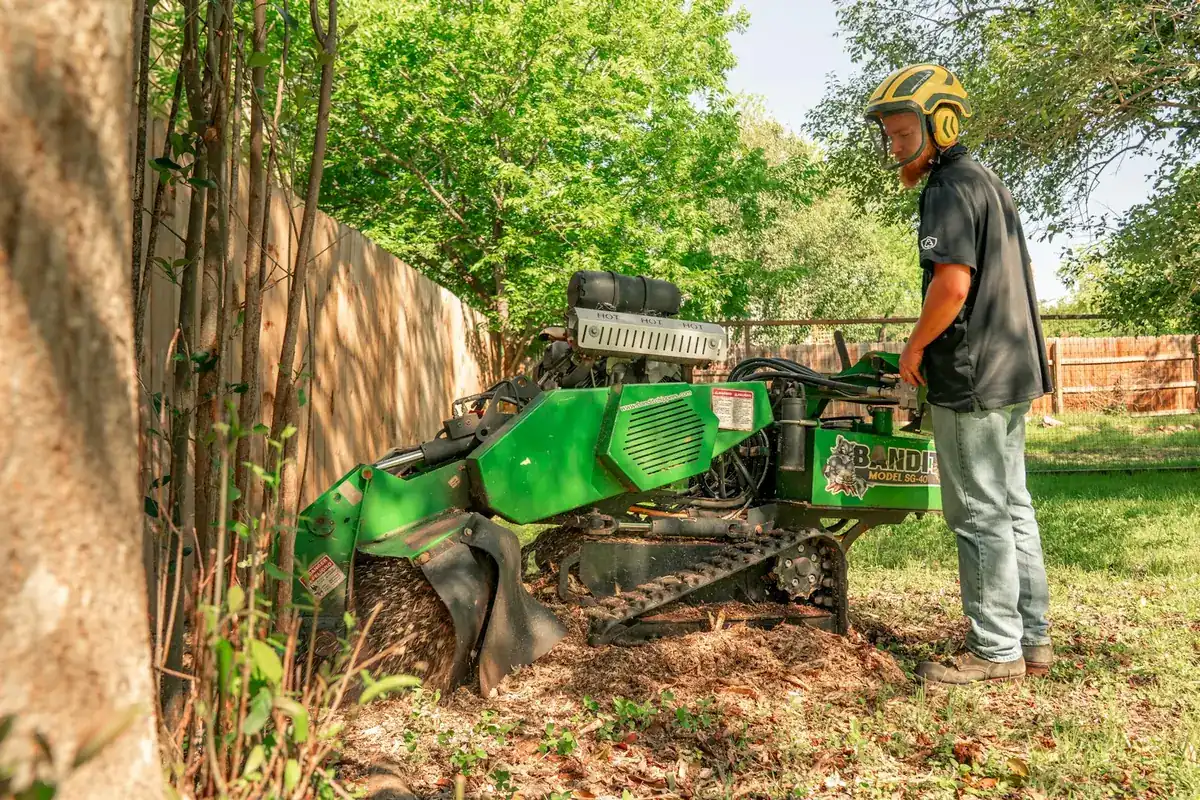
- Excavator dig out of the stump and main root plate
- Material hauled off site
- Hole backfilled and compacted
- The right call before footings, patios, pools, and utility runs
Grinding and removal are different jobs with different machines
Grinding chews the stump into chips from above and leaves the root system in the ground. Removal digs the stump and the main root plate out of the ground entirely and hauls it away. The first uses a grinder and takes hours. The second uses a mini excavator or a skid steer with a grapple and leaves a hole that has to be filled and compacted.
Cost guides blur these two constantly. One Topeka lead generation site states outright that grinding and removal are not different, which is wrong and is a useful example of why the cheap published stump numbers should be treated carefully. Fixr is one of the few sources that separates them, pricing root removal at $150 to $350 when the tree is staying and $500 to $1,000 for complete removal. LawnStarter puts stump removal at $175 to $516 against grinding at $158 to $450. No Kansas specific number for full excavation exists anywhere we could verify, which is why we quote it on inspection rather than publishing a range we cannot stand behind.
For a lawn, a garden bed, or a replant a few feet to the side, grinding is the right answer and the cheaper one. Excavation is for the cases where the ground itself has to be clear.
- Grinding leaves the roots, excavation takes the root plate out
- Excavation leaves an open hole that needs fill and compaction
- Machine access is mandatory, since nobody digs a root plate by hand
- Kansas specific excavation pricing is not published, so it is quoted on site
When you actually need the roots out
Anything structural going into the same footprint. A patio, a garage slab, a shed pad, a deck footing, or a retaining wall all sit on compacted fill, and a decaying root plate under that fill creates voids as it breaks down. The slab settles unevenly over the following five to ten years, and the crack that shows up in year six is the root you left in year one.
Pool excavation and utility trenching are the other clear cases. A pool contractor will not dig through a bur oak root plate, and a plumber running a new sewer lateral or a gas line through an old Osage orange stump will charge you for the time either way. Getting the stump out first is cheaper than paying a trade with a higher hourly rate to fight it.
Regrading is the third. If you are cutting the grade down around a spot where a large tree stood, the root plate is in the way of the new elevation and the material has to come out. Grinding to 12 inches does nothing for you if the finished grade is dropping 18.
- Footings, slabs, patios, and retaining walls
- Pool excavation and any significant regrade
- Utility trenching through the old root plate
- Anywhere a subsequent contractor would otherwise be billing to dig through it
How an excavation runs
Full removal is a heavier operation than grinding and it looks like it. Expect equipment on the property, a spoil pile, and a truck or trailer to haul material.
Plan on the site looking disturbed when we leave. The hole gets backfilled and compacted, but the surrounding turf will need attention.
- 1 We confirm machine access first, since a mini excavator needs a wider path than a stump grinder and something has to carry the spoil out.
- 2 A utility locate goes in. Excavation goes deeper than grinding, which puts gas, water, sewer, and communications lines in play rather than just irrigation.
- 3 Ground protection goes down along the travel path, and the spoil area gets tarped so the topsoil can go back rather than getting mixed into the lawn.
- 4 The excavator cuts a trench around the root plate, severing the lateral roots so the plate can be lifted rather than dragged.
- 5 The stump and plate come up, get shaken to knock soil off, and get loaded out.
- 6 Remaining large roots running out of the hole get chased back and cut off below the finished grade.
- 7 The hole gets backfilled in lifts and compacted between them rather than dumped full in one go, since a single dumped fill will settle badly.
- 8 Topsoil goes back over the top and the area gets raked out ready for seed or for whatever is being built there.
Backfill is the part that gets skipped
A stump hole is bigger than it looks, and filling it correctly is most of the difference between a spot you forget about and a depression that reappears every spring. Fill goes in in layers of six to eight inches, each one compacted before the next goes on. Dumping a truckload of dirt in a hole and raking the top flat produces ground that keeps sinking for two years.
What goes in the hole depends on what is going on top of it. Turf and beds get clean topsoil. Anything that will carry a load gets engineered fill compacted to whatever the builder or the engineer specifies, and that specification comes from them rather than from us. We are happy to coordinate directly with your builder on it.
Grindings should not be used as fill in a hole that will carry a structure or that you want to plant grass over quickly. Wood decomposing in the fill creates the same voids the root plate would have, and it ties up nitrogen in the top layer while it breaks down.
What drives the price
The root plate size is the first factor, and it scales with the tree that was on top of it. A 30 inch cottonwood on the Kansas River bottom has a wide, shallow plate spreading through soft alluvial soil. A bur oak of the same diameter on upland clay has a deeper, more compact plate that fights harder but occupies less footprint. Osage orange is the worst of both, dense wood and stubborn roots.
Access is the second. If a mini excavator cannot reach the stump, there is no job at any price short of hand digging, which nobody sells. A 36 inch gate that works for a stump grinder will not pass most excavators, and sometimes the answer is removing a fence panel and putting it back.
Disposal and fill volume close it out. The spoil has to go somewhere and the hole has to be filled with something, and both of those are truck loads. Both scale directly with the size of the plate that came out.
- Root plate diameter and soil type
- Whether an excavator can physically reach the location
- Volume of fill required and its specification
- Haul off and disposal of the stump and spoil
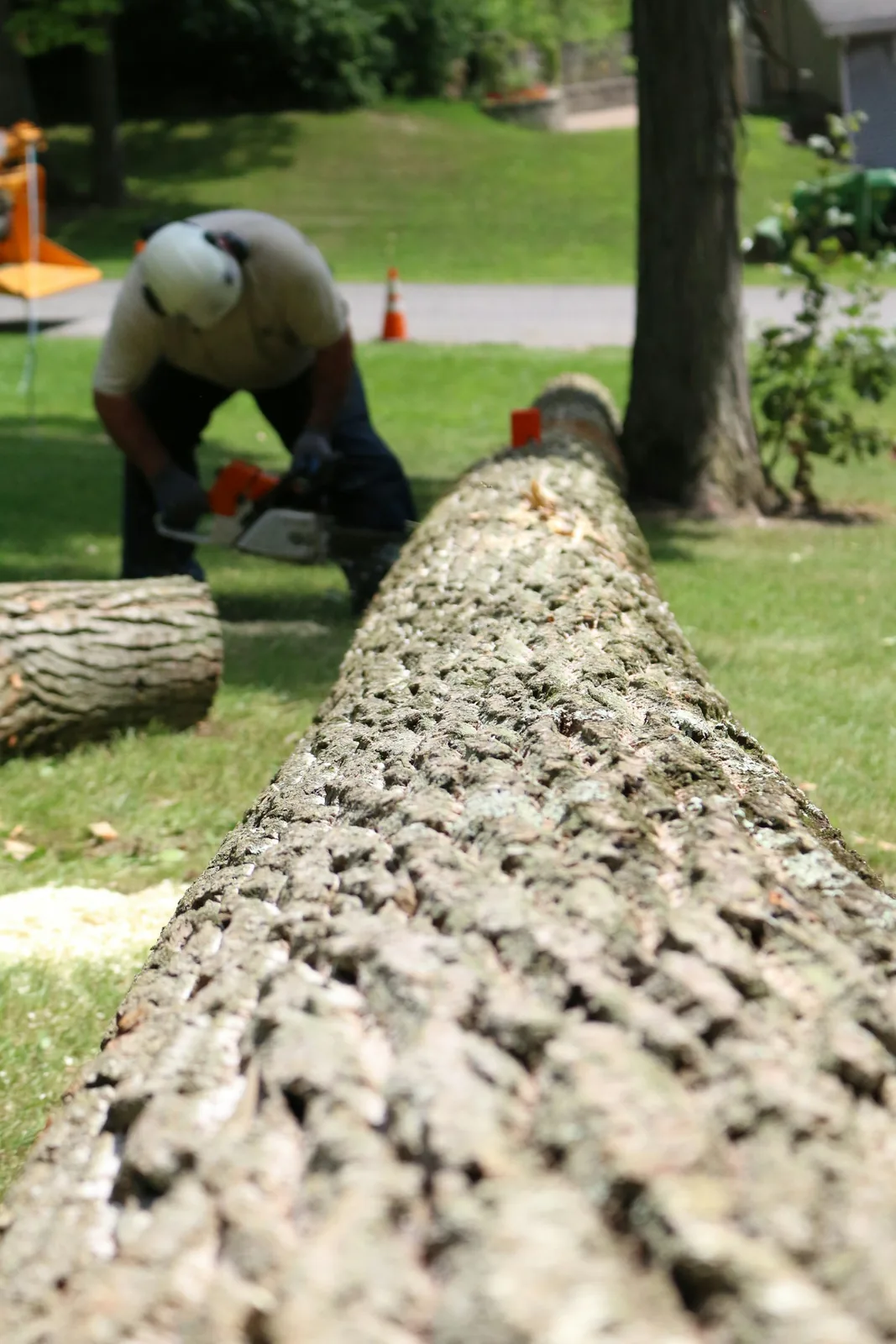
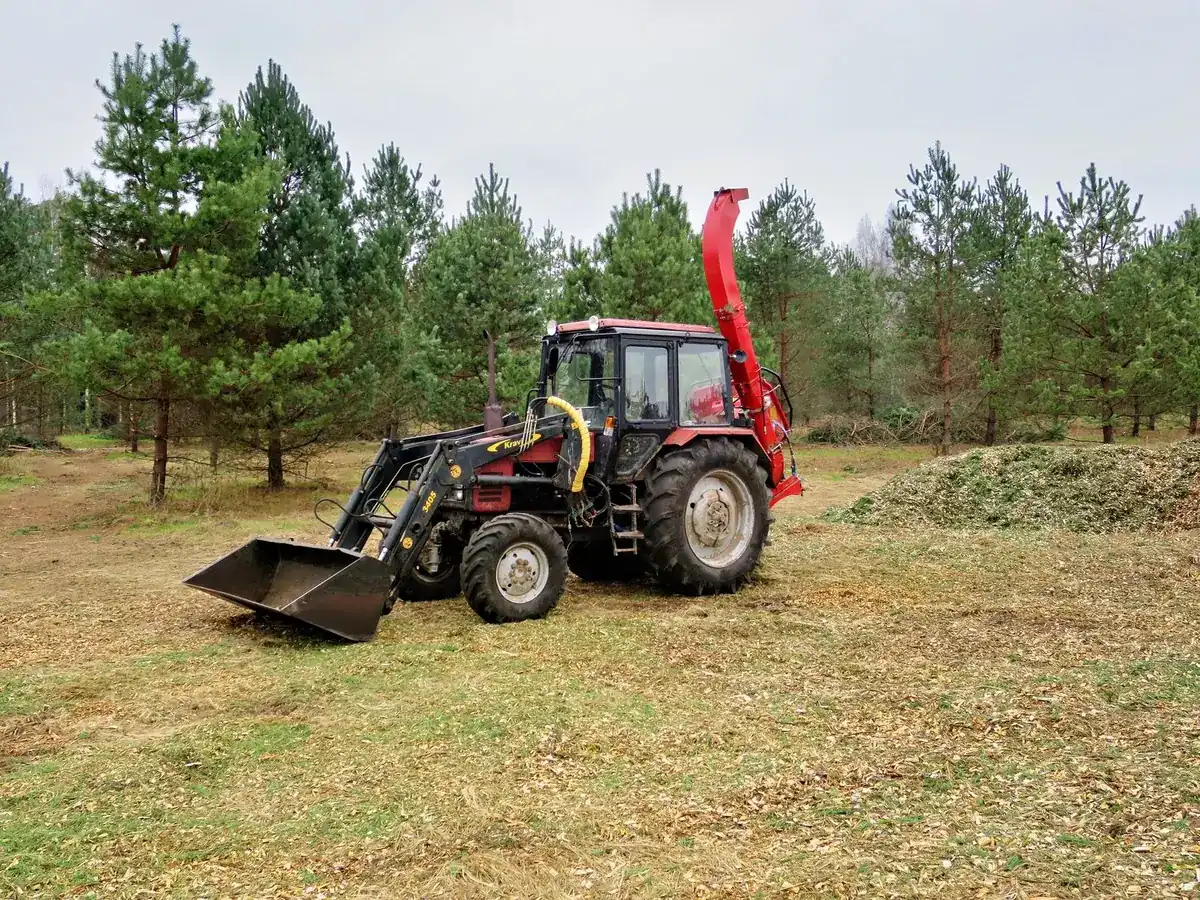
Stump Removal in progress
Representative of the work. Real job photography replaces these as the crews document jobs.
What this costs and how long it takes
Every property is different, so we price on site rather than over the phone. The estimate is free, it takes about fifteen minutes, and you get the number in writing before anyone starts.
What moves the price
- Stump and root plate size
- Excavator access to the location
- Volume of fill needed
- Disposal
Stump Removal questions
Do I need full removal or is grinding enough?
Grinding is enough for lawn, garden beds, and replanting a few feet to the side. Full removal is for footings, slabs, patios, pools, retaining walls, utility trenching, and any regrade that cuts below the root plate. The failure mode grinding creates is decay voids under a load bearing surface, which show up as uneven settling years later.
How much more does excavation cost than grinding?
More, and honestly the published data on this is poor. Fixr prices complete removal at $500 to $1,000 against $150 to $350 for root removal where the tree stays. LawnStarter puts stump removal at $175 to $516 against grinding at $158 to $450, which is a much narrower gap than our experience suggests for a large plate. No Kansas specific figure for full excavation is published anywhere, so we look at it and quote it rather than guessing from a national table.
Will excavation wreck my yard?
It will disturb it. There is equipment on the property, a spoil pile, and travel ruts along whatever path the machine took. We lay ground protection on the travel route and tarp the spoil so the topsoil can go back where it came from, but plan on reseeding the work area. This is a bigger footprint than a stump grind and it is worth knowing that before you book it.
Can you get to a stump in my backyard?
Depends on the gate and what is between the gate and the stump. A stump grinder fits through about 36 inches. A mini excavator needs more, so backyard excavations often mean pulling a fence panel and reinstalling it. We check that at the estimate and tell you if it is not feasible, rather than finding out on the morning of the job.
What do you fill the hole with?
Clean topsoil for anything that will be lawn or beds, placed in six to eight inch lifts and compacted between them. If something is being built on the spot, the fill specification comes from your builder or engineer and we work to it. We do not use grindings as fill in a hole that will carry a load or be seeded soon, because decaying wood creates voids and ties up nitrogen.
Will the hole still settle?
Properly compacted fill settles a little, dumped fill settles a lot. Filling in lifts with compaction between them is the difference. Expect to add a wheelbarrow of soil once the following spring on a lawn area, which is normal. If a spot keeps sinking year after year, the fill was not compacted.
Can you take the stump out without killing the tree next to it?
Sometimes, and it is a real consideration. Trees standing within a few feet of each other often have overlapping root systems, and on oaks of the same species those roots can be grafted together. Trenching around one plate can cut a meaningful share of a neighbor's roots. We look at the spacing and tell you the risk before digging, and in tight cases grinding is the safer answer for the tree that is staying.
Request a free estimate
Free, no obligation. We call back within 15 minutes.
Got it.
We call back within 15 minutes during business hours.
That did not send. Call and we will take it down over the phone.
(785) 550-0100Coverage
Lawrence, Topeka, and everything between
We run out of Lawrence and cover 14 towns across 5 counties. If your town is not pinned, call anyway. We are usually closer than you think.
- Home base
- Lawrence, KS
- Storm calls
- 24 / 7
Often booked together
Stump Grinding
Grinding the stump below grade so you can mow over it, replant, or lay sod.
Land Clearing
Clearing acreage of trees, brush, and cedar so the ground can be used.
More in Tree Care
- Tree Removal
- Tree Trimming
- Tree Pruning
- Stump Grinding
- Crown Reduction
- Deadwooding
- Cabling and Bracing
- Tree Planting
- Shrub and Hedge Trimming
- Firewood