Answered 24 hours a day
Fallen Tree Removal in Lawrence and Topeka
A tree already down, cut up and hauled off, including off structures and vehicles.
- On a structure
- Emergency dispatch
- In the open yard
- Scheduled, and cheaper
- Wood
- Hauled, or stacked for you free
- Root plate holes
- Backfilled and compacted
What the job includes
- Trees off roofs, cars, fences, and outbuildings
- Trunks bucked and hauled
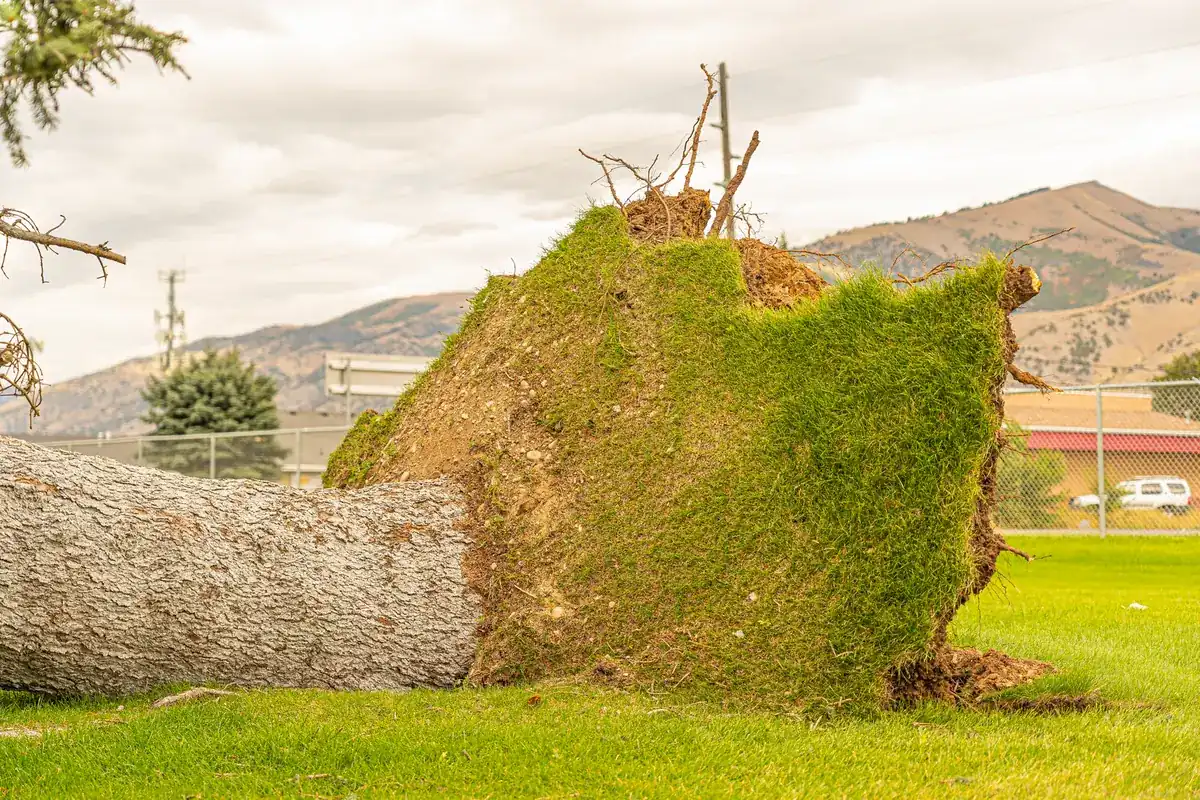
- Root plates dealt with where the tree tipped rather than snapped
- Photographs for your claim
First Ten Minutes With a Tree Already Down
A tree that has already fallen has done most of its damage, which makes this less frantic than a tree still standing and threatening. It does not make it safe. A down tree is a stored-energy problem, and the injuries happen during cleanup rather than during the fall.
Work this list before you touch anything, including the branches that look small and harmless.
- 1 Check whether the tree took a wire down with it. If any conductor is under, over, or tangled in the tree, stay back and call Evergy at 800-544-4857 before doing anything else.
- 2 If it landed on the house or garage, get people out of those rooms and out of anything with a sagging ceiling.
- 3 Look at the root plate. If soil has heaved and the trunk is only partly down, treat the whole area as live, because a partly tipped tree can drop the rest of the way without warning.
- 4 Photograph everything before anything moves. The tree where it lies, the point of contact, the damage from several angles, and a wide shot showing the whole scene.
- 5 Open the insurance claim if it hit a structure or a vehicle, and note the claim number.
- 6 Check whether the trunk is blocking your driveway, the street, or a hydrant, since blocked access moves the job up the priority list.
- 7 Leave the saw in the garage. Do not cut a limb that is bent, pinned, or holding the trunk off the ground.
- 8 Call, and tell us the species if you know it, roughly how big around the trunk is, and what it is lying on.
Why a Down Tree Is Still Dangerous
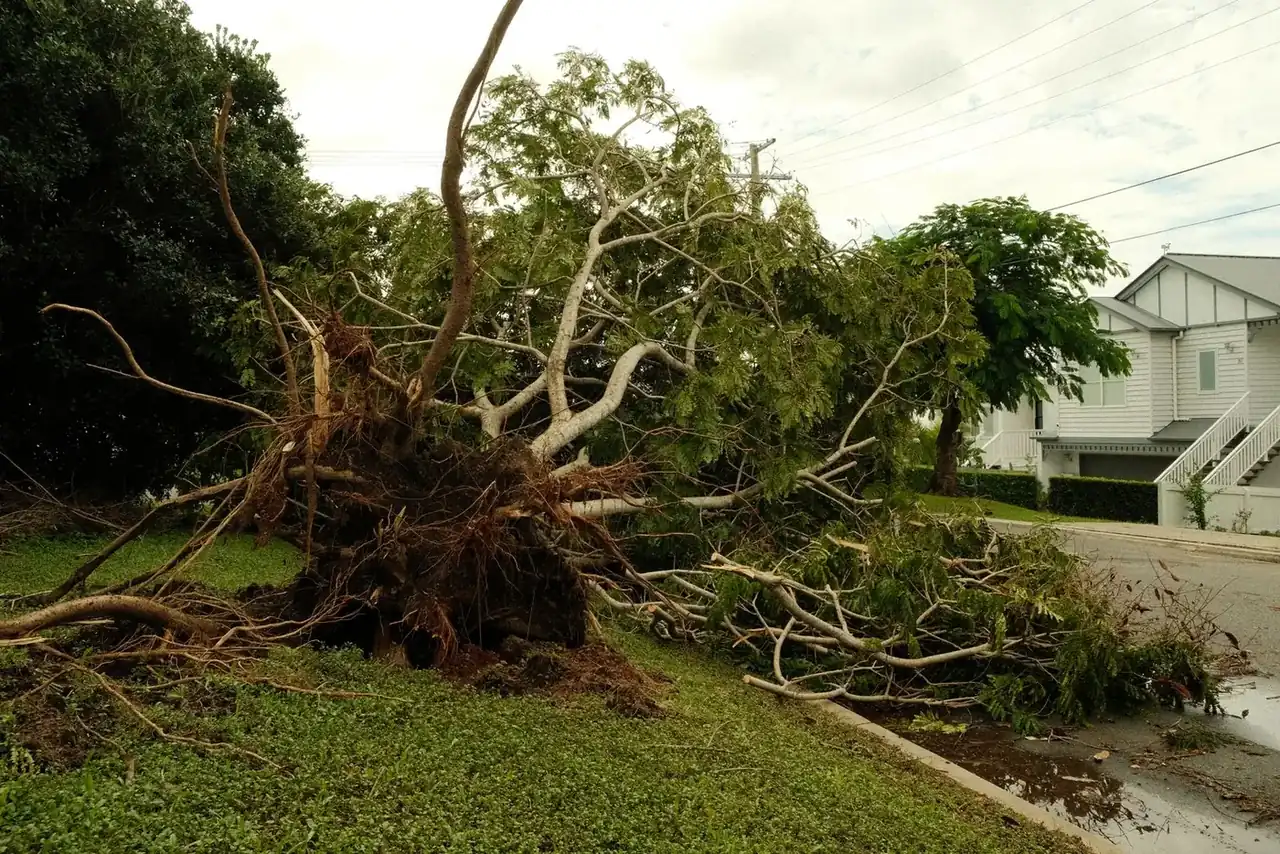
Every limb under a fallen trunk is a spring. The wood is bent, the fibers on one face are in tension and the fibers on the other are in compression, and the trunk above it is being held up by that stored force. Cut the wrong face and the limb straightens in a fraction of a second, which is more than fast enough to break a leg or throw a running saw back at the person holding it.
The trunk itself does the same thing at a larger scale. A stem supported at both ends binds a saw bar and then drops. A stem supported at one end springs upward when the far side is released. Reading which condition you have, and cutting the compression face first by the right amount, is most of what a bucking crew is actually doing.
Add to that the root plate. When a tree tips rather than snapping, the plate stands up as a wall of soil and roots weighing several tons, held vertical only by the trunk's weight on the far end. Cut the trunk off it and the plate can slam back into the hole. We cut those in an order that keeps the plate loaded until it is dealt with deliberately.
- Limbs under a trunk are loaded springs, not sticks
- Bind and kickback are the two common ways a homeowner cleanup goes wrong
- Tipped root plates can rotate back into the hole when the trunk is released
- Wood on a roof is holding building load, so the cutting order decides how much further damage happens
Tipped, Snapped, or Uprooted, and Why It Changes the Job
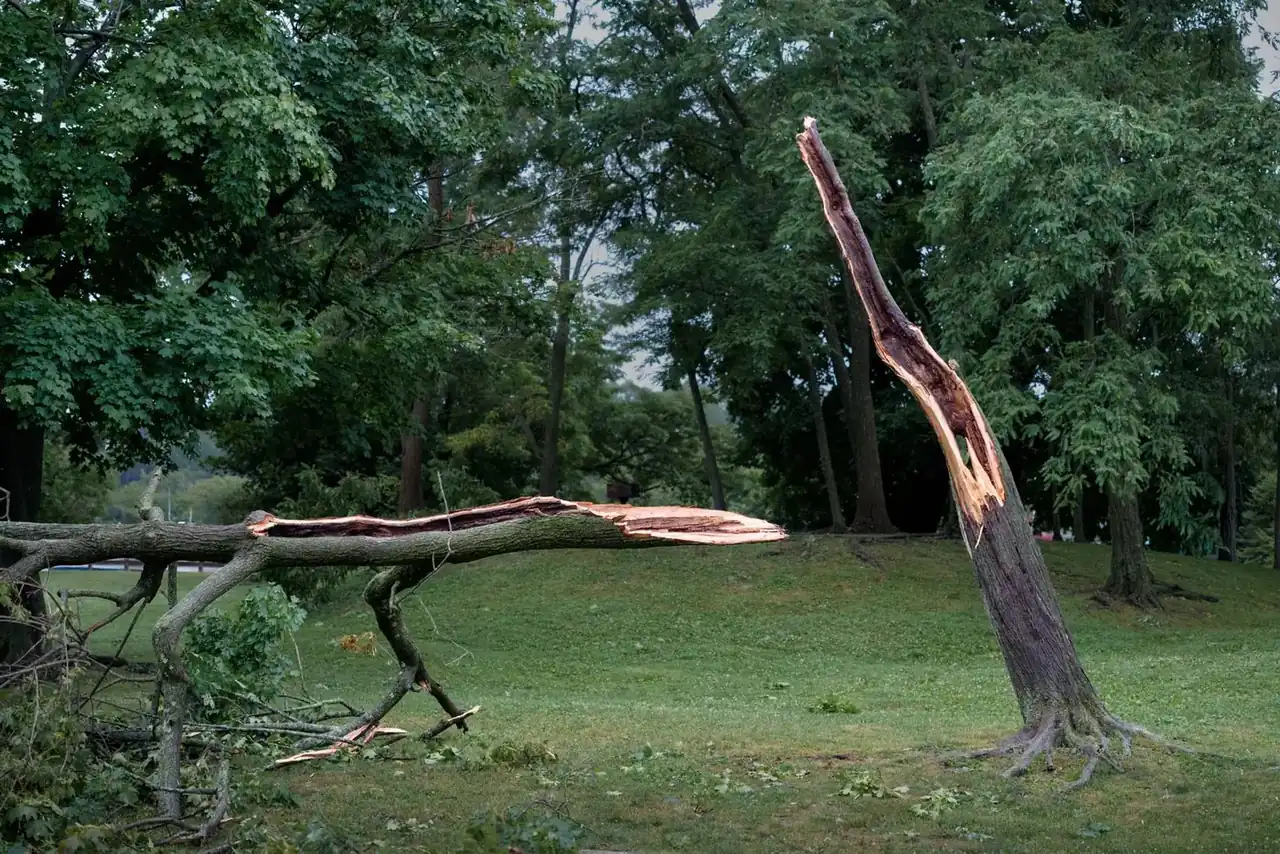
A snapped trunk leaves a standing stump and a tree on the ground. That is the simplest version: buck the trunk into rounds, chip the brush, haul, and grind the stump if you want it gone. Most storm-snapped silver maple and Siberian elm in Topeka and Lawrence fall into this category, since both species break rather than uproot.
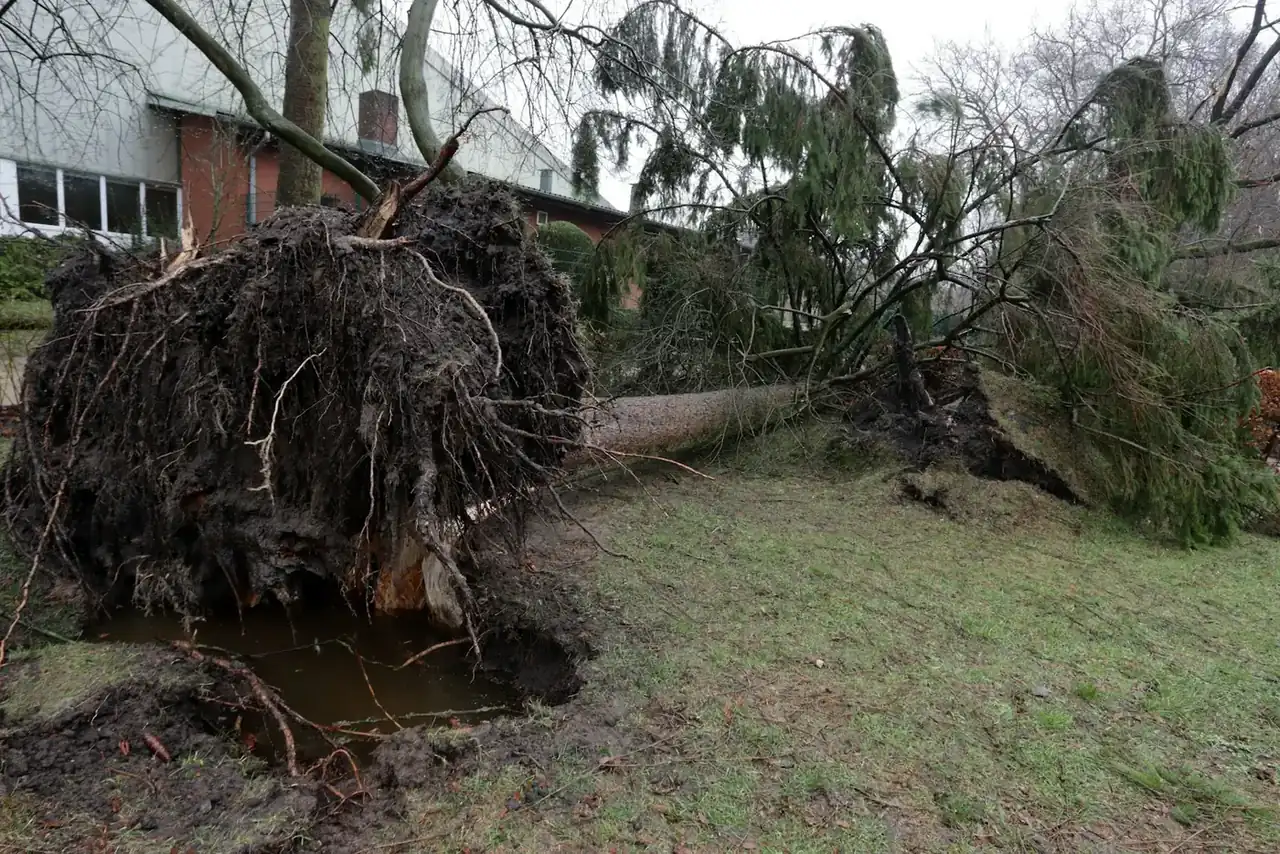
An uprooted tree leaves a root plate and a hole, and the hole is a real part of the job. Once the plate is cut free and worked back down, you are left with a depression that needs backfilling and compacting or it becomes a soft spot in the lawn for years. Cottonwood and pin oak on the bottomland ground near the Kansas River tip like this, especially when the soil is saturated before the wind arrives.
A partial failure, where the tree is leaning hard on another tree or on a structure and is only half down, is the most dangerous of the three and the one people most often underestimate. Nothing about it is finished. It is a removal in progress that stopped partway, and it needs rigging rather than cutting.
- Snapped: bucking, chipping, hauling, optional stump grinding
- Uprooted: plate cut free, worked back into the hole, backfilled and compacted
- Hung up or partly down: rigged and taken apart, never cut from underneath
- On a structure: load assessed and weight removed in controlled pieces
What Insurance Does With a Fallen Tree
Homeowners policies generally cover removal when the tree lands on a covered structure. The house, the detached garage, a shed, and in most policies the fence. The removal gets paid because the structural damage is a covered loss and clearing the tree is part of repairing it.
A tree that falls in the open yard and hits nothing generally is not covered, no matter how large it was or how much it costs to haul off. This is the single most common surprise after a Kansas windstorm. Some policies do carry a limited debris removal allowance that applies either way, so ask the adjuster about it by name rather than assuming it is not there.
A tree on a car is usually a claim on the auto policy rather than the homeowners policy. And a tree from your neighbor's yard that lands on your building is normally still your claim, unless you can show the tree was clearly dead and the owner was told and did nothing. Photograph everything before anything moves. Once we start bucking, the evidence goes on the truck.
What It Costs and What Leaves With Us
A tree already lying in an open area is generally cheaper to deal with than taking the same tree down standing, which is what HomeGuide reports as well. Nobody has to climb it, rig it, or drop it between a fence and a garage. It is bucking, loading, and hauling.
That flips once the tree is on something. A trunk resting on a roof, a car, or a fence is priced as an emergency job, and emergency and storm call-outs run about fifty percent above scheduled work according to Today's Homeowner data across Topeka, Lawrence and Shawnee. What you are paying for is the rigging that gets weight off the structure without adding a second round of damage.
Everything leaves with us unless you say otherwise. Brush goes through the chipper, rounds go on the truck, and the work area gets raked and blown. If you burn, tell us before the crew starts and we will cut the trunk into stove length rounds and stack them where you want them at no extra charge. Oak, hackberry, honeylocust, and Osage orange are all worth keeping.
- Down in the open: bucked, chipped, hauled, generally cheaper than a standing removal
- On a structure or vehicle: emergency pricing, rigged rather than cut
- Stump grinding quoted separately so you can skip it
- Root plate holes backfilled and compacted
- Wood left in rounds and stacked at no charge if you burn it
Hiring for This Work in Kansas
Fallen tree work is where the least equipped operators show up, because from the road it looks like nothing more than a chainsaw job. It is not. The judgment involved in bucking a loaded trunk off a roof without cracking a second rafter is the entire value of the crew.
Kansas has no state licensing requirement for tree removal companies, so a truck and a card prove nothing about competence. Insurance and certification are the only checks available. Ask for a certificate of liability insurance and workers compensation issued directly by the carrier, and ask whether the person cutting is ISA or Kansas Arborists Association certified.
Get the scope in writing, specifically whether hauling and disposal are included. A low bid that leaves the rounds stacked in your yard and the ruts in your lawn is not a low bid, it is a partial one.
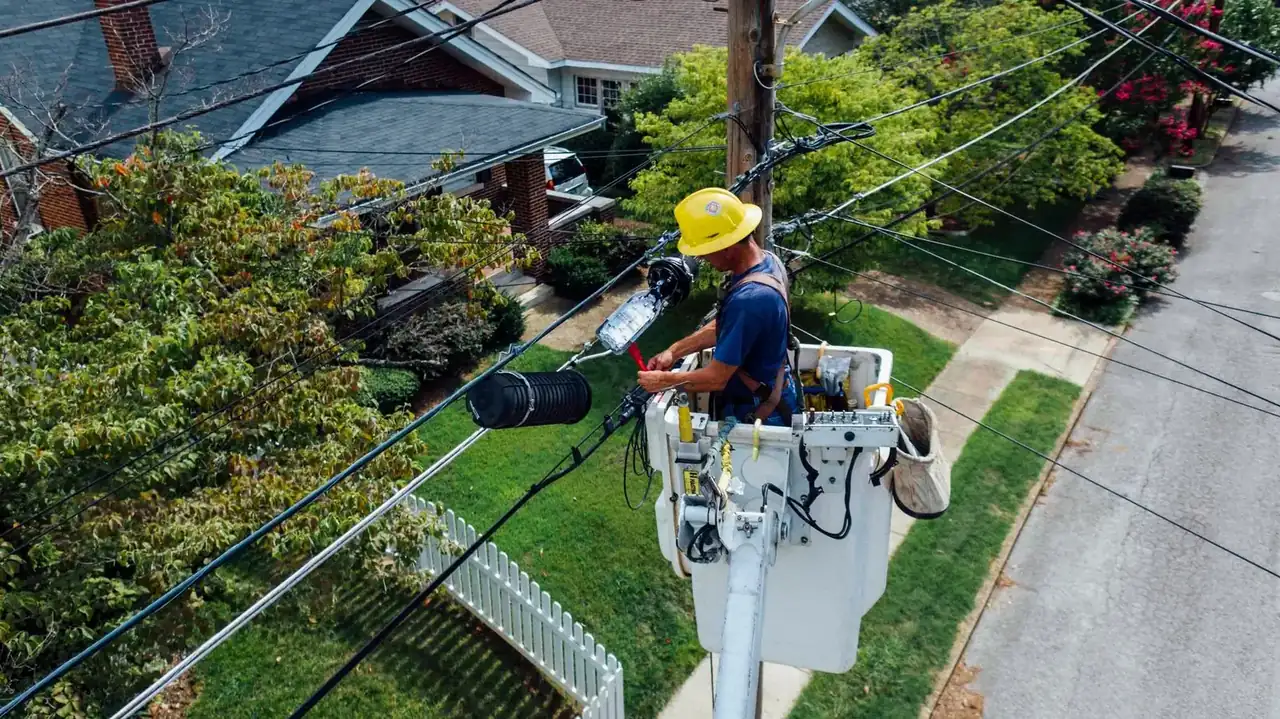
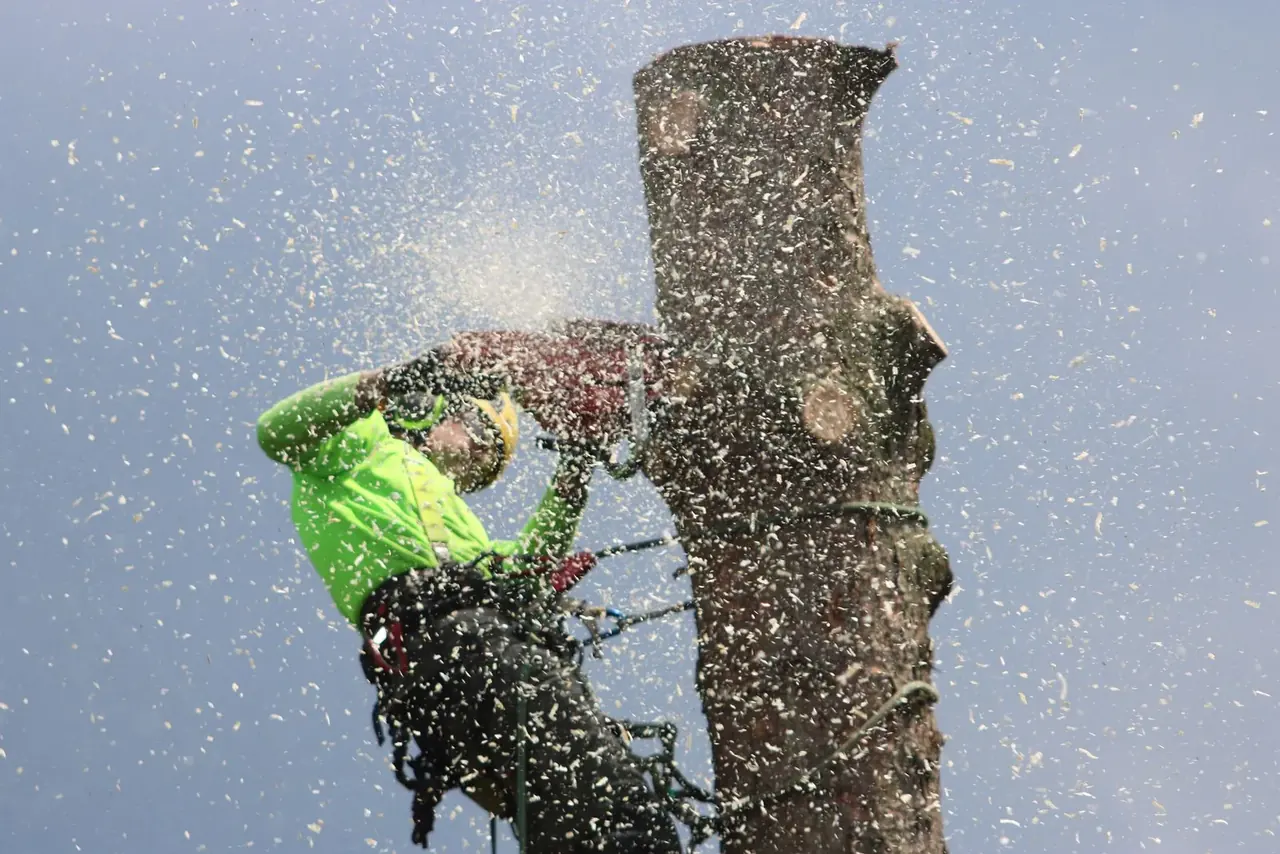
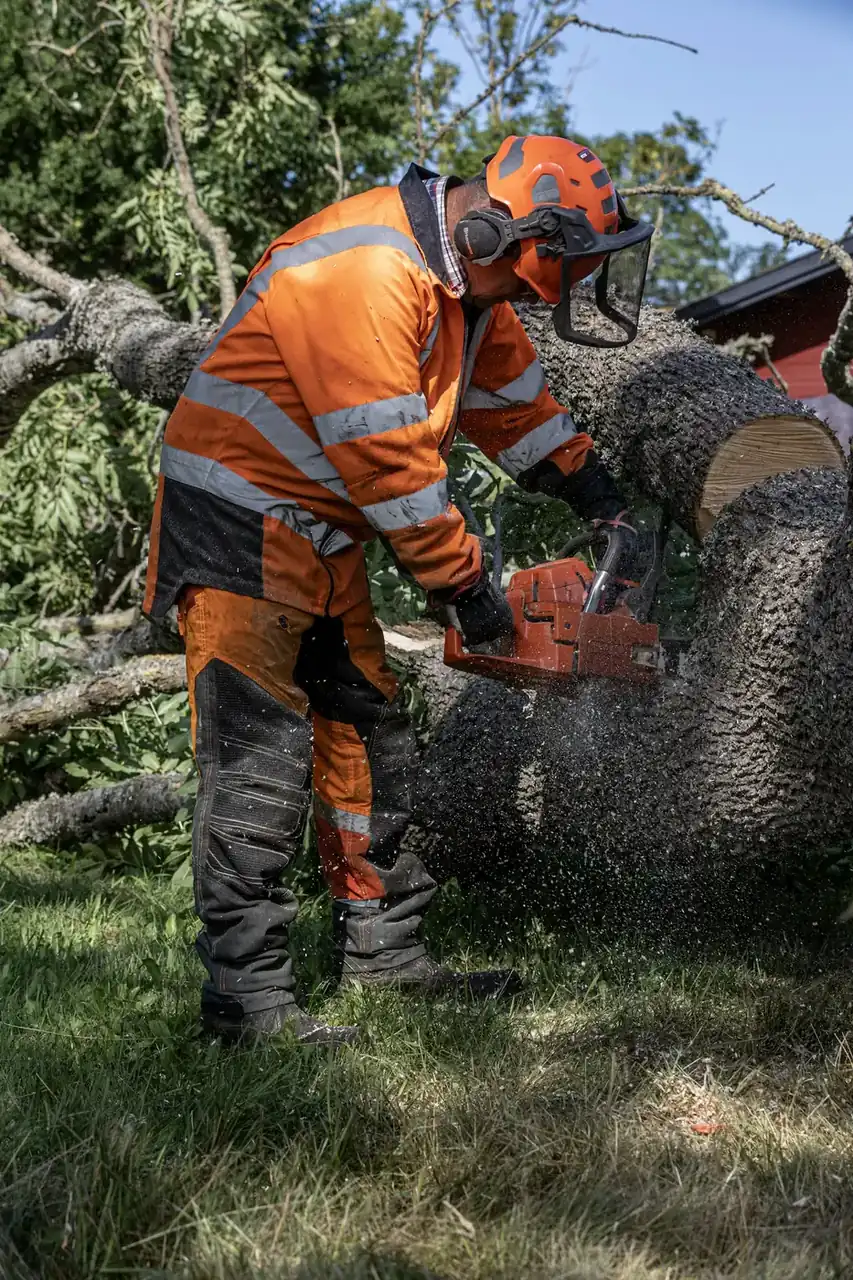
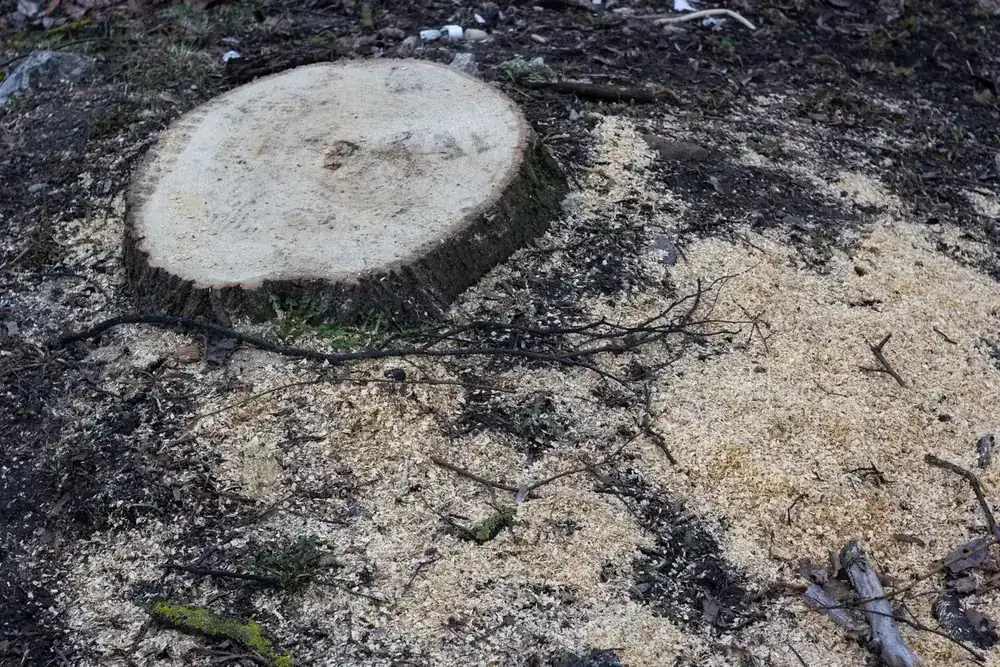
Fallen Tree Removal in progress
Representative of the work. Real job photography replaces these as the crews document jobs.
What this costs and how long it takes
A tree already on the ground and not touching anything usually costs less than taking the same tree down standing, because the rigging is already done
Published figures for fallen tree removal range from $75 to $900 across sources, too wide a spread to quote as a price. What holds is the comparison, and that emergency call-outs run about 50 percent above scheduled work.
These are published cost ranges for Kansas and national industry averages, not a quote. Every tree is different, and the only way to know what yours costs is a free on-site look.
What moves it up or down
- Hard access or a tight spaceadds 25 to 50 percent
- Several trees on one visitsaves 10 to 25 percent per tree
- Peak season, summer into falladds 10 to 20 percent
- A crane is requiredadds $500 or more
- Same-day emergencyup to two or three times standard rate
- Permit, where one is needed$60 to $450
Fallen Tree Removal questions
The tree fell in my yard and hit nothing. Is that urgent?
Usually not. If it is not on a structure, not blocking access, and not holding tension against anything, it will keep until we can schedule it, and scheduled work costs meaningfully less than an emergency call-out. Keep people and pets off it in the meantime.
Can I cut it up myself and just have you haul it?
You can, and some people do. The caution is that limbs pinned under a trunk are loaded and a bar buried in a bind is how most homeowner chainsaw injuries happen. If the tree is lying clean on flat ground with nothing pinned, it is a reasonable job. If anything is bent, propped, or on a slope, call.
Is a fallen tree cheaper to remove than a standing one?
In an open area, generally yes, and HomeGuide reports the same. There is no climbing and no rigging, so it is bucking and hauling. That advantage disappears the moment the tree is lying on a roof, a fence, or a car, where the work becomes controlled removal of weight from a damaged structure.
Will my insurance pay for it?
Generally yes if it hit a covered structure, generally no if it landed in the yard and hit nothing. A tree on a car is usually a claim on your auto policy instead. Ask your adjuster specifically whether the policy carries a debris removal allowance, because some do and it is easy to miss.
It was my neighbor's tree. Should they pay?
Normally your own policy responds based on where the tree landed rather than where it grew. It changes if the tree was visibly dead and the owner had been notified in writing beforehand. That is why sending a dated letter about a dead tree is worth doing while it is still standing.
What do you do with the root plate and the hole?
The plate gets cut free and worked back down into the hole, then the hole is backfilled and compacted. Skipping that leaves a soft depression that settles for years and swallows a mower wheel. If the whole plate needs to come out, that is an excavator job and we quote it separately.
Do you take the wood away?
Yes, by default. Brush chipped, rounds loaded, work area raked and blown. If you burn, tell us before the crew starts and we will cut the trunk into rounds and stack them where you want them at no extra charge.
How do I know a company is qualified to cut a tree off my roof?
Kansas does not license tree removal companies, so ask for the two documents that mean something: a certificate of liability insurance and workers compensation from the carrier. Then ask how they plan to get the weight off the structure. A crew that answers with rigging, piece sizes, and where the pieces will land has done it before. A crew that says they will just cut it up has not.
Request a free estimate
Free, no obligation. We call back within 15 minutes.
Got it.
We call back within 15 minutes during business hours.
That did not send. Call and we will take it down over the phone.
(785) 550-0100Coverage
Lawrence, Topeka, and everything between
We run out of Lawrence and cover 14 towns across 5 counties. If your town is not pinned, call anyway. We are usually closer than you think.
- Home base
- Lawrence, KS
- Storm calls
- 24 / 7
Often booked together
Emergency Tree Removal
A tree is on the house, across the drive, or leaning on a line. Call, do not fill out a form.
Storm Damage Cleanup
After a wind or ice event: hangers out of the canopy, broken limbs down, property cleared.
Debris Hauling
Wood, brush, and storm debris loaded and hauled off.