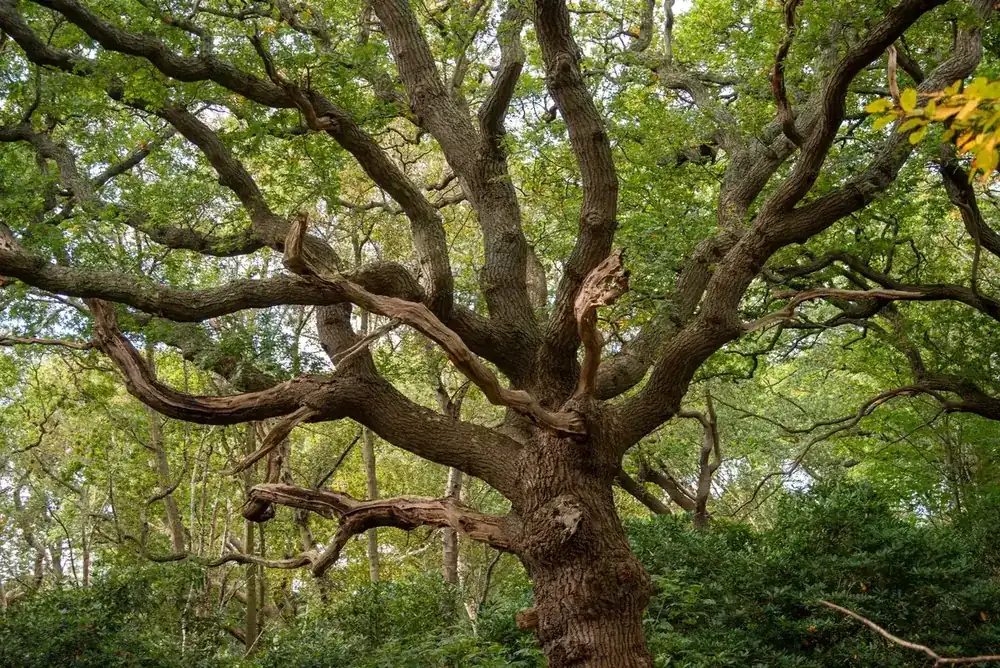
Plant Health Care
Oak Wilt Treatment in Lawrence and Topeka
Diagnosis, fungicide treatment, and root separation for a disease that moves tree to tree underground.
- Pruning blackout
- April through July
- Red oak group
- Can die within one season
- Underground spread
- Root grafts between neighboring oaks
- Injection cost
- $10 to $15 per inch of trunk diameter
What this is
Oak wilt is a fungal disease that blocks the water conducting tissue in an oak. Red oak group trees, which includes pin oak and northern red oak, can die within a single season of showing symptoms. White oaks and bur oaks decline more slowly and are more often saveable. The part that catches people out is how it spreads: sap beetles carry it to fresh wounds during the growing season, and once one tree has it, the fungus moves through connected root systems to the oaks standing next to it.
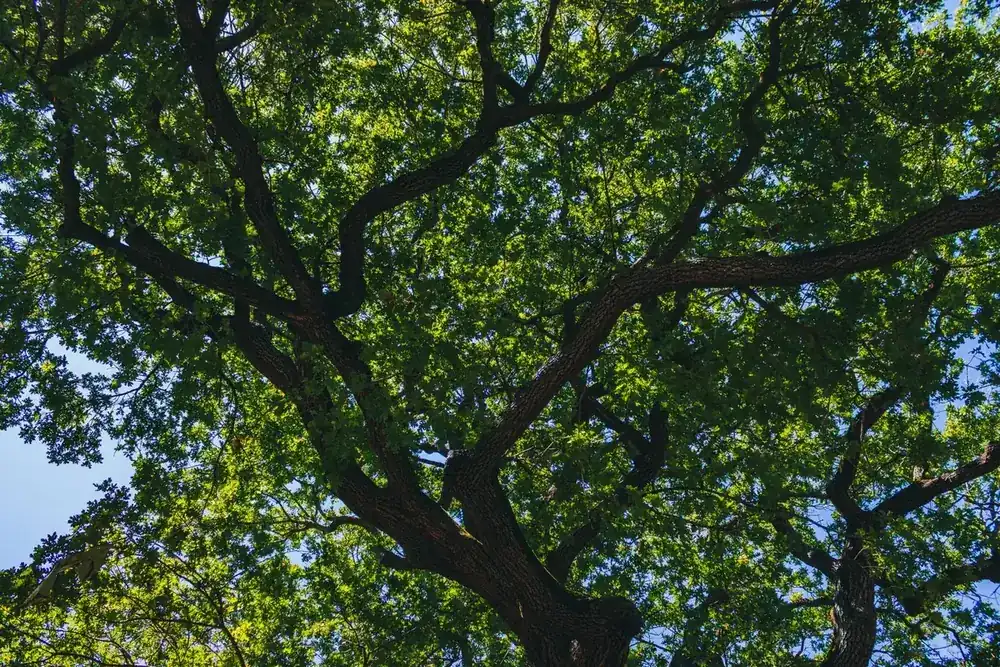
What the job includes
- Diagnosis from the leaf drop pattern and the wilt progression, confirmed by lab sample where it matters
- Preventive fungicide injection for healthy high value oaks near a confirmed infection
- Root separation to stop the fungus moving underground to neighboring oaks
- Removal and correct disposal of trees too far gone, before beetles emerge
- Pruning scheduled into the dormant window so we are not the ones who introduce it
What oak wilt does inside the tree
Oak wilt is a fungus that grows in the water conducting vessels of an oak. The tree responds by plugging its own vessels to wall the fungus off, and that response is what kills it. Water stops reaching the canopy, the leaves wilt from the outer edges inward, and the tree drops them while they are still partly green.
That is the diagnostic signature and it is worth knowing, because a pile of half green leaves under an oak in the middle of July is not normal for any other reason. Anthracnose drops leaves earlier and they are blotched, not tip burned. Drought browns leaves and they stay on the tree. Iron chlorosis yellows the tissue between the veins and does not drop anything.
Speed is the other tell. Most things that make an oak look bad take years. This one takes weeks in the red oak group, and the change from one visit to the next two weeks later is usually obvious.
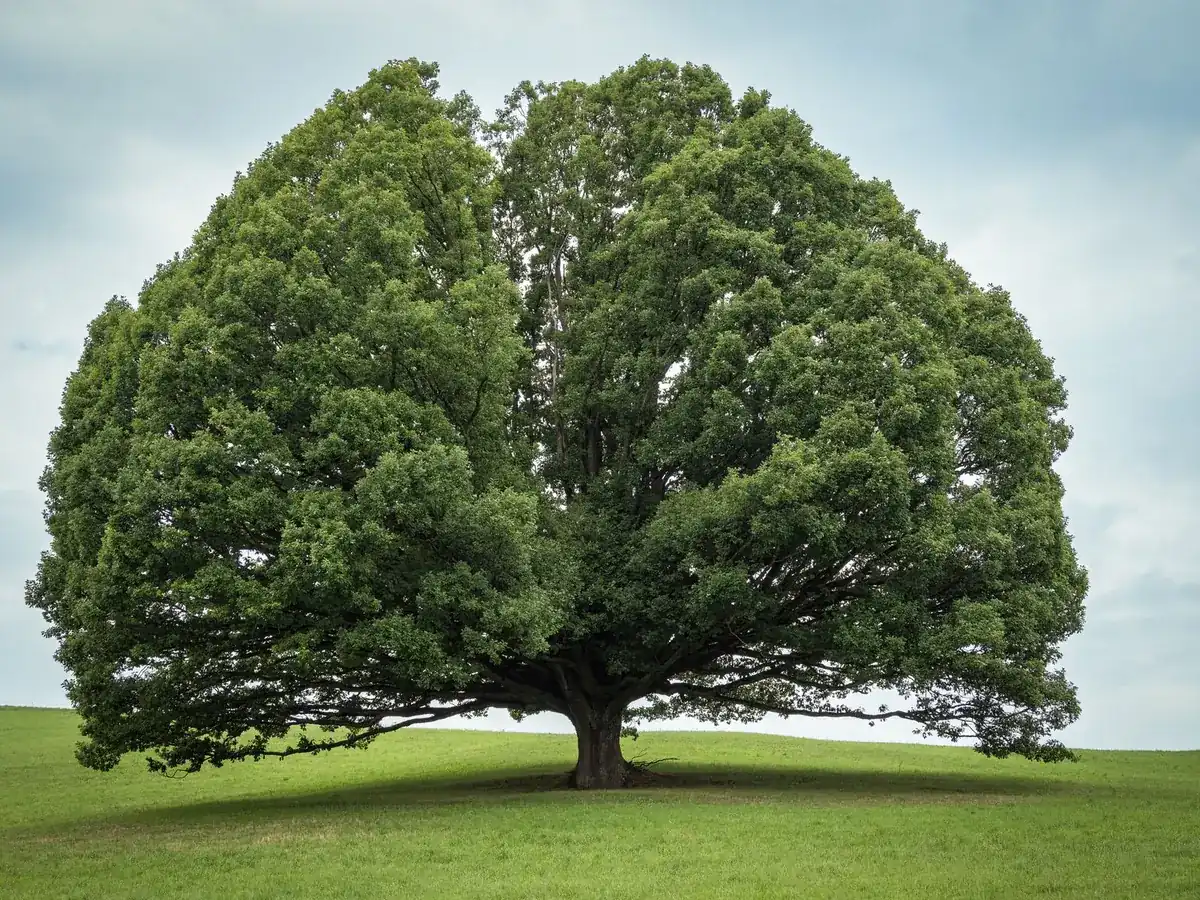
Red oaks die fast, white oaks decline slowly
The red oak group, which around here means pin oak and northern red oak, has vessel anatomy that lets the fungus move quickly through the whole tree. A red group oak can go from first symptom to dead within a single growing season. There is generally no saving that individual tree, and the useful work becomes protecting the oaks standing next to it.
The white oak group, meaning bur oak, white oak, and chinkapin oak, walls the fungus off more effectively. Those trees decline over years, sometimes losing a limb at a time, and they are far more often treatable. A mature bur oak with early oak wilt is worth a serious conversation about fungicide injection.
Pin oak is the complicating species in Lawrence and Topeka because it is everywhere, it is in the red group, and it also commonly has iron chlorosis in our alkaline soils. A yellowing pin oak alarms owners who have heard about oak wilt. Chlorosis and oak wilt look nothing alike up close, which is one of the more common things a consultation sorts out in ten minutes.
- Pin oak and northern red oak, red group, can die within one season of symptoms
- Bur oak, white oak, and chinkapin oak, white group, decline slowly and are more often treatable
- Root grafts between same species oaks growing near each other are the main local spread route
- Confirmation by lab sample where the treatment decision hinges on it
Diagnostic checklist for a suspect oak
Run this in the order given, in mid summer, and do it the week you notice something rather than the season you notice something. Timing changes what can be saved, and on a red group oak the difference between calling in July and calling in September is usually the difference between saving the neighboring trees and losing them too.
Photograph what you find as you go. If you end up needing a lab sample or a second opinion, the photographs from the first week are useful and the tree will not look the same by then.
- 1 Identify the group. Pointed lobes with bristle tips means red group. Rounded lobes means white group
- 2 Look at the ground under the canopy for shed leaves that are green at the base and browned at the tip
- 3 Check whether the canopy is thinning from the outside of the crown inward
- 4 Note how fast it is moving. Weeks means oak wilt is on the list. Years means it probably is not
- 5 Look for a wound, a pruning cut, or storm damage from this past April through July
- 6 Map every other oak within about fifty feet, since those are the ones at risk through root grafts
- 7 Check whether a neighboring oak, including one on the adjoining property, died in the last two years
- 8 Get a professional look and a lab sample before anyone cuts anything, since removal timing and disposal both matter
Two ways it spreads, and only one is obvious
Above ground, sap beetles carry fungal spores from an infected tree to fresh wounds on healthy oaks. The window runs roughly April through July, which is the same window when people prune, when storms tear limbs, and when contractors nick trunks with equipment. A wound that is a few hours old is attractive to those beetles. A wound made in January is not.
Below ground is the route people do not expect. Oaks of the same species growing near each other commonly graft their roots together, and the fungus travels through those connections from tree to tree without any beetle involved. That is how a single infected pin oak takes out a row of them along a street.
Root separation is the answer to the underground route. It means trenching a line between the infected tree and the ones being protected, deep enough to sever the grafts. It is disruptive, it is not cheap, and on a property with several high value oaks it is the difference between losing one tree and losing four.
Do not prune oaks from April through July
This is the single cheapest thing anyone reading this can do. Every fresh cut on an oak during the growing season is an invitation to the beetles that carry oak wilt. Prune oaks in the dormant season, roughly December through February in this part of Kansas, and the risk drops to close to nothing.
That rule applies to everyone with a saw, including your landscaper, your fence contractor, and the utility crew clearing a line. If a storm forces an emergency cut in June because a limb is over the driveway, make the cut and seal the wound the same day. Wound paint is bad practice in almost every other situation and this is the one genuine exception.
We schedule oak work into the dormant window as a matter of policy. If somebody offers to prune your bur oak in May, that tells you something about the company independent of anything else on their truck.
Treatment, and what it can and cannot do
Preventive fungicide injection goes into healthy, high value oaks near a confirmed infection. It is a systemic product injected at the root flare, and it is genuinely preventive rather than curative. It does not clear the fungus out of a tree that is already well into decline, and it does nothing for a red group oak that is already wilting through the canopy.
Injection is priced by trunk diameter, the same as any trunk injection. HomeGuide's national range is $10 to $15 per inch of trunk diameter, or $75 to $250 per tree. A mature bur oak is a large tree, so plan on the upper end of that, and understand that protection is a repeating commitment rather than a single purchase.
Trees that are too far gone come out, and how they come out matters. Infected oak wood can produce fungal mats that attract the beetles that spread it. The material gets handled and disposed of properly rather than stacked by the shed for next winter's firewood, and the removal gets timed so we are not opening fresh wounds on the neighbors during beetle season.
- Preventive injection for healthy oaks near a confirmed infection
- Root separation trenching to cut grafts between infected and protected trees
- Removal and controlled disposal of trees past saving
- All pruning scheduled into the dormant window so treatment is not undone by the crew doing it
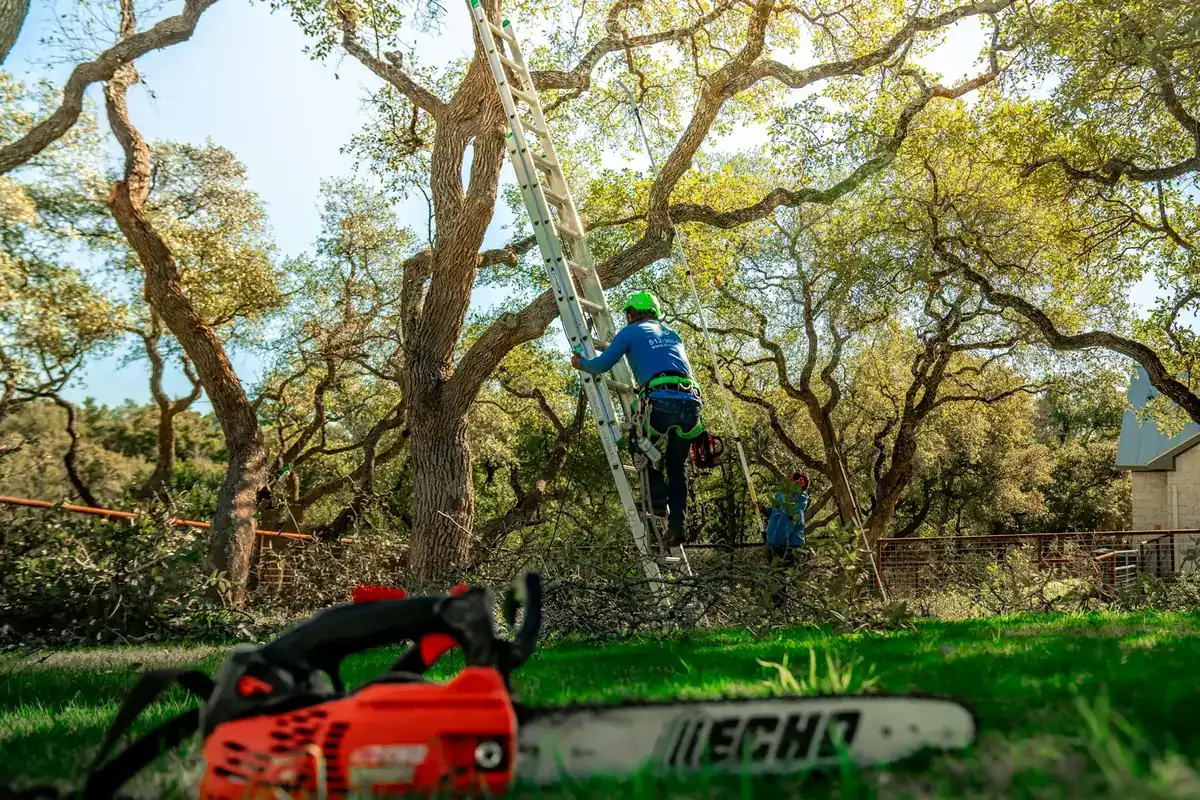
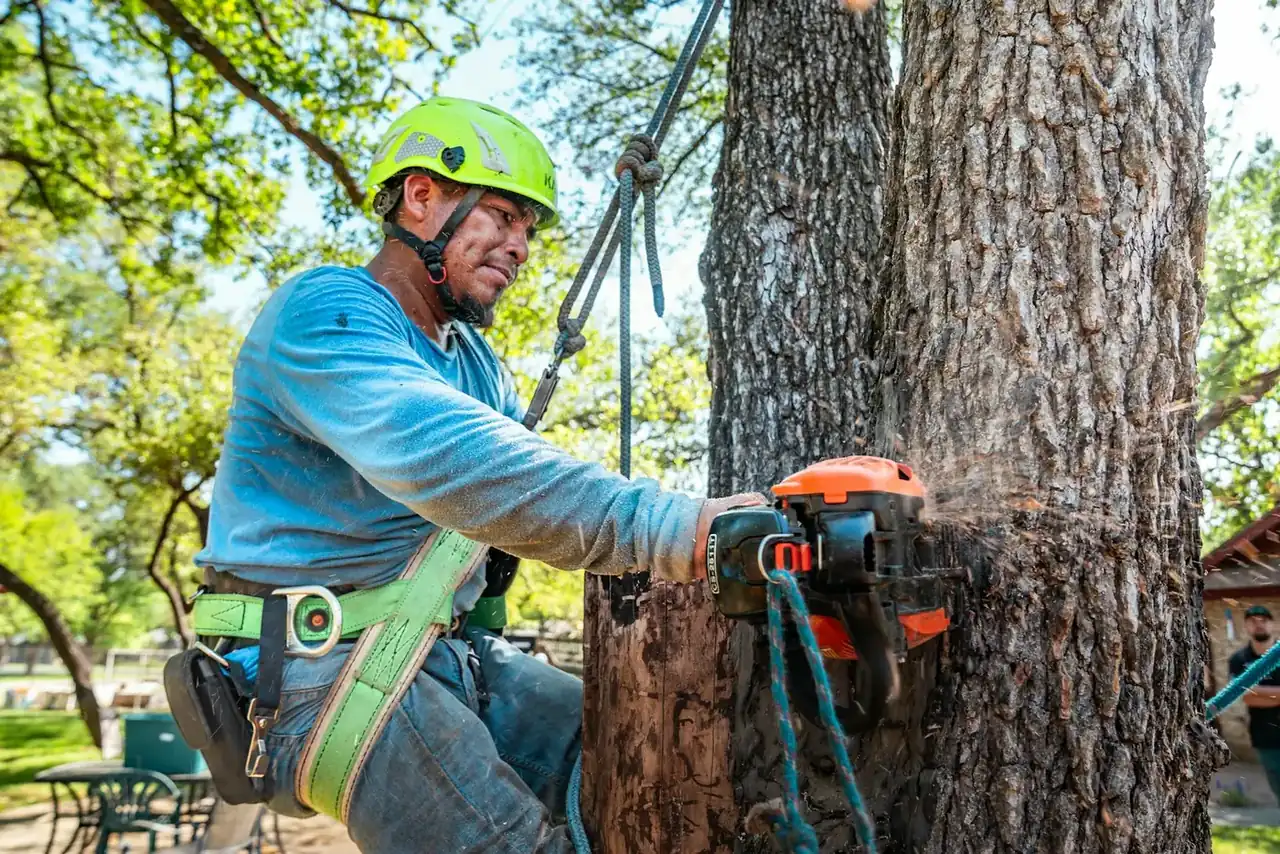
Oak Wilt Treatment in progress
Representative of the work. Real job photography replaces these as the crews document jobs.
What this costs and how long it takes
Fungicide injection runs roughly $10 to $15 per inch of trunk diameter
HomeGuide trunk injection pricing. Root separation trenching between grafted oaks is quoted separately.
These are published cost ranges for Kansas and national industry averages, not a quote. Every tree is different, and the only way to know what yours costs is a free on-site look.
What moves the price
- Number of oaks being protected and their trunk diameter
- Whether root separation is needed, which means trenching between trees
- Lab confirmation if the diagnosis is not clear from symptoms
What moves it up or down
- Hard access or a tight spaceadds 25 to 50 percent
- Several trees on one visitsaves 10 to 25 percent per tree
- Peak season, summer into falladds 10 to 20 percent
- A crane is requiredadds $500 or more
- Same-day emergencyup to two or three times standard rate
- Permit, where one is needed$60 to $450
If you have an oak dropping leaves in mid summer, get it looked at that week rather than that season. Timing changes what can be saved.
Oak Wilt Treatment questions
How do I know it is oak wilt and not something else?
The signature is leaves dropping in mid summer that are green at the base and browned at the tip, and a canopy thinning from the outside in over weeks rather than years. Plenty of other things make an oak look bad. This one moves fast, and the speed is the tell.
Why does my neighbor's oak dying matter to mine?
Oaks of the same species growing near each other commonly graft their roots together underground, and the fungus travels through those connections. If a confirmed infection sits within about fifty feet of your oak, root separation is worth discussing before you spend anything on treatment.
Can I prune my oaks in the summer?
Avoid it. Sap beetles are drawn to fresh wounds from roughly April through July, and that is how the fungus gets into a new tree. Prune oaks in the dormant season. If a storm forces an emergency cut in summer, seal the wound, which is the one case where wound paint is actually recommended.
Can an oak with oak wilt be saved?
A red group oak, meaning pin oak or northern red oak, showing wilt through the canopy is generally not saveable. A white group oak, meaning bur, white, or chinkapin, declines more slowly and is often worth treating. Which group your tree is in is the first question, and it is answered by looking at whether the leaf lobes are pointed or rounded.
What is root separation and do I need it?
It is a trench cut between an infected tree and the healthy oaks near it, deep enough to sever the root grafts the fungus travels through. You need it when there are oaks of the same species within about fifty feet of a confirmed infection and those oaks are worth protecting. On a single isolated oak it is unnecessary.
Does the wood need to be handled a certain way?
Yes. Infected oak can produce fungal mats that attract the beetles that spread the disease, so the material gets disposed of rather than stacked as firewood near your remaining oaks. That is a real precaution, not a disposal upsell.
My pin oak has yellow leaves. Is that oak wilt?
Almost certainly not. Yellow leaves with green veins on a pin oak in Kansas is iron chlorosis, caused by our alkaline soil locking up iron the tree cannot pull in. It is a soil chemistry problem and it is treatable. Oak wilt browns leaf tips and drops the leaves while they are still partly green.
How fast do I need to act?
If an oak is dropping half green leaves in mid summer, get it looked at that week rather than that season. On a red group oak the tree itself may already be lost, but the window to protect the oaks around it is measured in weeks.
Request a free estimate
Free, no obligation. We call back within 15 minutes.
Got it.
We call back within 15 minutes during business hours.
That did not send. Call and we will take it down over the phone.
(785) 550-0100Coverage
Lawrence, Topeka, and everything between
We run out of Lawrence and cover 14 towns across 5 counties. If your town is not pinned, call anyway. We are usually closer than you think.
- Home base
- Lawrence, KS
- Storm calls
- 24 / 7
Often booked together
Arborist Consultation
Time with a certified arborist to diagnose a problem or plan work on your trees.
Tree Risk Assessment
A written evaluation of whether a specific tree is likely to fail, and what to do about it.
Tree Pruning
Structural cuts on young and mid-age trees so they grow strong instead of needing removal later.
More in Plant Health Care
- Tree Risk Assessment
- Arborist Consultation
- Emerald Ash Borer Treatment
- Pine Wilt Treatment
- Insect and Disease Control
- Tree Fertilization and Deep Root Feeding