Plant Health Care
Tree Fertilization and Deep Root Feeding in Lawrence and Topeka
Feeding nutrients directly into the root zone, where a lawn fertilizer spreader never reaches.
- Cost
- $60 to $300 per tree (HomeGuide, Angi)
- Best window
- Fall, October into November
- Injection depth
- Top foot of soil
- Coverage
- Out to and past the drip line
What this is
A tree in a yard is not growing the way a tree in a forest grows. There is no leaf litter breaking down over the root zone, the turf competes for the same nutrients, and the soil is usually compacted from mowing and foot traffic. Deep root feeding injects a slow release fertilizer into the top foot of soil across the root zone, which is where the feeder roots actually are. It is not a rescue for a dying tree. It is what keeps a stressed one from becoming one.
What the job includes
- Liquid injection across the root zone, roughly out to the drip line
- Slow release nitrogen so the tree does not push weak flush growth
- Soil test first when the problem looks like a nutrient lockout rather than a shortage
- Vertical mulching and soil decompaction where the ground is packed hard
- Best applied in fall or early spring
Why a yard tree runs short
A tree in a woodlot recycles its own material. Leaves fall, break down, and return to the soil within the root zone every year, and the soil under them stays loose and full of air. A tree in a Lawrence or Topeka yard gets none of that. The leaves are bagged, turf competes for the same water and nutrients in the same top few inches, and the soil is compacted from mowing, foot traffic, and whatever was driven across it during construction.
That is the actual mechanism behind most slow decline in a landscape tree. It is not one dramatic problem. It is a root system operating in dense soil with the annual nutrient return removed.
Deep root feeding addresses part of that by injecting a slow release fertilizer into the top foot of soil across the root zone, which is where the absorbing roots actually live. It is not a rescue for a dying tree, and we will say so when that is the situation. It is what keeps a stressed tree from becoming a dying one.
What deep root injection actually does
A probe injects a liquid mix under pressure at spaced intervals across the root zone, roughly out to the drip line and often beyond, since the absorbing roots of a mature tree usually extend well past the edge of the canopy. The pressure does a second job. It fractures compacted soil at each injection point, which opens paths for air and water.
The formulation matters more than most people expect. Slow release nitrogen keeps the tree from pushing a flush of soft, weak growth that is attractive to insects and vulnerable to a late freeze. A fast release product on a mature tree buys a green flush and a set of problems behind it.
Lawn fertilizer does not substitute for this. It sits in the top two or three inches where turf roots are, and the turf takes it first because it is a dense mat of fine roots sitting right in the product. The tree's absorbing roots are deeper and much wider than the lawn, and very little of what goes on the grass ever reaches them.
- Injected across the root zone on a grid, out to and past the drip line
- Placed in the top foot of soil where the absorbing roots run
- Slow release nitrogen so the tree does not push weak flush growth
- Injection pressure fractures compacted soil and opens air paths
Test the soil before you feed it
Yellow leaves do not automatically mean the tree is hungry. On pin oak and maple in this part of Kansas they usually mean iron chlorosis, which is a lockout rather than a shortage. The iron is present in the soil and the alkaline pH is holding it in a form the tree cannot take in. Adding general fertilizer to that situation treats a problem the tree does not have.
A soil test tells us the pH, the organic matter, and what is actually short. It costs very little relative to a treatment program and it prevents the most common waste of money in this category, which is repeated feeding of a tree whose problem was never nutritional.
The same logic applies to trees declining from root damage, girdling roots, or a vascular disease. Fertilizer does nothing for any of those. We would rather tell you that on the first visit than sell an annual program that cannot work.
Compaction is often the real problem
Kansas clay compacts hard, and once it does, roots cannot get through it and water cannot get into it. You can see the result after a rain when water stands on the surface inside the drip line instead of soaking in. No amount of fertilizer fixes a root system that cannot breathe.
Vertical mulching addresses it directly. Holes are augered through the root zone on a grid and backfilled with a porous mix, which gives roots a path into the soil and gives water somewhere to go. On badly packed ground it does more for the tree over five years than any feeding program.
A ring of mulch is the other move, and it is nearly free. Two to three inches of wood chips out as far as you can stand to let it go, kept off the trunk itself, does what the leaf litter used to do. It moderates soil temperature, holds moisture, feeds the soil as it breaks down, and keeps the mower away from the flare. Piled against the trunk it does the opposite and rots the bark, which is why the volcano of mulch around so many street trees is actively harmful.
- Vertical mulching to open compacted soil through the root zone
- Mulch ring two to three inches deep, pulled back off the trunk
- Turf removed from inside the ring where practical, since it competes directly
- Soil test to confirm what is short before anything gets injected
How a feeding visit runs
The visit itself is not long for a single tree. Most of the judgment happens before the rig comes off the truck.
You do not need to be home. There is no re-entry restriction on the fertilizer itself, and there is nothing left on the surface for pets to get into.
- 1 Identify the species and confirm there is not a structural or disease problem behind the symptoms
- 2 Pull a soil sample where pH or a lockout is suspected
- 3 Measure trunk diameter at chest height, since the dose scales with it
- 4 Map the root zone out to and beyond the drip line and locate any irrigation lines or utilities in it
- 5 Inject on a grid at spaced intervals into the top foot of soil
- 6 Auger vertical mulching holes where the ground is packed hard
- 7 Set the mulch ring, pulled back off the trunk flare
- 8 Leave the watering recommendation in writing, since watering does more than feeding in a dry Kansas summer
Timing and cost
Fall is the best window, roughly October into November. The tree has stopped putting on top growth but the roots are still active and taking material in, so what goes in gets stored rather than spent on a flush of leaves. Early spring is the second option. Feeding a drought stressed tree in July can do more harm than good, and in that situation the honest recommendation is water.
Deep root fertilization runs $60 to $300 per tree according to published national cost data, with HomeGuide at $60 to $200 and Angi at $50 to $300. What moves the number is trunk diameter, since dose scales with the size of the tree, how many trees are done on the same visit, whether a soil test is included, and whether the injection rig can get to the root zone.
Several trees on one visit costs less per tree than several separate visits, which is the same arithmetic as any other tree work. Most of the cost of a visit is the visit.
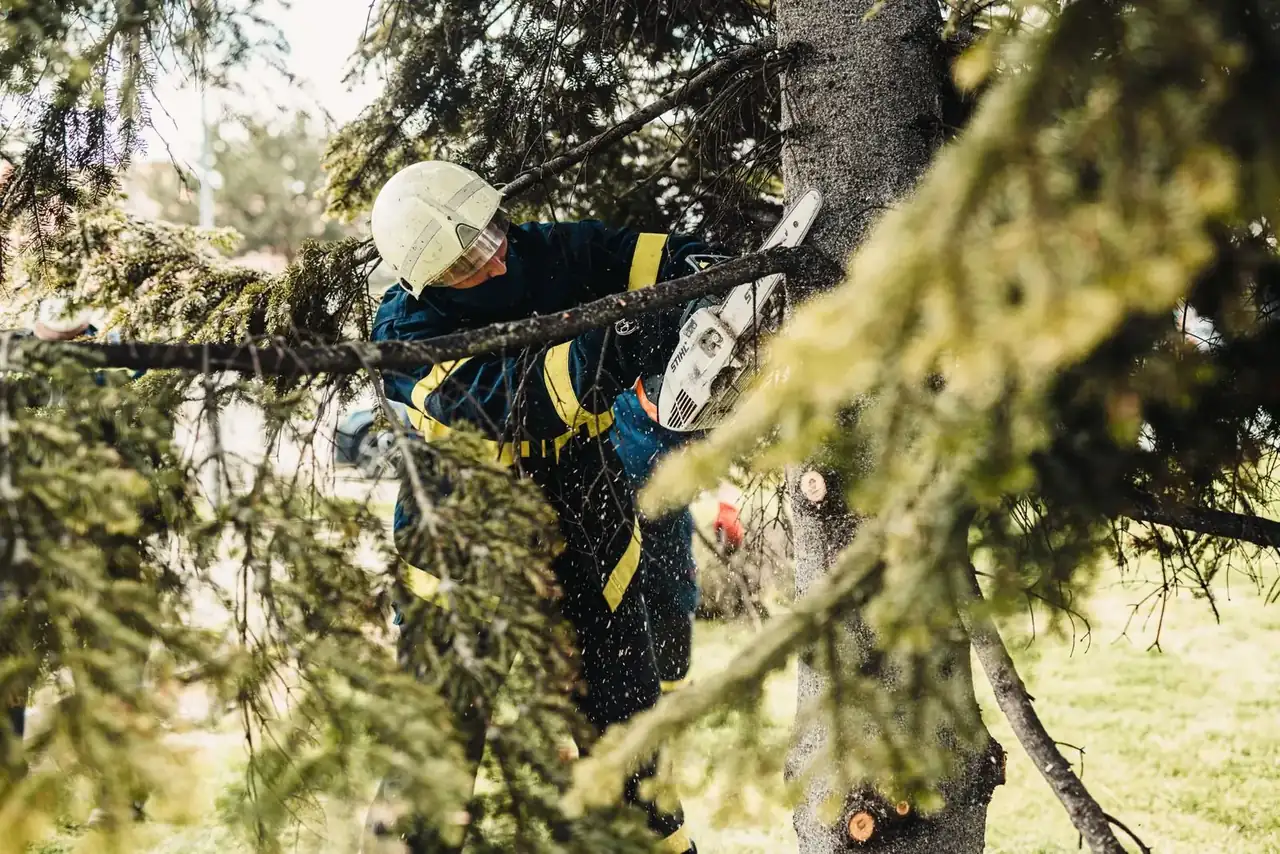
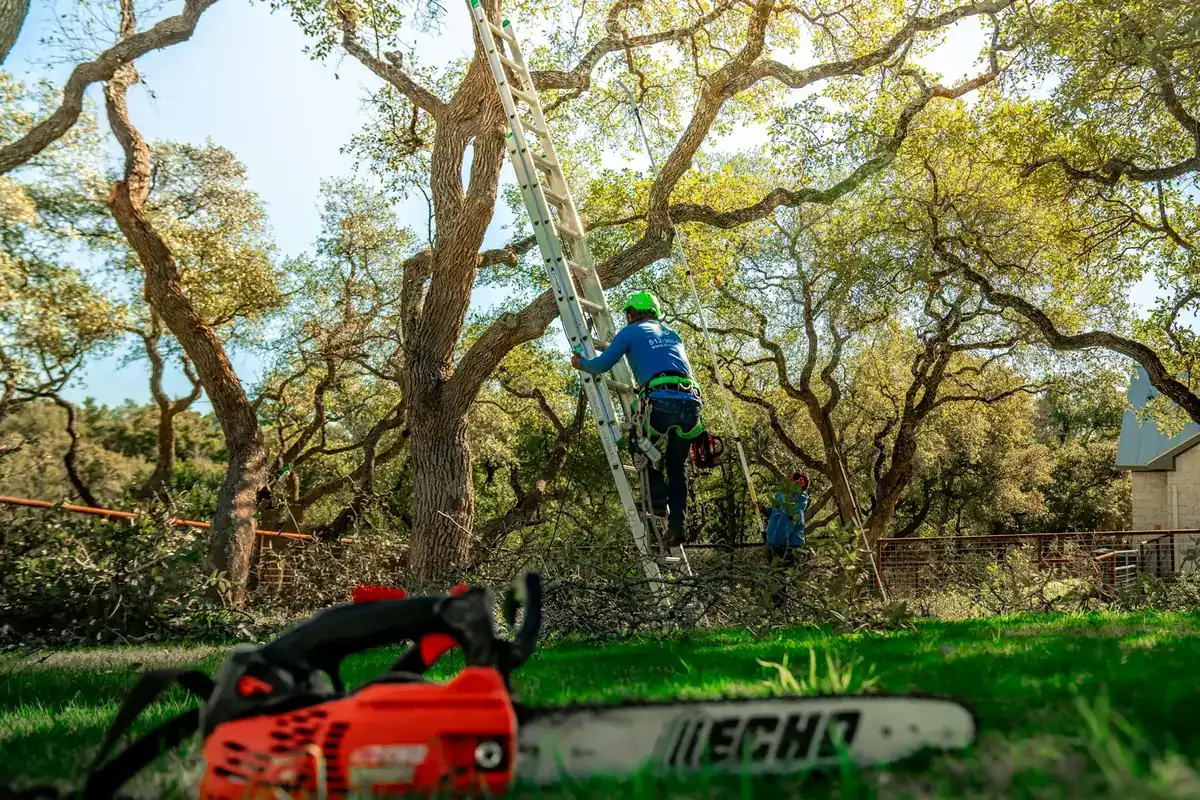
Tree Fertilization and Deep Root Feeding in progress
Representative of the work. Real job photography replaces these as the crews document jobs.
What this costs and how long it takes
$60 to $300 per tree for deep root fertilization
HomeGuide puts it at $60 to $200, Angi at $50 to $300. Priced by trunk diameter, so a large oak sits at the top of the range.
These are published cost ranges for Kansas and national industry averages, not a quote. Every tree is different, and the only way to know what yours costs is a free on-site look.
What moves the price
- Trunk diameter, since dosage scales with the size of the tree
- Number of trees on the same visit
- Whether a soil test is included
- Access for the injection rig
What moves it up or down
- Hard access or a tight spaceadds 25 to 50 percent
- Several trees on one visitsaves 10 to 25 percent per tree
- Peak season, summer into falladds 10 to 20 percent
- A crane is requiredadds $500 or more
- Same-day emergencyup to two or three times standard rate
- Permit, where one is needed$60 to $450
Worth pairing with an assessment. Feeding a tree that is declining from root damage or a vascular disease does nothing, and we would rather tell you that than sell you a treatment.
If you are feeding trees and treating turf in the same season, the two programs are worth coordinating. Clean Cut Lawn Care handles that side, and shares our ownership.
Tree Fertilization and Deep Root Feeding questions
My lawn gets fertilized. Is that not enough for the tree?
No. Lawn fertilizer sits in the top two or three inches where the turf roots are, and the turf takes it first because it is a dense mat sitting right in the product. Tree feeder roots run deeper and much wider than most people expect, often well past the edge of the canopy. Deep root injection puts the nutrients where the tree can reach them.
When should trees be fertilized in Kansas?
Fall is best, roughly October into November, once the tree has stopped putting on top growth but the roots are still active. Early spring is the second option. Summer feeding on a drought stressed tree can do more harm than good.
Will this fix my yellowing pin oak?
Probably not on its own. Yellow leaves with green veins on a pin oak or a maple here is usually iron chlorosis, which is our alkaline soil locking up iron the tree cannot access. That needs an iron treatment rather than general fertilizer. A soil test tells us which one you have.
What does deep root fertilization cost?
National cost guides put it at $60 to $300 per tree, with HomeGuide at $60 to $200 and Angi at $50 to $300. Dose scales with trunk diameter, so a large silver maple costs more than a young redbud, and doing several trees on one visit lowers the per tree price.
How often does a tree need feeding?
Most healthy landscape trees do not need it every year. A stressed tree, a newly transplanted tree, or one growing in compacted soil benefits from an annual application for two or three years, then a longer interval. Feeding a tree that does not need it is money spent for no result.
Is it safe for my dog and my vegetable beds?
The fertilizer goes into the soil under pressure rather than sitting on the surface, so there is nothing for a dog to get into and no drift. Tell us where the vegetable beds and any irrigation lines are before we start and we will work around them.
Can fertilizer save a tree that is already declining?
Rarely, and it depends entirely on the cause. If the decline is nutritional or from soil compaction, feeding and vertical mulching help. If it is root damage, a girdling root, a vascular disease, or a borer, fertilizer does nothing and delays the real fix. That is why we look before we inject.
What is vertical mulching?
Holes augered through the root zone on a grid and backfilled with a porous mix. It gives roots a path through compacted clay and gives water somewhere to go instead of standing on the surface. On badly packed ground it does more for a tree over five years than any feeding schedule.
Request a free estimate
Free, no obligation. We call back within 15 minutes.
Got it.
We call back within 15 minutes during business hours.
That did not send. Call and we will take it down over the phone.
(785) 550-0100Coverage
Lawrence, Topeka, and everything between
We run out of Lawrence and cover 14 towns across 5 counties. If your town is not pinned, call anyway. We are usually closer than you think.
- Home base
- Lawrence, KS
- Storm calls
- 24 / 7
Often booked together
Insect and Disease Control
Treatment for bagworms, borers, scale, and the fungal problems common in Kansas.
Arborist Consultation
Time with a certified arborist to diagnose a problem or plan work on your trees.
Tree Planting
Choosing and planting species that survive Kansas clay, wind, and heat.
More in Plant Health Care
- Tree Risk Assessment
- Arborist Consultation
- Emerald Ash Borer Treatment
- Pine Wilt Treatment
- Insect and Disease Control
- Oak Wilt Treatment