
When to Prune Trees in Kansas: A Month by Month Guide
The dormant season is right for most trees, oaks have their own rule, and spring flowering trees have another. A Kansas pruning calendar.
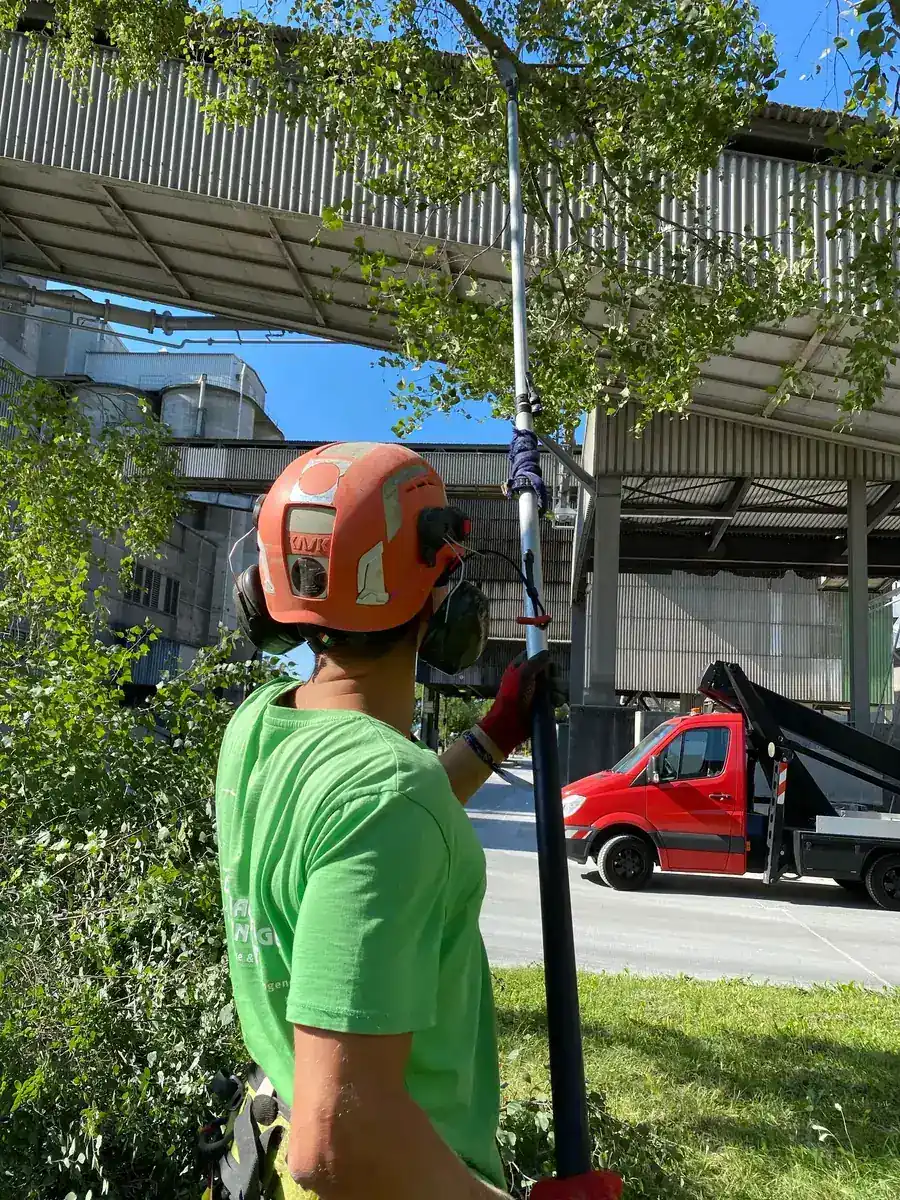
Timing changes how well a pruning cut heals and, for a couple of species here, whether the tree survives the decade. Here is the Kansas calendar. If you already know you need the work, start with tree trimming in Lawrence or Topeka.
The default answer is late winter
January through early March is the right window for most trees in northeast Kansas.
The tree is dormant, so it is not spending energy on leaves while it seals a wound. The canopy is bare, so the crew can see the actual structure they are cutting instead of guessing through foliage. The ground is firm, so equipment crosses a lawn without rutting it. And insects and fungal spores that colonize fresh cuts are not active yet.
It is also the cheapest time to book, because every tree crew in the region is looking for work in February and turning it away in June.
Oaks have their own rule
Do not prune oaks between roughly April and July.
Oak wilt is a fungal disease spread by sap beetles that are drawn to fresh wounds during the growing season. A cut made on an oak in May is an open invitation. Oak wilt moves through connected root systems and can take out a group of trees rather than one.
Prune oaks in the dormant season. If storm damage forces an emergency cut on an oak during summer, the wound should be sealed, which is the one situation where wound paint is actually recommended.
Spring flowering trees come after they bloom
Redbud, serviceberry, ornamental cherry, and crabapple set their flower buds the previous summer. Prune them in February and you are cutting off this year’s flowers.
Prune these right after they finish blooming, usually late April into May.
What you can do any time of year
Dead wood. Removing dead limbs is safe in any month, because there is no living tissue to wound.
Broken and hanging limbs after a storm. Never wait on these. A hanger caught in a canopy comes down without warning.
Clearance that has become a hazard. A limb touching the service drop to your house is not a seasonal question.
The month by month version
January and February. The best window. Structural pruning, crown reduction, clearance work, and removals on every species including oak.
March. Still good, and the last of the dormant window. Book early because it fills.
April and May. Stop pruning oaks. Prune spring flowering trees after bloom. Watch for storm damage, since this is when the wind season starts.
June. Bagworm treatment window on juniper and spruce, roughly mid month when larvae are small. Storm response season.
July and August. Assess canopies now, since this is when a dead limb is obvious against full foliage. Avoid heavy pruning during drought stress.
September and October. The best window for planting. Light pruning is fine. Avoid heavy cuts, since the tree is heading into dormancy and will not close wounds before winter.
November and December. Dormant season opens again. Good time to get quotes for January work.
One rule regardless of month
Take no more than about a quarter of the live canopy in a single season. Past that, the tree responds by throwing up dense weak regrowth, and three years later you have a heavier, more dangerous canopy than the one you started with.
And in no month is topping a good idea.
Questions this article usually raises
When should I book tree trimming in Lawrence or Topeka?
January through early March for most hardwoods. That is when crews have space and the tree is dormant. Oaks stay in that window because of oak wilt.
Is this the same as hiring a trim?
The calendar is the same. The work itself is on the tree trimming page. This article is only timing.
Services in this article
Relevant service areas
Keep reading
- When to Spray Bagworms in Kansas (Mid June) The spray window in Lawrence and Topeka is about three weeks in mid June. Miss it and you are treating a sealed bag.
- The Cheapest Time of Year for Tree Removal in Kansas Tree work in northeast Kansas is roughly twelve times busier in June than in December. Booking in the slow months is the easiest way to pay less.
- Emerald Ash Borer in Douglas and Shawnee County: Treat or Remove? EAB has been in Kansas since 2012 and is established across the northeast counties. How to tell if your ash is infested, and the point where treatment stops being worth the money.